
Med info
Why do vision correction results vary from person to person?

How Are Vision Correction Outcomes Measured?
Visual Acuity Measurement: 6/6
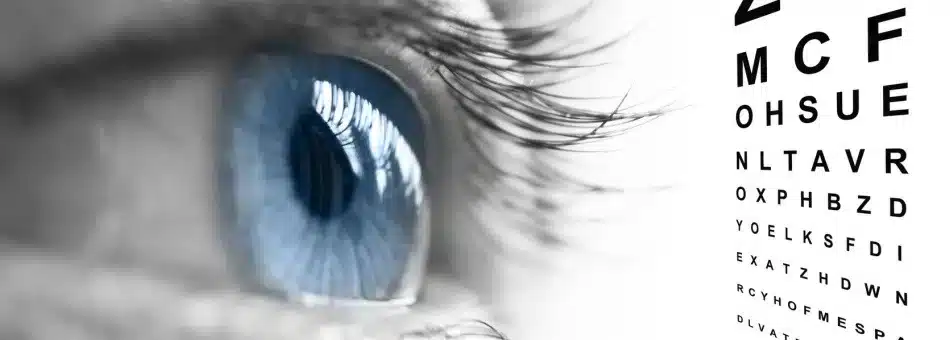
One of the most important indicators of successful vision correction after LASIK or SMILE surgery is achieving a visual acuity of 6/6 or close to it.
Visual acuity is measured using a standard eye chart in the ophthalmologist’s clinic, where the patient is asked to read letters or symbols of varying sizes from a fixed distance.
If the patient can read the line corresponding to 6/6 visual acuity without glasses or contact lenses, this indicates that the refractive correction is accurate from a visual standpoint.
In some cases, the patient may not reach 6/6, but achieving 6/9 or 6/7.5 vision along with a clear improvement in day-to‑day vision is still considered a good outcome, and is assessed as part of the overall picture of the refractive surgery results.
Evaluation of Night Vision and Contrast Sensitivity
Assessing the outcome of vision correction is not limited to visual acuity alone; it also includes evaluating night vision and contrast sensitivity.
The ophthalmologist performs specific tests to measure the eye’s ability to see under low‑light conditions, and to assess how clearly objects are perceived in the dark or while driving at night.
Contrast sensitivity is also evaluated, meaning the eye’s ability to distinguish fine differences between light and dark shades. Reduced contrast sensitivity can cause haziness or halos around lights after refractive surgery.
Improvement in night vision and contrast sensitivity is an important indicator of surgical success, demonstrating that the cornea has healed well and that the quality of the retinal image has improved—not just the visual acuity score on the chart.
Assessing Postoperative Visual Stability
A key element in evaluating refractive surgery outcomes is ensuring that vision remains stable in the medium and long term, not only in the first few days after the procedure.
This is done through regular follow‑up visits with the ophthalmologist to check the degree of refractive error—myopia, hyperopia, or astigmatism—and to compare the measurements with previous readings to confirm that they are stable and that there is no regression.
Typically, vision is expected to stabilize within several weeks to a few months after LASIK or other refractive procedures. Any significant change in these measurements may require further evaluation or additional treatment.
Stable vision means the patient can rely on their new eyesight consistently in daily activities, and this is a primary indicator of successful refractive correction from both a medical and functional perspective.
Assessing Ocular Comfort and Reduced Dependence on Glasses
An important part of evaluating refractive surgery outcomes is assessing how comfortable the eyes feel in everyday life, not just how well the patient reads the eye chart.
The doctor asks the patient about symptoms such as dryness, burning, or eye strain during reading or screen use, as these can significantly affect satisfaction with the surgical outcome.
The degree of reduced dependence on glasses or contact lenses is also measured. The more the patient can perform daily tasks such as driving, working, and reading without spectacles, the more successful the refractive correction is considered to be.
Ocular comfort, combined with improved visual quality and reduced need for visual aids, together form the realistic benchmark for the success of refractive surgery from the patient’s own perspective and overall experience.
Types of Vision Correction Procedures and Their Impact on Outcomes in Light of the Research Intent
Outcomes of Conventional LASIK

Conventional LASIK is one of the most commonly performed vision correction procedures and usually provides stable, satisfactory outcomes for most patients with mild to moderate myopia, hyperopia, or astigmatism.
In the majority of cases, vision improves rapidly within a few days, and patients often achieve visual acuity close to 6/6 (20/20) without the need for glasses.
Over the long term, conventional LASIK has a high success rate when the patient is properly selected and the cornea has adequate thickness.
However, a small residual refractive error may remain, which can be corrected with light prescription glasses or an enhancement procedure. Some patients may also experience temporary dry eye or halos around lights for several months after surgery, which usually improve gradually over time.
Outcomes of Femto-LASIK
Femto-LASIK is an advanced form of conventional LASIK that uses a femtosecond laser instead of a mechanical microkeratome to create the corneal flap, which enhances the precision and stability of the results.
Outcomes with Femto-LASIK generally show higher accuracy in correcting refractive errors, particularly in cases that require very precise measurements of corneal shape and thickness.
This type of laser vision correction reduces the risk of flap-related complications and often allows for faster visual recovery and clearer night vision compared with conventional LASIK in selected cases.
Overall, when the most suitable vision correction technique is chosen for each patient, Femto-LASIK can provide excellent visual outcomes with a high safety profile.
Outcomes of SMILE (Femto-SMILE)
SMILE (Small Incision Lenticule Extraction) is one of the latest laser vision correction techniques and is characterized by reshaping the cornea through a small incision without creating a large corneal flap.
This approach helps maintain better corneal biomechanical stability, which translates into a lower risk of corneal weakening in the long term, especially in patients with high myopia.
Visual outcomes with SMILE are generally comparable or very close to those of Femto-LASIK in terms of final visual clarity, with a lower incidence of dry eye symptoms due to less disruption of the corneal nerve fibers.
Visual recovery during the first few days may be slightly slower than with LASIK, but within a few weeks most patients achieve excellent, stable visual acuity.
Outcomes of Surface Laser (PRK)
Surface laser photorefractive keratectomy (PRK) is an important option in corneal laser procedures, particularly for patients with thin corneas or those whose corneal thickness does not safely allow conventional LASIK or Femto-LASIK.
In terms of final visual acuity, PRK outcomes are usually very similar to those of LASIK, but the main difference lies in the recovery period, as patients generally need more time for their vision to stabilize.
During the first few days, patients may experience eye pain or burning with blurred vision, which then improves gradually over the following weeks, reaching a stable level after several months.
From a long-term perspective, PRK has the advantage of lowering the risk of corneal ectasia, making it a safer choice for certain patient groups despite the longer healing period.
Outcomes of Implantable Collamer Lenses (ICL)
Implantable Collamer Lens (ICL) implantation is a key solution for vision correction in patients who are not good candidates for laser procedures, such as those with very high myopia or structurally weak corneas.
In this type of procedure, a thin lens is implanted inside the eye without removing the natural crystalline lens, allowing highly precise visual correction and the treatment of high degrees of refractive error.
Most patients notice a rapid improvement in vision within the first 24–48 hours, with sharp visual detail and no need for glasses or contact lenses.
A major advantage of ICL is that it is reversible: the lens can be removed or replaced if needed, while preserving the corneal tissue. With regular follow-up and adherence to medical advice, ICL generally provides very good long-term visual outcomes.
When Does Vision Improve After Refractive Surgery?
In most cases, patients notice a clear improvement in their vision within the first few hours to the next day after refractive procedures such as LASIK, Femto-LASIK, or PRK (surface laser). However, achieving fully stable visual acuity can take several weeks to a few months, depending on the type of surgery and the preoperative condition of the cornea.
During the first few days, it is common to experience mild blurriness, light sensitivity, or eye dryness. These are normal postoperative symptoms in the early recovery phase and do not indicate that the refractive surgery has failed.
Vision usually continues to improve gradually over the first week, provided the patient uses the prescribed eye drops regularly and follows the surgeon’s instructions. Most patients reach their best level of vision between one and three months after the procedure.
It is essential to understand that the speed of visual recovery after refractive surgery varies from person to person. Factors such as corneal thickness, the degree of myopia, hyperopia, or astigmatism, and any pre-existing eye conditions all play a role. For this reason, the final evaluation of the surgical outcome should always be based on your ophthalmologist’s assessment during scheduled follow-up visits.
Why do vision correction results vary from one person to another?
Corneal Thickness and Ocular Surface Health
Corneal thickness and the health of the ocular surface are key factors in understanding why vision correction outcomes vary from one person to another.
Patients with a thick, structurally healthy cornea are usually better candidates for procedures such as LASIK, allowing the surgeon to safely correct a higher degree of refractive error.
In contrast, when the cornea is thin or irregular, the surgeon may need to opt for alternative techniques such as SMILE, femto-SMILE, or PRK, or deliberately reduce the amount of correction to preserve corneal integrity. This can lead to a final result that is less ideal compared with someone who has a thicker cornea.
Pre-existing ocular surface problems—such as keratitis or tear film instability (dry eye disease)—can also compromise preoperative measurements and affect the quality of vision after refractive surgery.
For these reasons, variations in corneal thickness and corneal/ocular surface health among patients explain a substantial part of the differences in vision correction results.
Degree of Myopia, Hyperopia, and Astigmatism
The degree of myopia (short-sightedness), hyperopia (long-sightedness), and the presence of astigmatism are among the main factors behind variations in refractive surgery outcomes.
Patients with mild to moderate myopia or hyperopia generally achieve more stable and precise results after LASIK or SMILE compared with those who have very high refractive errors.
In cases of high myopia or marked astigmatism, the surgeon may need to “undercorrect” slightly or accept leaving a small residual refractive error to avoid excessive corneal thinning or complications. This can make the final outcome less optimal than in patients with lower degrees of refractive error.
Moreover, both the magnitude and type of astigmatism (regular vs irregular) influence the accuracy of laser treatment and the long-term stability of vision.
Thus, differences in the degree and nature of myopia, hyperopia, and astigmatism directly contribute to the variability in outcomes after vision correction procedures.
Pre-existing Dry Eye or Chronic Ocular Allergy
Chronic dry eye or ongoing ocular allergy before surgery is a significant reason why refractive outcomes differ between patients.
Individuals with dry eye may experience fluctuating vision, burning sensations, or unstable visual clarity after LASIK or SMILE, even if the refractive correction itself is technically successful.
Chronic allergic conjunctivitis and eye rubbing can also interfere with corneal healing after surgery, increasing the risk of inflammation or corneal shape changes over time.
By contrast, patients with a healthy, well-lubricated ocular surface tend to have a more comfortable and stable postoperative visual experience.
Therefore, optimizing dry eye disease and adequately treating ocular allergy before surgery is a crucial step to improving refractive outcomes and reducing variability between patients.
Age and Its Impact on Long-term Stability
Age is a major factor explaining why vision correction results differ, particularly with respect to long-term stability.
In relatively young patients (typically under the mid-twenties), myopia or hyperopia may not yet be fully stable. The refractive error can continue to change even after surgery, which may reduce the accuracy of the result over time.
At older ages—especially after about 40—presbyopia (age-related difficulty with near vision) begins to appear. This may necessitate tailored solutions such as multifocal correction or monovision (one eye set for near, the other for distance), leading to a different visual outcome than that of a younger patient whose goal is simply clear distance vision.
In addition, tissue healing capacity and corneal response to surgery change with age, affecting both the speed of recovery and the stability of the final result.
Patient Compliance with Postoperative Instructions
Patient adherence to postoperative instructions is a direct and critical reason why refractive outcomes vary, even among individuals treated using the same technique by the same surgeon.
Regular use of prescribed eye drops, avoiding eye rubbing, respecting rest periods, and refraining from swimming or exposure to dust and smoke in the early postoperative phase all support proper corneal healing and lower the risk of infection or complications.
Conversely, neglecting medications, rubbing the eyes forcefully, or exposure to contaminants can cause inflammation, delayed healing, or visual fluctuation, resulting in a poorer outcome compared with a patient who strictly follows instructions.
Thus, the success of refractive surgery depends not only on the surgeon and the chosen technique, but also very clearly on patient behavior after the procedure.
Surgeon Experience and Technology Used
Surgeon experience and the type of technology employed are among the most decisive factors behind variations in refractive surgery outcomes.
An experienced refractive surgeon knows how to select the most suitable technique for each eye—whether LASIK, femto-LASIK, SMILE, PRK, or other options—based on corneal thickness, morphology, and ocular surface status. This careful selection enhances accuracy and reduces regression and complication rates.
The use of modern, advanced laser platforms also improves the precision of measurements and allows for highly customized treatments, such as wavefront‑guided or topography‑guided ablations to correct higher‑order aberrations.
In contrast, choosing an inappropriate technique, relying on outdated equipment, or planning the procedure inadequately can result in suboptimal visual quality, even if the initial ocular condition was favorable.
Accordingly, differences in surgeon expertise and in the quality of technology used are directly reflected in the variability of refractive surgery outcomes among patients.
Individual Healing Response of the Eye

The eye’s healing response naturally differs from one person to another, which is why refractive surgery results are never identical, even among patients with the same degree of myopia undergoing the same procedure.
Some corneas tend to form more healing tissue or micro‑scarring than others, which can lead to slight regression or residual refractive error.
There are also individual differences in the recovery of corneal nerves, which influence the severity and duration of postoperative dry eye symptoms and early visual comfort.
Similarly, the speed at which the corneal shape stabilizes after laser treatment can vary between patients, explaining differences in how quickly vision clears and stabilizes.
These inherent biological variations in healing make refractive surgery outcomes highly individualized and unique to each person.
Factors That May Negatively Affect Vision Correction Outcomes
Could a patient need an enhancement procedure?
In some cases, the visual outcome after refractive surgery may not be perfectly optimal from the first attempt. Here comes the role of an enhancement procedure—often referred to as a “touch‑up”—which is performed to refine the refractive correction and achieve the best possible visual acuity.
Enhancement is commonly considered after LASIK, femto-LASIK, or other laser vision correction procedures when a slight residual refractive error persists, or when part of the myopia or hyperopia gradually recurs sometime after the initial surgery.
The decision to proceed with an enhancement depends on a thorough assessment by the ophthalmologist. This typically includes measuring visual acuity, checking corneal thickness, confirming the stability of the refractive error, and evaluating corneal shape (topography) to ensure that repeating laser treatment is safe and will not lead to corneal thinning or other complications.
Not all patients require an enhancement, and in most individuals the results of laser vision correction remain stable for many years. However, the presence of mild blurriness, difficulty with night vision, or continued dependence on glasses after surgery can be a reason to discuss the option of an enhancement procedure with your eye specialist.
What to Expect After Vision Correction Surgery
After undergoing vision correction surgery, you can generally expect a noticeable improvement in visual clarity within the first few hours to days. Your vision will continue to stabilize gradually over the following weeks, depending on the technique used and the condition of your eyes.
It’s normal to experience some temporary symptoms such as dry eyes, light sensitivity, and mild blurred or hazy vision, especially at night. These usually improve with regular use of the prescribed eye drops and by carefully following your ophthalmologist’s instructions.
Most patients achieve visual acuity close to 6/6 (20/20) or are able to perform their daily activities without glasses or contact lenses. However, final outcomes can vary from person to person, depending on factors such as corneal thickness, the degree of refractive error before surgery, and any pre-existing eye conditions.
Your ophthalmologist will schedule routine follow‑up visits after the procedure to monitor corneal healing and detect any early complications. Adhering to these appointments and following postoperative recommendations—such as avoiding eye rubbing and protecting your eyes from dust and water during the first few days—is essential to achieving a stable, safe, and long‑lasting result.
Tips for Achieving the Best Vision Correction Results
To achieve the best possible outcome after LASIK, SMILE, or any other refractive surgery, it’s essential to follow a set of guidelines recommended by ophthalmologists to ensure safe healing and stable visual quality.
Start by choosing a board‑certified ophthalmologist who has extensive experience in refractive surgeries, and make sure you undergo a full pre‑operative assessment. This should include corneal thickness measurement, a detailed retinal (fundus) examination, and evaluation for dry eye disease before the procedure.
Inform your doctor about all medications you are taking and any chronic conditions such as diabetes or hypertension, as well as any previous eye surgeries. These factors can significantly influence both the surgical plan and the final visual outcome.
Use all prescribed eye drops and ointments exactly as directed, especially lubricating drops, antibiotic drops, and steroid (corticosteroid) eye drops, in the doses and for the duration determined by your doctor. Skipping or misusing these medications may lead to infection, inflammation, or unstable vision.
Avoid rubbing your eyes, and protect them from direct exposure to water, soap, and cosmetics during the first few weeks after surgery. If your doctor recommends it, wear protective goggles or a plastic eye shield while sleeping to safeguard the eyes in the early healing phase.
Refrain from swimming, wearing contact lenses, and visiting dusty or smoky environments for a period specified by your surgeon, depending on the type of procedure performed and your overall eye health.
Make it a priority to attend all scheduled follow‑up appointments. These visits are essential to monitor corneal healing, adjust your treatment if needed, and detect any complications early, before they can affect your long‑term visual results.
Finally, keep your expectations realistic. Achieving 20/20 vision (6/6) is possible in many cases, but some patients may still need a mild prescription, particularly for near vision or after the age of forty. This is considered a normal outcome of refractive surgery and does not mean that the procedure has failed.
The Best Specialist for Post–Laser Vision Correction Assessment in Jeddah – Dr. Issa Ba-Issa
When it comes to evaluating the outcomes of laser vision correction in Jeddah and ensuring long‑term eye health and visual quality, Dr. Issa Ba‑Issa is regarded as one of the leading specialists in this field, thanks to his extensive experience in refractive surgery and comprehensive post‑operative follow‑up.
Dr. Ba‑Issa is committed to performing a thorough eye examination that includes visual acuity testing, detailed corneal assessment, intraocular pressure measurement, and verification of the stability of the refractive outcome, in addition to checking for any degree of dry eye or subtle complications that might compromise visual clarity.
He also provides tailored, in‑depth consultations for patients who have concerns about their vision after surgery, such as fluctuating vision, the possible need for enhancement procedures, and the available options to further improve their results.
Choosing the best doctor to assess laser vision correction results in Jeddah is not only about surgical skill; it also requires meticulous post‑operative monitoring and the ability to design a clear, individualized treatment plan for each patient, to help maintain the most stable and safest results possible.
Book Your Appointment at Batal Specialized Eye Center
To book an appointment at Batal Specialized Eye Center and check your vision correction results, you can easily get in touch either by phone or through the online booking system on the center’s official website. You’ll be able to choose the ophthalmologist that best suits your case and select the appointment time that fits your schedule.
The center includes board-certified consultants specialized in laser vision correction, LASIK, and cataract (white cataract) surgery. Comprehensive pre- and post-operative examinations are performed to assess visual acuity, ensure the stability of the results, and monitor corneal health.
When you book an appointment at Batal Specialized Eye Center, you receive an accurate assessment of your condition using state-of-the-art diagnostic equipment, along with clear reports on the degree of visual improvement. You’ll also be provided with tailored medical instructions for post-operative eye care to help you achieve the best long-term outcomes.
Scheduling a visit is an essential step for anyone considering vision correction or wishing to follow up on previous surgery results and rule out complications such as dry eye or delayed corneal healing. This helps you maintain clear vision and enjoy more comfort and safety in your daily life.