
Med info
Blurred vision with glasses: Causes of blurred vision with glasses and when is the cause related to the cornea?

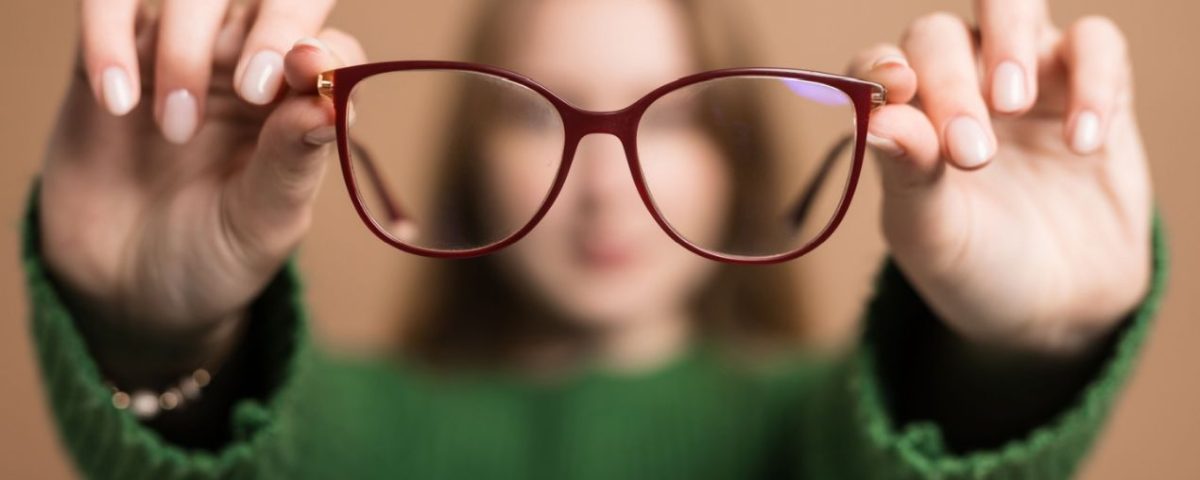
What is meant by blurred vision while wearing glasses?

Blurred vision with glasses refers to a condition in which a person experiences unclear or hazy vision despite wearing prescription glasses that are supposed to correct their eyesight.
This blurriness may appear as difficulty focusing on near or distant objects, double vision, or a feeling that letters and images are not as sharp and crisp as they should be.
Blurred vision while wearing glasses is often caused by an inaccurate eye prescription, incorrect lens power, misalignment of the astigmatism axis, or even poor adjustment of the spectacle frame on the face, which affects the positioning of the lenses in front of the eyes.
In some cases, the problem is not with the glasses themselves, but with the eye. Blurry vision may be related to eye conditions such as dry eye, early cataracts (lens opacification), or elevated intraocular pressure (which may be associated with glaucoma), leading the patient to think the glasses are at fault when the underlying issue is actually ocular.
For this reason, persistent blurred vision while wearing glasses warrants a visit to an ophthalmologist or optometrist to recheck the vision, assess eye health, and ensure that the lenses and their fitting are appropriate.
Causes of Blurry Vision While Wearing Glasses
Inaccurate Prescription or Incorrect Refraction
One of the most common reasons for blurry vision with glasses is an inaccurate prescription or an error during the refraction test.
Even a slight miscalculation in the degree of myopia, hyperopia, or astigmatism can cause blurred vision, headaches, and poor detail resolution, especially when reading or using a smartphone.
In such cases, it’s advisable to see an ophthalmologist or optometrist for a thorough re-examination to ensure that the prescription values truly match the eye’s actual needs.
Error in Measuring Pupillary Distance (PD)
Pupillary distance (PD) is the horizontal distance between the centers of the pupils in both eyes. It is essential for positioning the lenses correctly in front of the eyes.
If the PD is measured incorrectly, you may experience blurred vision, eye strain, or mild dizziness, even if the prescription itself is accurate.
Precisely adjusting this distance helps focus the image at the optical center of the lens, improving visual clarity and reducing discomfort while wearing glasses.
Astigmatism Axis Issues and Progressive Lenses
Astigmatism requires very precise axis alignment in the prescription. Even a small error in the astigmatism axis can cause distorted or blurred vision, particularly at night or when looking at lights.
With progressive (multifocal) lenses, any inaccuracy in defining the viewing zones or in the lens design can lead to blurriness and visual confusion when shifting between near and distance vision.
That’s why it’s important to have the prescription filled at an optical center experienced in toric lenses for astigmatism and in progressive lenses, and to ensure that the lens design fits your lifestyle and visual demands.
Inappropriate Frame Altering Lens Position
Choosing an unsuitable frame can directly cause blurred vision with glasses, even if the prescription is correct.
A frame that is too wide, too tight, or that constantly slips down the nose changes the position of the lenses relative to the eyes, moving the optical centers away from the ideal visual axis.
Selecting a frame that matches your face size and properly adjusting the temple length and nose bridge height help keep the glasses stable, thus maintaining clear vision throughout the day.
Scratches or Damage to Lenses and Coatings
Over time, spectacle lenses may develop scratches or damage to their surface coatings, such as anti-reflective coating or blue-light filter.
These scratches and surface defects scatter light and cause blurred vision, especially when exposed to strong light sources or while driving at night.
Proper lens care, using suitable cleaning solutions, and replacing the glasses when noticeable scratches appear all help restore clarity and improve visual comfort.
Large Difference Between Old and New Glasses
When there is a significant change in prescription between an old pair of glasses and a new one, it’s normal to initially feel some blur or discomfort.
This sudden change in lens power or design means the brain needs time to adapt to the new visual input.
If blurred vision with the new glasses persists after several days of regular use, it’s best to revisit the optometrist to rule out any error in lens power or lens fitting.
Difficulty Adapting to New Lenses
Even with a correct prescription, some people struggle to adapt to new lenses, especially in the case of progressive lenses or when switching lens type.
During the adaptation period, the wearer may notice mild blurring or visual disturbance when moving the eyes or turning the head.
Wearing the new glasses for sufficient hours each day, and avoiding frequent switching back to the old pair, helps the brain gradually adapt and reduces the sensation of blur.
Blurry Vision Caused by Dry Eye
Dry eye is a common cause of blurry vision with glasses, even when the lenses themselves are perfectly accurate.
Insufficient tear production or rapid tear evaporation leads to an irregular corneal surface, resulting in transient blurring, burning or itching sensations, and frequent blinking.
Using lubricating eye drops (artificial tears) and reducing prolonged exposure to air conditioning and digital screens can improve visual clarity while wearing glasses.
Corneal Diseases Causing Blur Despite Glasses
Certain corneal conditions, such as keratoconus or corneal scarring, can distort the corneal surface and cause visual blur even with the correct glasses.
In these situations, standard spectacle lenses do not fully correct the irregularity, and the patient may require specialty rigid contact lenses or other treatments such as corneal cross-linking or surgery, depending on the case.
Persistent blurring with glasses warrants a detailed corneal assessment using specialized imaging to check corneal health and determine the most suitable optical solution.
Retinal Problems or Cataract and Their Impact on Vision
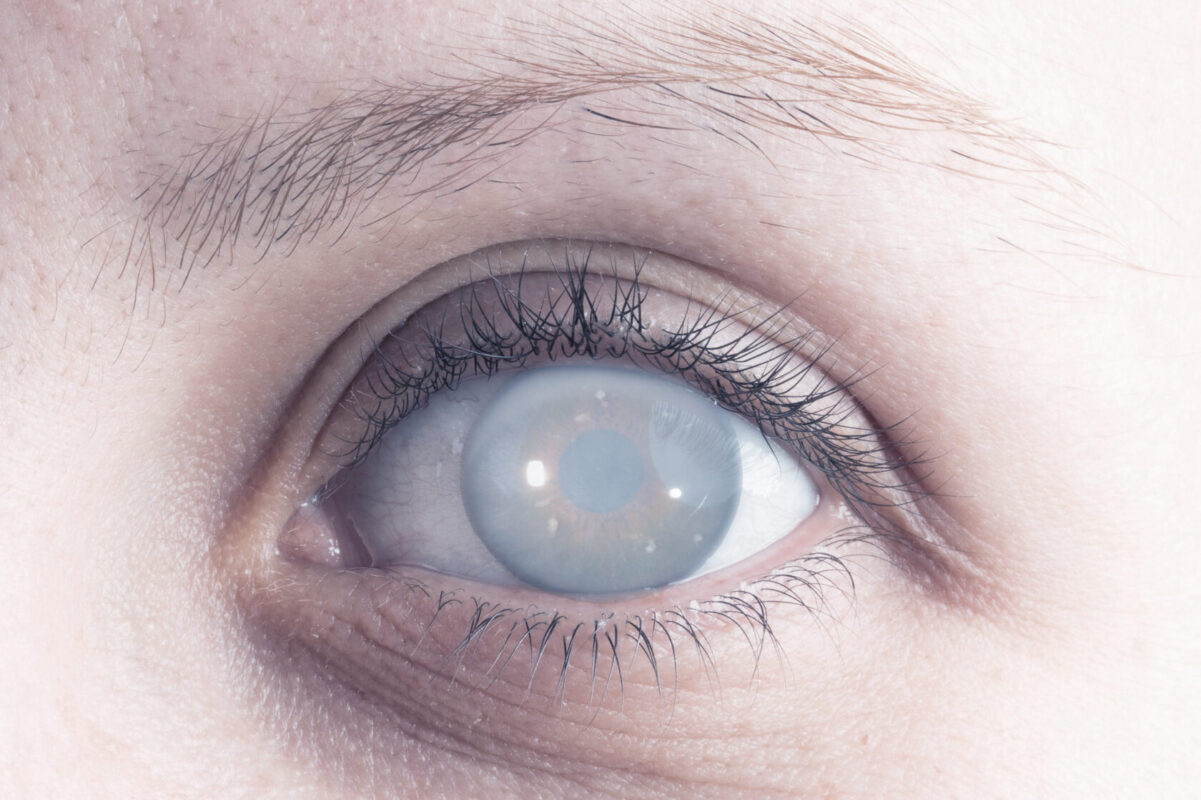
Sometimes, blurred vision with glasses is not related to the lenses or the refraction at all, but to a deeper problem involving the retina or the eye’s internal lens (cataract).
Conditions such as diabetic retinopathy, age-related macular degeneration, or early cataract can cause ongoing haze and blur that does not improve by simply changing glasses.
In these cases, a comprehensive dilated fundus examination and retinal imaging are necessary to identify the underlying cause and plan appropriate treatment, as glasses alone will not be sufficient to restore clear vision.
When Is Blurred Vision Caused by the Cornea?
Keratoconus and Progressive Blurring of Vision
In keratoconus, the blurring of vision originates from the cornea itself. The corneal surface starts to protrude forward in a cone-like shape instead of maintaining its smooth, regular curvature.
This distortion of the corneal shape causes irregular refraction of light, so vision remains blurred through glasses even when the prescription is technically correct.
Patients often notice that their spectacle power changes frequently, and that they never achieve truly sharp vision no matter how often the lenses are adjusted.
Keratoconus may also be associated with monocular double vision (double images in one eye), increased light sensitivity, or seeing halos around lights at night.
If these symptoms persist along with repeated changes in prescription, keratoconus or another corneal problem should be suspected as the source of blurred vision, rather than simple refractive error.
Corneal Thinning and Irregular Corneal Surface
When the cornea becomes thin or its surface irregular, the passage of light into the eye is disrupted, leading to blurred vision even with an apparently suitable pair of glasses.
Corneal thinning may be due to keratoconus, previous eye surgery, or improper use of contact lenses.
Irregularities in the corneal surface can lead to what is known as irregular astigmatism, a form that cannot be fully corrected with standard spectacles.
In such cases, the blur is caused by the cornea itself, and the patient may require rigid (hard) contact lenses or specialized procedures to regularize the corneal surface and improve visual clarity.
If you feel that glasses never give you stable, sharp vision despite repeated changes in prescription, the problem may lie in the shape of the cornea rather than the strength of the lenses.
Corneal Inflammation and Chronic Dry Eye
Superficial corneal inflammation, as well as chronic dry eye, can make the cornea itself the source of visual blur.
When the cornea is inflamed or irritated, its surface smoothness is disturbed, causing light to bend unevenly. This creates blurred vision even with glasses, especially during reading or prolonged screen use.
Chronic dry eye often causes burning, stinging, or a foreign-body sensation in the eye, along with fluctuating vision that sometimes improves after blinking or using lubricating eye drops.
In this situation, the blurring arises from the corneal surface and the tear film covering it, rather than from the spectacle prescription itself.
Treating dryness or inflammation and improving ocular surface hydration can restore clearer vision without the need to change glasses each time symptoms worsen.
Corneal Scars and Surface Changes
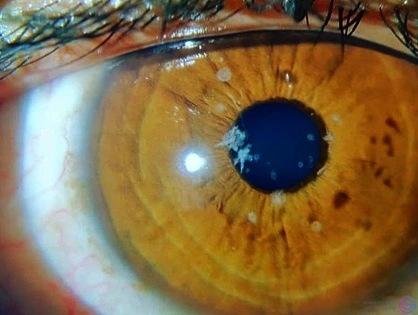
Old corneal scars or abrasions, as well as changes following surgery or trauma, can leave permanent irregularities on the corneal surface.
When a scar is located at or near the center of the cornea, it scatters light instead of allowing it to pass uniformly, resulting in blurred vision through glasses even when the prescription is accurate.
Patients may complain of hazy vision, dark spots, or disabling glare around lights, and notice that changing glasses does not fully resolve the problem.
In such cases, the blurring is due to the scarred cornea itself, and a thorough evaluation by an ophthalmologist is needed to determine treatment options, which may include specialized eye drops, surface laser procedures (such as superficial keratectomy or PRK), or corneal transplantation in advanced cases.
Recognizing the true source of blur helps avoid repeated, unnecessary changes in spectacles that provide little real benefit.
How Do Corneal Problems Affect the Accuracy of Glasses?
When blurred vision is caused by the cornea, an accurate spectacle prescription alone is not enough to achieve clear sight.
Glasses can correct myopia, hyperopia, and regular astigmatism, but they cannot adequately compensate for all types of corneal irregularity, scarring, or severe ocular surface dryness.
As a result, patients may feel that their prescription is constantly changing, or that new glasses never deliver fully sharp vision despite careful refraction.
In such situations, a corneal problem should be considered, and optimizing the corneal surface—by treating disease, improving tear film quality, or smoothing the cornea—should come before finalizing the spectacle power.
If the cornea is suspected to be the cause of blurred vision despite glasses, advanced tests such as corneal topography and tear film assessment are recommended to reach an accurate diagnosis and an appropriate treatment plan.
Examinations that Reveal the Cause of Blurred Vision
Comprehensive Eye Refraction and Visual Acuity Testing
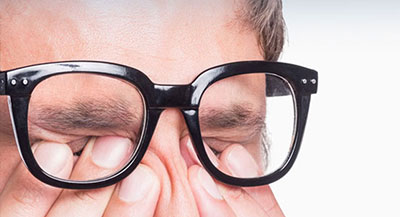
A full eye refraction and visual acuity test is the primary and most essential step when experiencing blurred vision even while wearing glasses.
During these examinations, the optometrist or ophthalmologist accurately measures the degree of myopia, hyperopia, and astigmatism, then compares the current findings with the prescription of your existing glasses.
This assessment helps determine whether your current prescription is inaccurate or has changed over time—a very common cause of blurred vision despite wearing glasses correctly.
Visual acuity testing also evaluates how clearly you see at distance and near, and detects any significant difference in vision between the two eyes that could affect image clarity or lead to headaches and eye strain.
PD Measurement and Lens Axis Alignment
Measuring the interpupillary distance (PD) and precisely determining the lens axis are crucial tests that are often overlooked when investigating the causes of blurred vision with new glasses.
PD ensures that the optical center of each lens is aligned with the center of the pupil; even a minor error in this measurement can result in blurred vision, headaches, and a general feeling of discomfort with the new glasses.
Lens axis alignment is especially important in cases of astigmatism, as a misalignment of just a few degrees from the correct axis can cause visual blur, even if the lens power itself is accurate.
For this reason, optometrists will recheck the PD and lens axis whenever they suspect that the source of blurred vision is not the prescription strength alone, but inaccuracies in lens manufacturing or fitting within the frame.
Corneal Examination and Corneal Topography
Corneal examination and corneal topography are advanced tests that identify causes of blurred vision related to the eye’s surface itself, not just the glasses prescription.
Specialized devices are used to create a detailed map of the cornea’s curvature and thickness, helping to detect conditions such as keratoconus, irregular corneal surfaces, or changes related to previous surgeries or long-term contact lens wear.
These problems may limit how much regular glasses can improve vision, because the underlying issue lies in the shape of the cornea rather than lens power alone.
Therefore, ophthalmologists resort to corneal examination and topography when a patient complains of blurred vision with glasses even though all routine measurements appear to be within normal limits.
Dry Eye Evaluation
Dry eye disease is a hidden but common cause of blurred vision with glasses, which is why dry eye testing is an important part of investigating persistent visual haze.
The doctor assesses the quality and quantity of the tear film, how long it remains stable on the eye’s surface, and examines the tear glands and eyelid margins.
When dry eye is present, the tear film over the cornea becomes unstable, causing the image to fluctuate and vision clarity to vary throughout the day. Patients often assume the problem lies in the glasses, while the real issue is the dry ocular surface.
Treating dry eye with lubricating eye drops or more targeted therapies often leads to a noticeable improvement in visual clarity, even without changing the glasses.
Retinal Imaging and Intraocular Pressure Measurement
Retinal imaging and intraocular pressure (IOP) measurement are fundamental tests when blurred vision persists with glasses and no obvious cause is found in the basic refraction and fitting.
Retinal imaging allows the doctor to examine the optic nerve, blood vessels, and the inner retinal layers, helping to detect conditions such as diabetic retinopathy, vascular occlusions, or early optic neuropathies.
Intraocular pressure testing is performed to rule out glaucoma and other conditions that may cause gradual, progressive deterioration of vision which cannot be corrected by simply changing the glasses.
These advanced investigations are particularly important in patients with sudden or worsening visual blur, or those with chronic systemic diseases such as diabetes and hypertension, to ensure that the issue is not limited to the glasses prescription but involves the overall health of the eye.
Best Eye Doctor for Blurred Vision in Jeddah – Dr. Bara’a Fahham
Dr. Bara’a Fahham is considered one of the leading ophthalmologists in Jeddah for treating blurred vision while wearing glasses. He combines precise clinical expertise with state-of-the-art diagnostic equipment to identify the real cause of visual blur, even when the patient is already using prescription eyewear.
Dr. Bara’a relies on advanced tests to assess visual acuity and refractive error, as well as detailed evaluation of the cornea, retina, and intraocular pressure. This helps him distinguish between simple issues related to the glasses prescription and deeper problems such as uncorrected astigmatism, dry eye disease, corneal weakness (ectasia), or early retinal disorders.
Thanks to this meticulous approach, he can accurately adjust the glasses prescription or recommend alternatives such as medical contact lenses or targeted treatments for the cornea and dry eye. This contributes to safely restoring clear vision and reducing headaches and eye strain associated with blurred vision despite wearing glasses.
If you are searching for the best doctor to treat blurred vision in Jeddah and feel that your glasses are not giving you comfortable sight, a visit to Dr. Bara’a Fahham’s clinic will provide you with a comprehensive evaluation and a personalized treatment plan based on sound, evidence-based medical standards.
Book Your Appointment Now at Batal Specialized Eye Center
If you’re experiencing blurred vision even while wearing your glasses and feel that your eyesight is no longer as clear as it used to be, you can now easily book an appointment at Batal Specialized Eye Center for a thorough and accurate assessment of your visual condition.
The center brings together a distinguished team of ophthalmologists and consultants specialized in refractive errors and blurred vision with glasses. They use state‑of‑the‑art diagnostic equipment to examine visual acuity, measure degrees of astigmatism, and detect any retinal or corneal diseases that may be causing reduced vision despite wearing prescription glasses.
By scheduling a comprehensive eye examination, you will receive an updated eyeglass prescription or suitable alternatives such as medical contact lenses or laser vision correction procedures (if appropriate for your case).
Book your eye examination appointment now at Batal Specialized Eye Center via phone or online booking, and regain clear vision safely under trusted medical supervision.