
Med info
Intraocular lens implantation: When is it better than laser?


When Are Implantable Lenses a Better Option Than Laser Vision Correction?
High myopia: when lens implantation outperforms laser correction
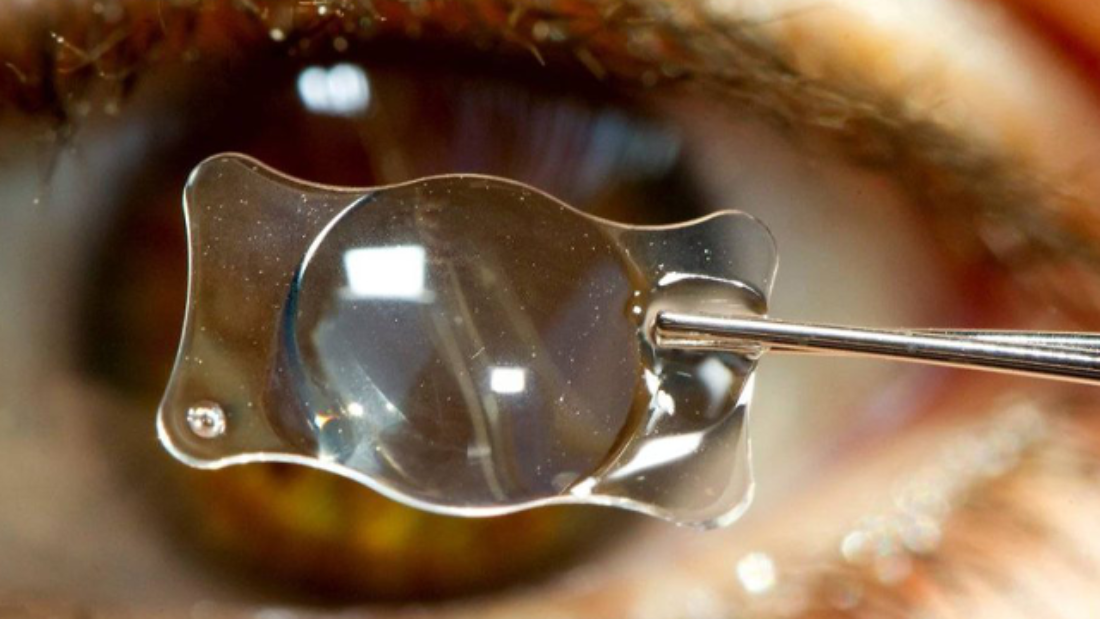
In cases of high myopia, especially when the refractive error exceeds the safe limits for laser vision correction, intraocular lens implantation becomes a safer and more accurate option than laser procedures.
Laser surgery works by reshaping and thinning the cornea, whereas implantable lenses can provide excellent visual acuity without weakening the corneal structure or removing any of its layers.
In such cases, the risk of complications such as corneal ectasia or deterioration of night vision is generally lower with lens implantation compared to laser procedures. In addition, implantable lenses can correct higher degrees of myopia than those typically manageable with laser treatment in the first place.
When corneal thickness is not suitable for LASIK
During preoperative assessment for vision correction, it may be found that the cornea is too thin to safely perform LASIK or femto-LASIK.
In this situation, intraocular lens implantation is often preferable to laser surgery, because it does not require removal of corneal tissue and does not alter corneal thickness.
This preserves the structural integrity of the eye while still achieving clear vision, particularly in patients with thin corneas or those who are at borderline risk for post‑LASIK corneal ectasia.
Patients with severe dry eye or unstable corneal surface
Laser vision correction techniques can exacerbate dry eye symptoms, as they involve creating a corneal flap and can affect the corneal nerves that supply the ocular surface.
For patients with significant dry eye disease or an unstable corneal surface, intraocular lens implantation is usually a better option than laser procedures, because it does not directly alter the corneal surface and does not aggravate dryness to the same extent.
In this way, vision can be improved while minimizing the risk of worsening burning, redness, and discomfort associated with dry eye.
Preference for a reversible or removable procedure in the future
One of the key advantages of implantable intraocular lenses is that the procedure is reversible: the lens can be removed or exchanged if the patient’s refractive status changes over time or if new visual needs arise.
For this reason, lens implantation is often a better choice than laser surgery for individuals who prefer a flexible, non‑permanent solution, or for those who are uncomfortable with permanent corneal alterations that cannot be undone.
The ability to adjust or remove the lens later offers patients greater peace of mind compared to laser procedures, which permanently remove part of the corneal tissue.
High astigmatism or complex corneal curvature
In cases of high astigmatism or irregular, complex corneal curvature, laser correction may not deliver the desired outcomes and can potentially increase visual distortions such as glare and halos at night.
Here, intraocular lens implantation—particularly with toric lenses designed specifically to correct astigmatism—can offer a more precise and stable solution than laser surgery.
This makes lens implantation a superior option for patients with significant astigmatism or irregular corneal shapes, while maintaining good quality of vision and reducing the risk of complications related to the corneal surface.
Patient Selection Criteria: Who Is the Best Candidate for Each Procedure?
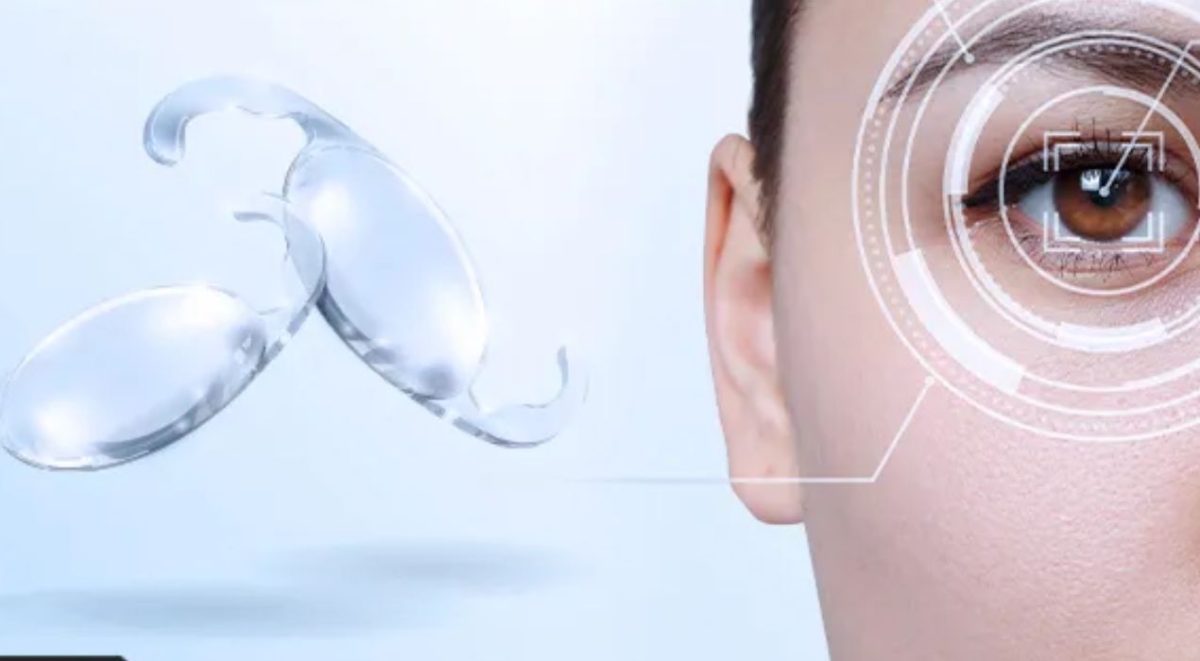
Defining clear patient selection criteria for intraocular lens implantation is crucial to ensure surgical success and achieve the best possible visual acuity.
In general, the ideal candidate for phakic intraocular lens (IOL) implantation is someone with moderate to high degrees of myopia, hyperopia, or astigmatism who does not achieve comfortable or stable vision with conventional glasses or contact lenses.
The patient is usually required to be older than 18–21 years, with a stable refraction for at least one year. In addition, the cornea should have normal thickness and shape, and the eye must be free from active diseases such as infections, advanced cataract, or uncontrolled glaucoma.
The retina and optic nerve are carefully evaluated, especially in cases of high myopia, to rule out any underlying pathology that could limit visual improvement after IOL implantation.
The ophthalmologist will also take into account the patient’s lifestyle and expectations from the procedure—such as the desire to reduce dependence on glasses for daily activities or sports—to ensure that the selected lens type matches the patient’s long-term visual needs.
Ultimately, the decision to proceed with intraocular lens implantation is based on a comprehensive examination that includes precise refractive measurements, assessment of anterior chamber depth, and pupil size, along with a thorough explanation of the benefits and potential risks of the procedure before moving forward.
Comparative Visual Outcomes of Phakic IOL Implantation and Laser Vision Correction in Line with the Study Objective
Visual outcomes differ between phakic intraocular lens (IOL) implantation and laser vision correction techniques depending on ocular status and the degree of refractive error. However, evidence suggests that phakic IOLs often provide sharper and more stable vision, particularly in cases of high myopia or hyperopia where laser correction cannot be performed safely or effectively.
In laser procedures such as LASIK and Femto-LASIK, correction is achieved by reshaping the cornea. This inherently limits the amount of correction possible in eyes with thin corneas or high refractive errors/astigmatism. In contrast, phakic IOL implantation involves inserting a thin, precisely calculated lens inside the eye without removing the natural crystalline lens. This preserves corneal thickness and, in many cases, offers the potential to achieve visual acuity close to 6/6 (20/20).
Visual outcomes after phakic IOL implantation tend to be highly stable, with a high level of patient satisfaction. Moreover, the lens can be removed or exchanged if refractive status changes over time or if a new medical indication arises. Laser vision correction, on the other hand, is essentially irreversible and cannot be easily undone once the corneal tissue has been ablated.
Ultimately, the choice between phakic IOL implantation and laser vision correction is individualized. It requires a comprehensive eye examination, including corneal thickness assessment and precise measurement of the refractive error, alongside a detailed discussion with the ophthalmologist about the expected visual outcomes of each option. This should be aligned with the patient’s lifestyle, visual demands, and intention to achieve the best possible quality of vision.
Cost Differences Between Lens Implants and Laser Vision Correction (for research purposes)
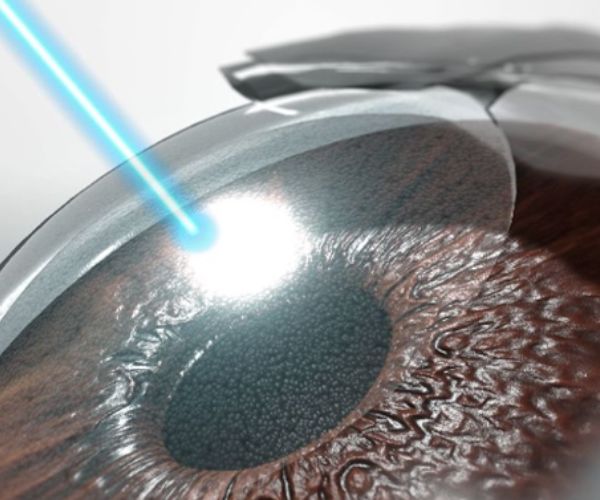
When comparing the cost of phakic intraocular lens (IOL) implantation with laser vision correction, lens implantation is generally more expensive. This is because the procedure includes the price of the lens itself (which may be a premium or custom-made lens), in addition to the surgeon’s fee, operating room charges, and detailed pre‑ and post‑operative assessments.
In contrast, laser procedures such as LASIK and femto‑LASIK tend to be relatively cheaper, as the technology reshapes the cornea without inserting a foreign body into the eye, which lowers material-related costs.
However, laser procedures can become more costly in advanced centers or when using state-of-the-art technologies such as topography‑guided or wavefront‑guided treatments.
In general, ophthalmologists resort to lens implantation in cases that are not suitable for laser correction, such as very high myopia or thin corneas. It is therefore essential for patients to weigh the overall cost against long‑term benefits and safety, and to consult a qualified ophthalmologist to choose a treatment plan that fits both their clinical condition and budget.
The Best Intraocular Lens Implant Specialist in Jeddah – Dr. Baraa Fahham
Dr. Baraa Fahham is widely regarded as one of the leading specialists in intraocular lens implantation in Jeddah. He combines solid academic and clinical expertise in ophthalmic surgery with the use of the latest techniques for implanting intraocular lenses to treat high myopia, hyperopia, astigmatism, and cataracts.
Dr. Fahham is committed to conducting a comprehensive assessment of each patient’s eyes before deciding on lens implantation, carefully selecting the most suitable lens type for every case to achieve clearer vision and minimize dependence on glasses or contact lenses as much as possible.
He also places great emphasis on explaining the procedure steps, possible risks, and expected outcomes, in addition to providing close, structured follow‑up after surgery to ensure maximum safety and success. This has made him a trusted reference for patients seeking lens implantation in Jeddah, with reliable results and a comfortable treatment experience.
Book Your Consultation for Intraocular Lens Implantation at Batal Eye Specialty Center
Schedule your consultation now for intraocular lens (IOL) implantation at Batal Eye Specialty Center to accurately determine the most suitable option to correct your vision without relying permanently on glasses or contact lenses.
During the initial consultation, the ophthalmologist will perform a comprehensive eye examination, including assessment of your refractive error, corneal thickness measurement, intraocular pressure check, and evaluation of your overall medical suitability for intraocular lens implantation with the highest safety standards.
At Batal Eye Specialty Center, the medical team uses state-of-the-art diagnostic technologies to determine the lens type that best fits your condition—whether you have myopia, hyperopia, or astigmatism—while clearly and transparently explaining the expected outcomes, as well as the potential risks and benefits of the procedure.
This consultation helps you make an informed decision about IOL implantation, understand the total cost, review the postoperative follow‑up plan, and choose appointment times that fit your daily schedule.
You can easily book your intraocular lens implantation consultation by calling the center or filling out the online booking form, after which our team will promptly contact you to confirm your appointment with one of our specialized consultant ophthalmologists.