
Med info
Keratoconus Symptoms: A Comprehensive Guide to Early Signs and Treatment Options (2026)

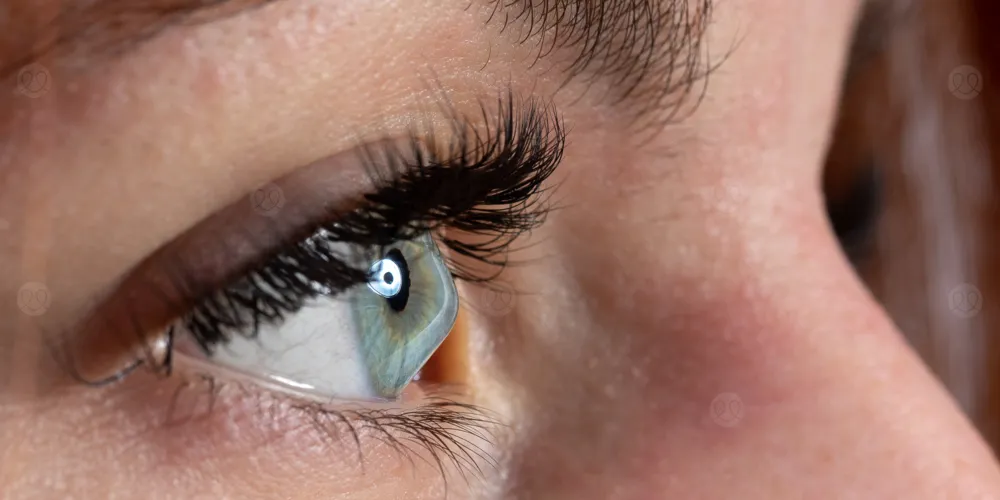
What is keratoconus, and why do its symptoms appear gradually?

Keratoconus is a progressive eye condition that affects the cornea—the clear, front surface of the eye responsible for focusing light onto the retina. In this condition, the cornea gradually becomes thinner and bulges outward, changing from its normal rounded dome shape to a cone-like shape.
This distortion of the corneal surface disrupts the way light enters the eye, leading to blurred vision, distorted images, irregular astigmatism, and progressive short‑sightedness (myopia).
The symptoms of keratoconus tend to develop slowly because corneal thinning and changes in curvature usually occur over several years rather than suddenly. Early on, many patients simply notice that their glasses or contact lens prescription needs to be changed more frequently, particularly during the teenage years and early twenties.
As keratoconus progresses, the symptoms become more pronounced, such as visual distortion of objects, difficulty seeing at night, and marked sensitivity to light (photophobia). This is why many people only discover they have keratoconus after noticing a persistent decline in vision despite multiple changes in their glasses prescription.
Understanding the nature of keratoconus and why its symptoms emerge gradually is key to early diagnosis and seeking prompt evaluation by an eye specialist before the condition advances to more complex stages.
Early Symptoms of Keratoconus (When Do They Start?)
Mild Blurring of Vision
Mild blurring of vision is one of the earliest and most important signs of early keratoconus, and it often starts during adolescence or in the early twenties.
Patients may notice that straight lines are not sharply defined, or that letters in print appear faint or slightly doubled, even when wearing the correct prescription glasses.
This blurring is not constant; it may worsen with fatigue or toward the end of the day, and some people may mistake it for simple eye strain.
However, if blurred vision persists or recurs noticeably—especially in someone with a family history of corneal disease—it is important to see an ophthalmologist for early screening for keratoconus before it progresses and causes more significant loss of visual acuity.
Frequent Changes in Glasses Prescription
A hallmark early sign of keratoconus is the need to change glasses frequently over relatively short intervals.
A patient may notice that their prescription changes every few months, or that glasses which previously provided clear vision suddenly seem inadequate.
This happens because the shape of the cornea gradually becomes more conical in early keratoconus, leading to rapid shifts in myopia (short-sightedness) and astigmatism compared with the usual gradual changes.
If your eye doctor tells you that your refraction is changing unusually fast, or you find yourself needing more than one new prescription in a year, this can be an early warning sign that warrants detailed corneal assessment to look for early keratoconus.
Light Sensitivity (Photophobia)
Light sensitivity, or feeling dazzled by bright lights, is a common early symptom of keratoconus and often appears alongside mild visual blurring.
Patients may feel discomfort in bright sunlight, or when exposed to car headlights or bright digital screens, and may find themselves squinting or seeking shade.
In the early stages of keratoconus, light sensitivity can be intermittent, but it tends to worsen as the cornea becomes more protruded and its surface more irregular.
Therefore, if light sensitivity occurs together with changing spectacle prescriptions or blurry vision, it should not be ignored, and an ophthalmologist should be consulted to examine the cornea and rule out early keratoconus.
Difficulty with Night Vision
Difficulty seeing at night is another early sign that may indicate the onset of keratoconus, even if daytime vision still seems relatively acceptable.
Patients may find it hard to drive at night, or they may see halos and starbursts around car headlights and streetlights, which can make them feel anxious or less confident moving around in low-light conditions.
This problem is related to early irregularities in the corneal surface, which cause light to scatter inside the eye and make lights appear smeared or distorted.
If night vision problems begin to appear together with other symptoms such as mild blurring of vision or frequent changes in glasses prescription, this may be an early warning sign that requires a specialist examination to detect keratoconus at an early stage.
Advanced Keratoconus Symptoms (When Should You Be Concerned?)
Monocular double vision
When keratoconus reaches an advanced stage, patients may start noticing double vision in one eye, even when the other eye is closed.
This type of double vision does not improve with changing prescription glasses, and usually indicates that the cornea has become significantly more conical and irregular, to the point that it prevents light from focusing properly on the retina.
The appearance of double vision in one eye is one of the most worrying signs of advanced keratoconus, as it may reflect an urgent need for prompt assessment by an ophthalmologist to plan appropriate management before permanent visual deterioration occurs.
Distortion of shapes
In advanced keratoconus, patients often notice that objects appear distorted, stretched, or tilted, especially when looking at straight lines or reading text.
This distortion results from the increasingly irregular corneal surface and the progression of astigmatism, which causes the image formed on the retina to become blurred and uneven.
When this distortion becomes constant and interferes with daily life – such as difficulty reading road signs or recognizing faces from a relatively short distance – it is a clear sign that keratoconus has entered a more serious stage that requires specialist medical intervention.
Halos around lights
Seeing colored or scattered halos around light sources, particularly at night, is a common symptom of keratoconus, but it becomes more pronounced and troublesome in advanced stages.
As corneal steepening and irregularity increase, light is scattered instead of being focused into a sharp point. The patient then perceives lights as being surrounded by halos or radiating streaks, making night driving or walking along brightly lit streets difficult and sometimes hazardous.
If you notice that halos around lights are becoming more obvious, accompanied by poor night vision and discomfort despite wearing glasses, this suggests that keratoconus is progressing to a stage that warrants urgent evaluation by an eye specialist.
Marked visual impairment
Severe visual impairment that does not improve with glasses or soft contact lenses is a key feature of advanced keratoconus.
At this point, the cornea has thinned further and become more steeply curved, leading to a marked drop in visual acuity and difficulty performing everyday tasks such as reading, using a mobile phone, or working on a computer.
When visual loss reaches a level that clearly affects quality of life and the ability to carry out routine activities, this indicates that keratoconus has become highly concerning. It may be time to discuss more advanced treatment options such as corneal collagen cross-linking, rigid (hard) contact lenses, or even corneal transplantation, depending on the ophthalmologist’s assessment.
How do symptoms differ in children, teenagers, and adults?

Keratoconus symptoms vary with age, which affects how quickly the condition is diagnosed and how it is managed.
In children, keratoconus is often more aggressive and progresses rapidly. Parents may notice that the child sits very close to the TV or books, experiences a sudden drop in vision, needs frequent changes in eyeglass prescription, and complains of headaches or constantly rubs their eyes because of blurred vision.
During adolescence, symptoms usually become more apparent, such as blurred or distorted vision, difficulty seeing the board at school or distant screens, poor clarity of details especially at night, and repeated changes in glasses or contact lenses due to increasing astigmatism.
In adults, keratoconus symptoms tend to be relatively more stable but still troublesome. They may include persistent blurred vision, marked sensitivity to light and glare, especially when driving at night, ghosting or double images around objects, and poor visual comfort with standard eyeglasses.
Recognizing these age-related differences in keratoconus symptoms helps raise early suspicion of the disease and prompts timely referral to an ophthalmologist, reducing the risk of vision deterioration and progression to advanced stages that require more complex treatments.
How does a patient notice the symptoms in daily life?
Patients often first become aware of keratoconus through everyday situations, such as struggling to read road signs while driving at night, or noticing blurred or double vision when looking at a phone or computer screen.
They may also realize that their glasses no longer provide the same clarity as before, or that their prescription is changing rapidly and needs to be updated frequently over short periods of time.
Another common sign is seeing intense halos or glare around lights, along with bothersome sensitivity to bright light, making it uncomfortable to go out in daylight or sit under strong indoor lighting.
Some patients find themselves moving very close to the TV or reading materials, or tilting their head into certain positions to see more clearly, often without consciously realizing it.
Noticing these recurring changes in vision—especially during the teenage years and early adulthood—can be an important warning sign of early keratoconus and should prompt an early visit to an ophthalmologist.
The Difference Between Keratoconus Symptoms and Simple Refractive Errors
The key difference between keratoconus symptoms and those of ordinary refractive errors lies in how blurred vision appears and how it progresses over time.
In common refractive errors (such as myopia, hyperopia, or mild astigmatism), visual blur is usually stable and can be corrected easily with glasses or contact lenses, and the prescription typically does not change rapidly.
With keratoconus, however, the visual disturbances are more complex. Patients may experience monocular double vision (double images in one eye), multiple streaks or ghost images around lights, and persistent blurring that does not improve satisfactorily even after changing their glasses more than once in a relatively short period.
Patients with keratoconus also often complain of marked light sensitivity (photophobia), bothersome glare at night, headaches, and rapid eye strain when focusing. These features suggest that the issue goes beyond a simple refractive error and may indicate keratoconus, which requires thorough evaluation by an ophthalmologist using specialized corneal imaging and diagnostic tests.
Recognizing these distinctions early helps differentiate keratoconus from simple refractive errors and allows timely intervention before vision deteriorates further.
When should you see an eye doctor immediately?
If keratoconus is suspected, you should consult an ophthalmologist without delay if you notice a rapid deterioration in your vision, sudden blurring, or a clear difficulty seeing at night that does not improve with changing your glasses prescription.
Warning signs that also require urgent assessment include seeing halos around lights, double vision in one eye, or needing frequent changes in your glasses or contact lens prescription.
Seeking prompt medical attention becomes even more critical if you experience severe eye pain, marked redness, pronounced sensitivity to light (photophobia), or a persistent sensation of a foreign body in the eye. These symptoms may indicate progression of keratoconus or serious complications such as corneal ulceration or significant corneal thinning.
Early detection and accurate diagnosis of keratoconus by a specialist ophthalmologist help slow disease progression, preserve visual acuity, and allow selection of the most appropriate treatment before the condition advances to the stage where corneal transplantation is required.
Best Keratoconus Specialist in Jeddah – Optimized for Search Intent

Dr. Bara’a Fahham – Consultant Corneal Surgeon
Dr. Bara’a Fahham is regarded as one of the leading specialists patients seek out when looking for the best doctor for keratoconus treatment in Jeddah, thanks to his extensive experience in the precise diagnosis and management of corneal diseases.
With his subspecialty in corneal treatment and surgery, Dr. Fahham manages all stages of keratoconus: from early, mild cases that present mainly with slight visual blurring, to advanced disease that may require sophisticated surgical interventions such as corneal collagen cross-linking, intracorneal ring segment implantation, or corneal transplantation.
His treatment approach is built around the early detection of keratoconus signs, such as progressive astigmatism, blurred vision, and frequent changes in eyeglass prescriptions. This enables him to develop an individualized treatment plan tailored to each patient’s condition.
Dr. Fahham relies on advanced diagnostic technologies for corneal topography and pachymetry, allowing for an accurate assessment of corneal shape and thickness. This is key to selecting the most appropriate treatment and is exactly what patients look for when searching for the best keratoconus specialist in Jeddah, to ensure safe and stable long‑term outcomes.
If you are experiencing any symptoms suggestive of keratoconus—such as marked light sensitivity, poor vision despite glasses or contact lenses, or frequent prescription changes—consulting a fellowship‑trained corneal specialist like Dr. Bara’a Fahham can provide an opportunity for early diagnosis and help prevent disease progression.
Book Your Keratoconus Screening at Batal Eye Specialty Center
If you’re experiencing blurred vision, uncomfortable light sensitivity, or frequent changes in your glasses or contact lens prescription, these may be signs of keratoconus and require a thorough evaluation by an eye specialist.
At Batal Eye Specialty Center, we offer advanced keratoconus screening using the latest corneal topography and tomography systems to accurately assess corneal curvature and irregularities, enabling early and precise diagnosis.
Scheduling a keratoconus assessment helps in early detection of the condition and in designing an appropriate treatment plan, such as corneal collagen cross-linking or customized rigid (RGP) / specialty contact lenses, which can slow disease progression and preserve visual quality.
Book your appointment now at Batal Eye Specialty Center for a comprehensive corneal examination and full keratoconus evaluation under the care of consultants specialized in corneal diseases and refractive surgery.