
Med info
Adult Amblyopia Treatment: Can Vision Improve After Childhood?

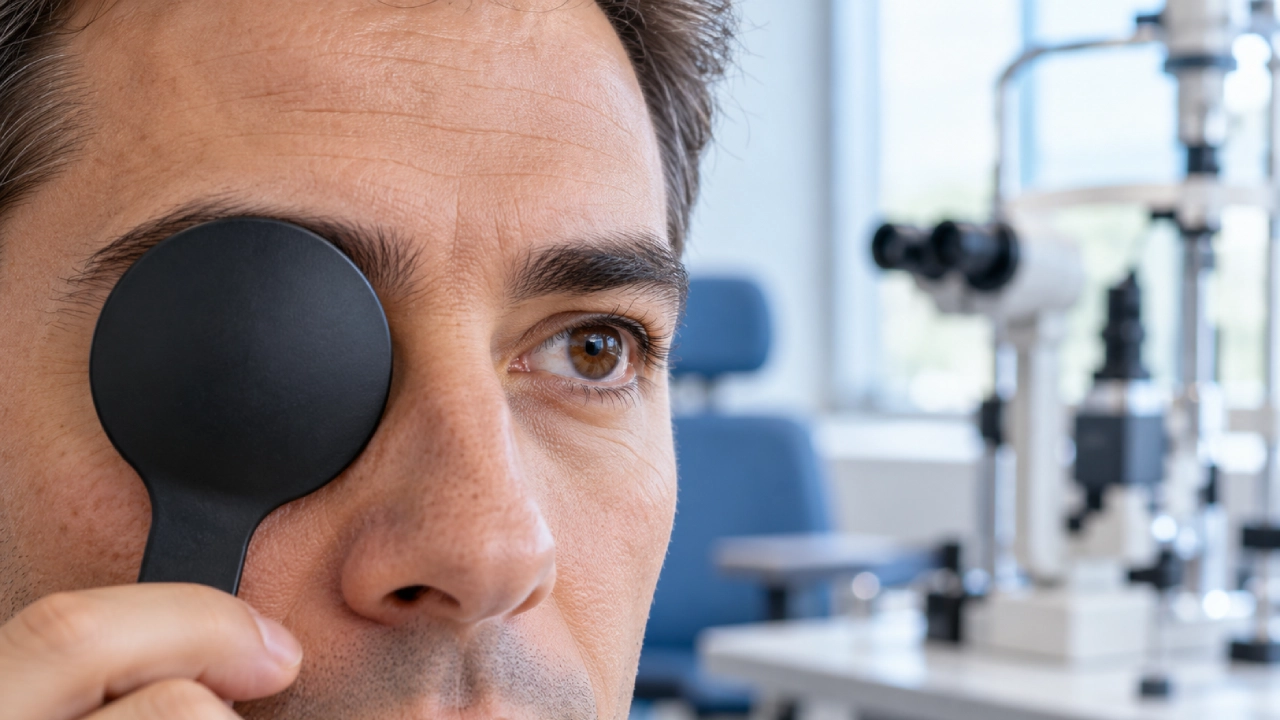
Some adults with amblyopia may experience improvements in vision, although responses vary and treatment is generally less effective than during childhood. Adult amblyopia treatment begins with confirming the diagnosis, correcting refractive errors, and ruling out other causes of reduced vision. Suitable options can then be discussed without promising a complete recovery.
If you were previously told that you have a lazy eye, or have recently discovered that one eye sees less clearly than the other, the first step is to establish the cause and determine the best vision achievable with appropriate correction.
Can Amblyopia Be Treated in Adults?
Improvement may be possible after childhood, but improving certain visual functions is different from restoring normal vision completely. Age alone does not determine the likely outcome. The clinician also needs to consider the severity and cause of amblyopia, your current optical correction, and previous treatments.
Research suggests that some adults can improve with specific interventions. However, results do not apply equally to every patient or treatment programme. It is therefore inappropriate to say that treatment becomes impossible at a particular age—or that it will work for every adult.

What Is Amblyopia, and Can It Develop Suddenly in Adulthood?
Amblyopia, commonly called lazy eye, is a condition that begins while vision is developing in childhood. Vision does not develop normally in one or both eyes. It may be associated with strabismus, a significant difference in refractive error between the eyes, or an obstruction to clear vision during early childhood. It can persist into adulthood or remain undetected until then.
Amblyopia does not mean that the eye muscles are weak. Strabismus refers to eye misalignment, whereas amblyopia affects visual development. Either condition can exist without the other.
A refractive error, such as short-sightedness, may cause blurred vision that improves with suitable glasses or contact lenses. With amblyopia, some reduction in vision may remain despite the best optical correction.
New or sudden vision loss should not be attributed to amblyopia without an examination, even if you already have a longstanding diagnosis.
How Is Amblyopia Diagnosed in Adults Before Treatment?
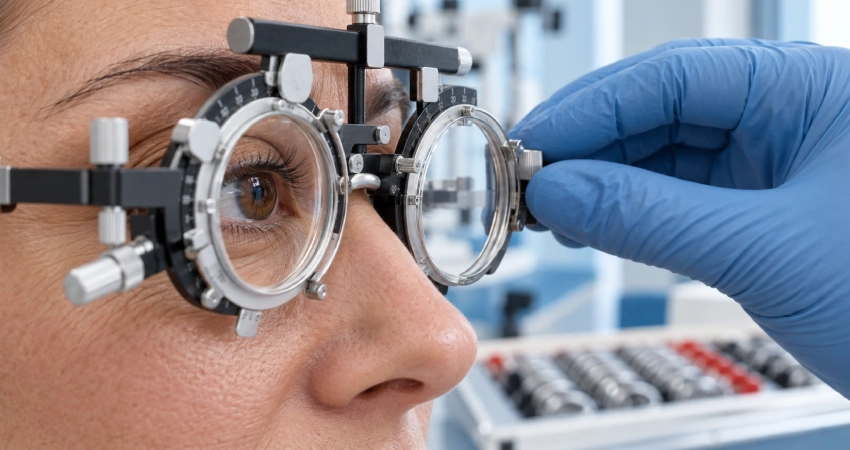
The clinician will ask about your vision since childhood, any history of strabismus, previous glasses or patching, and recent changes in sight. Visual acuity is measured separately in each eye, followed by an assessment of the best vision achievable with appropriate refractive correction.
The examination may also assess eye alignment, eye movements, and how the eyes work together. The cornea, lens, retina, and optic nerve are examined to rule out other explanations for reduced vision. Additional tests depend on the findings rather than following the same routine for every patient.
A comprehensive eye examination helps establish whether amblyopia alone explains the reduced vision or whether another condition also needs treatment.
What Are the Treatment Options for Adult Amblyopia?
Glasses or Contact Lenses
Appropriate optical correction is an essential starting point. An outdated or inaccurate prescription may account for part of the blurred vision.
However, clearer vision after updating your glasses does not necessarily mean that amblyopia has resolved. Equally, some remaining visual impairment does not make wearing the correct prescription pointless.
Can Eye Patching Help Adults?
Patching reduces reliance on the stronger eye and encourages use of the weaker eye. The strongest evidence supporting this approach comes from treatment in children. Its use in adults requires individual assessment and professional monitoring.
Do not start patching independently or follow a schedule prescribed for a child. Never cover one eye while driving or performing tasks that require safe vision and accurate distance judgement.
Vision Training and Perceptual Learning
Some training programmes target specific skills, such as recognising fine detail or detecting contrast. Research has reported improvements in certain aspects of vision in some adults, but this does not make general online eye exercises a proven treatment for everyone.
Pencil exercises and Brock string activities may be used for particular eye coordination problems. They should not automatically be treated as equivalent to amblyopia therapy.
Binocular Treatment, Apps, and Virtual Reality
Some programmes present different visual content to each eye to encourage both eyes to participate in seeing. Their results vary, and evidence supporting one programme does not establish that all apps or virtual reality systems are effective.
For example, one randomised trial found that the specific therapeutic video game it tested did not outperform the comparison game. Each programme therefore needs to be considered according to its evidence and suitability for the individual patient.
| Option | Intended purpose | Main limitation in adults |
|---|---|---|
| Glasses or contact lenses | Correct refractive error | Amblyopia-related visual impairment may remain |
| Patching | Encourage use of the weaker eye | Requires individual selection and monitoring |
| Perceptual learning | Improve specific visual skills | Benefits vary and may not extend to every visual function |
| Binocular treatment | Encourage participation of both eyes | Evidence differs between programmes and patient groups |
Can Strabismus Surgery or LASIK Treat Amblyopia?
Strabismus surgery aims to improve eye alignment. Depending on the condition, it may offer functional or appearance-related benefits, but it does not automatically eliminate amblyopia or restore normal visual acuity.
LASIK corrects refractive errors in suitable candidates. It is not a direct treatment for amblyopia and cannot guarantee vision beyond the best level achievable with optical correction.
Surgery should therefore be discussed in relation to the specific problem it is intended to address, rather than simply because one eye sees less clearly than the other.
How Much Improvement Is Possible, and How Long Does Treatment Take?
There is no single success rate or treatment duration that applies to all adults. Expected improvement depends on the diagnosis, severity of visual impairment, appropriate correction, previous treatment, and response during follow-up.
Progress is assessed using visual tests rather than subjective impressions alone. Better performance on an eye chart does not necessarily mean a similar improvement in depth perception or binocular vision.
It is important to agree on measurable goals with your clinician and review whether the treatment plan remains useful as it progresses.
When Should Reduced Vision Not Be Dismissed as Lazy Eye?
Seek medical assessment for new or progressively worsening vision, new double vision, or recently developed eye misalignment.
Sudden vision loss, severe eye pain, new flashes or a sudden increase in floaters, or a curtain-like shadow across your vision require urgent care.
Longstanding amblyopia does not prevent other eye conditions from developing and should never be used as a reason to delay assessment of emergency symptoms.
Adult Amblyopia Assessment with Dr. Ahmad Hassan Batal
Dr. Ahmad Hassan Batal is a consultant in paediatric ophthalmology and strabismus. According to his official profile, his clinical work includes strabismus surgery for both children and adults.
A specialist assessment helps distinguish amblyopia from strabismus and other causes of reduced vision, allowing suitable options and realistic expectations to be discussed. Bring your current glasses and any previous examination reports or treatment records, if available.
Begin Your Amblyopia Assessment at Batal Specialist Eye Center in Jeddah
Understand the options available for your condition and what treatment may realistically achieve. Dr. Ahmad Batal can assess your vision, investigate the reasons for reduced sight, and discuss the potential for improvement based on the examination findings. Book your consultation at Batal Specialist Eye Center in Jeddah and take the first step towards personalised eye care.