
Med info
Ocular Hypertension vs Glaucoma: Does High Eye Pressure Mean Glaucoma?

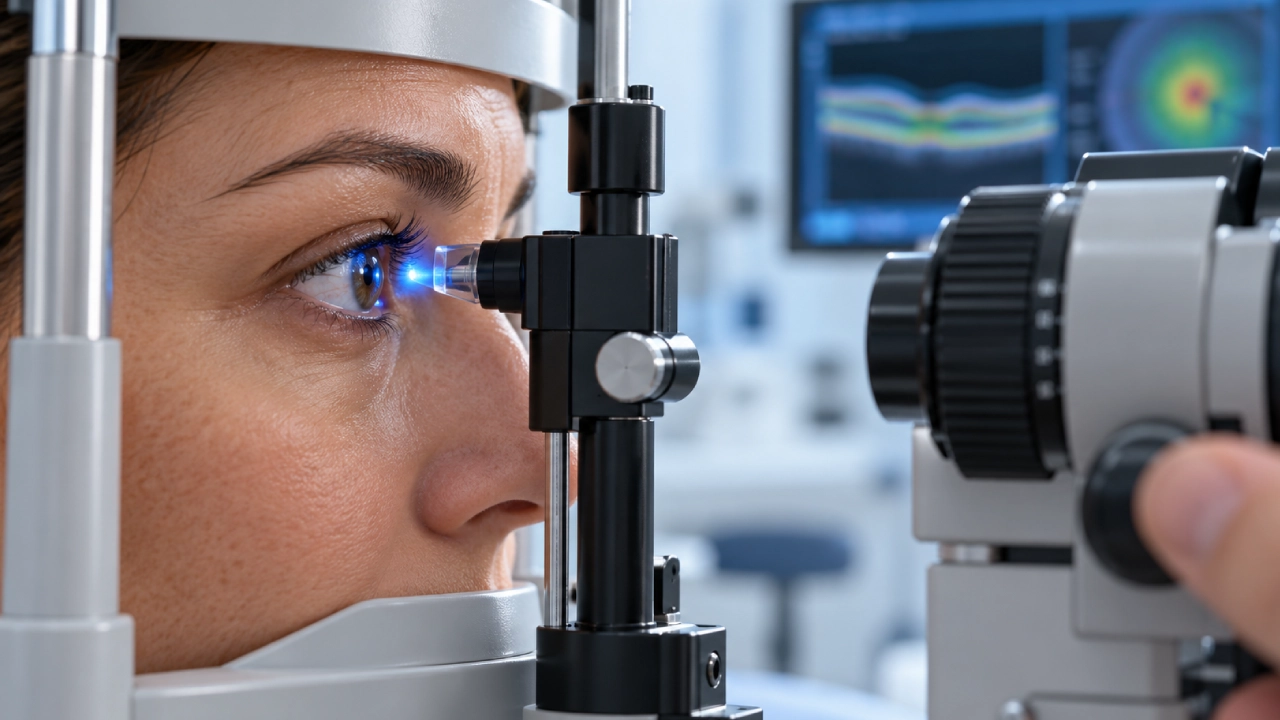
The key difference between ocular hypertension and glaucoma is the presence of characteristic optic nerve damage. Eye pressure can be elevated without detectable glaucomatous damage, while glaucoma can develop even when pressure readings fall within the usual range. Measuring eye pressure alone is therefore not enough to establish a diagnosis.
If an examination reveals high eye pressure, it does not automatically mean you have glaucoma. Equally, a normal pressure reading does not rule out the condition when other findings suggest optic nerve damage.
What Is the Difference Between Ocular Hypertension and Glaucoma?
Intraocular pressure is the pressure inside the eye. It is influenced by the balance between the production and drainage of aqueous humour, the fluid in the front part of the eye.
Ocular hypertension describes elevated eye pressure without detectable glaucomatous optic nerve damage or an associated visual field defect.
Glaucoma is a group of conditions that cause characteristic damage to the optic nerve, which carries visual information from the eye to the brain. This damage may occur with elevated pressure or with readings within the usual range.
| Comparison | Ocular hypertension without glaucoma | Glaucoma |
| Eye pressure | Elevated | May be elevated or within the usual range |
| Optic nerve | No detectable glaucomatous damage | Characteristic glaucomatous changes are present |
| Visual field | No detectable glaucomatous defect | May be affected; structural damage can precede a detectable field defect |
| Symptoms | Usually none | Open-angle glaucoma usually has no early symptoms |
| Management | Monitoring or pressure-lowering treatment, depending on risk | Treatment and monitoring to protect vision and limit progression |
These are general distinctions, not a guide to self-diagnosis. An ophthalmologist needs to interpret the findings together.
Does Everyone with High Eye Pressure Develop Glaucoma?
No. Elevated eye pressure increases the risk of glaucoma, but optic nerve damage is not inevitable. Susceptibility differs between individuals, which is why a clinician may recommend treatment for one person and monitoring for another despite similar pressure readings.
Risk assessment considers pressure levels, age, family history, corneal thickness, and findings from optic nerve and visual field examinations. Changes detected during follow-up also influence management.
High pressure should not be ignored simply because it causes no pain. However, it should not be interpreted as proof that sight loss will occur. The aim is to assess the individual risk and establish an appropriate plan.

Can You Have Glaucoma with Normal Eye Pressure?
Yes. Normal-tension glaucoma causes glaucomatous optic nerve damage despite pressure readings within the usual range. This is one reason why measuring eye pressure alone cannot confirm that the optic nerve is healthy.
When this condition is suspected, the clinician assesses the optic nerve, imaging results, and visual field. Repeat pressure measurements and investigations to exclude other explanations may also be necessary.
A reading described as normal is not necessarily suitable for every eye or every stage of glaucoma.
Is an Eye Pressure Reading Enough to Make a Diagnosis?
No. Pressure above 21 mmHg is considered higher than usual for many people, but this is not a diagnostic boundary for glaucoma. A reading above it does not prove that damage has occurred, and a reading below it does not guarantee a healthy optic nerve.
Measurements can also be influenced by the time of day, the method used, and corneal characteristics, including thickness. The clinician may therefore repeat measurements and interpret them alongside other examination findings.
It is also important to distinguish between the usual pressure range and an individual target pressure. A treatment target is set according to optic nerve health, disease severity, and the risk of progression. It may differ between patients and even between the two eyes of the same person.
How Does an Ophthalmologist Distinguish Ocular Hypertension from Glaucoma?
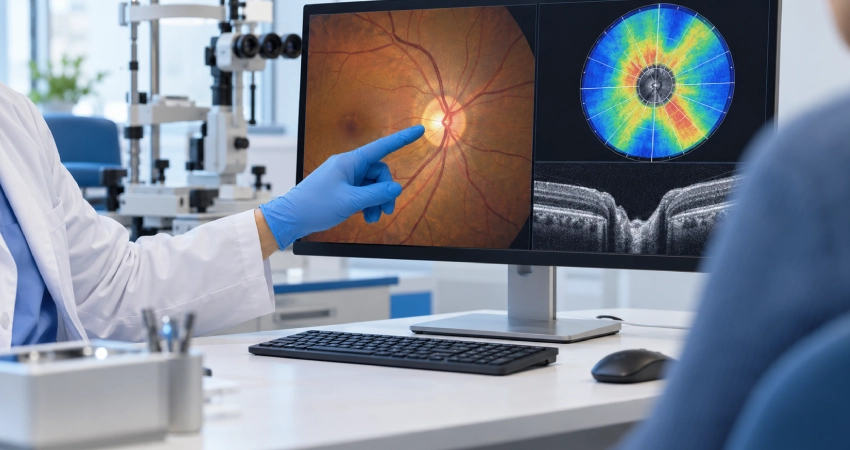
The distinction relies on complementary examinations rather than a single test. A comprehensive eye examination helps assess pressure, optic nerve health, and other factors relevant to the diagnosis.
The assessment may include:
- Eye pressure measurement: Repeated when necessary to verify the findings.
- Optic nerve examination: To identify characteristic changes and document its appearance.
- Optical coherence tomography, or OCT: To assess the retinal nerve fibre layer and related structures.
- Visual field testing: To detect areas of reduced vision that may not be noticeable in everyday life.
- Corneal thickness measurement: To support interpretation of pressure readings and risk assessment.
- Drainage angle examination: To assess the angle and help identify the mechanism involved.
Comparison with earlier results may be needed to establish whether a genuine change has occurred. An abnormal OCT or visual field result must also be considered alongside test quality and the rest of the examination.
Is Treatment Different for Ocular Hypertension and Glaucoma?
The approaches often share a goal—lowering pressure when needed—but the reason for treatment, its intensity, and the monitoring plan depend on whether optic nerve damage is present and how much risk the individual faces.
When Is Monitoring Enough for Ocular Hypertension?
A clinician may recommend monitoring when there is no evidence of glaucoma and the risk of future visual impairment is low. Follow-up involves reassessing pressure, optic nerve health, and the visual field at intervals suited to the individual.
Monitoring is an active medical decision. It does not mean waiting for symptoms to appear, because glaucoma can progress without noticeable warning signs.
When Is Pressure-Lowering Treatment Recommended?
Treatment may be recommended when the risk of sight-threatening damage is significant, glaucoma has been diagnosed, or the condition is progressing.
Options include prescription eye drops, laser treatment, and surgery. The choice depends on the diagnosis and the suitability of each option for the patient.
Not every person with high eye pressure needs surgery. Eye drops do not necessarily have to precede laser treatment in every suitable case.
Does Lower Pressure Mean Glaucoma Has Been Cured?
Lower pressure represents an important treatment goal, but it does not mean that optic nerve damage has disappeared. Treatment aims to preserve remaining vision and reduce the risk of further deterioration. It does not usually restore vision already lost through glaucomatous damage.
Regular follow-up remains essential. Do not stop or change prescribed drops simply because pressure readings have improved.
Which Symptoms Require Urgent Care?
Chronic ocular hypertension and open-angle glaucoma often produce no obvious early symptoms. However, acute conditions, including an angle-closure attack, may cause sudden symptoms such as:
- Severe eye pain.
- A red eye with blurred vision or halos around lights.
- Nausea or vomiting alongside eye symptoms.
- Sudden deterioration in vision.
These symptoms do not establish the diagnosis on their own, but they require immediate assessment at an emergency eye service or the nearest emergency department. Do not wait for a routine appointment or attempt to check the pressure at home first.
Eye Pressure and Glaucoma Assessment with Dr. Obaida Kilani
Dr. Obaida Kilani is a consultant ophthalmologist whose areas of practice include glaucoma surgery, according to his official profile on the Batal website.
A specialist assessment helps clarify how your pressure readings relate to optic nerve health and whether monitoring or treatment is appropriate.
If available, bring previous pressure measurements, optic nerve images, visual field results, and a list of your current medications. These records can support comparison over time.
Care for Your Eye Health at Batal Specialist Eye Center in Jeddah
Knowing your eye pressure is an important first step; assessing the optic nerve completes the picture. Book a consultation with Dr. Obaida Kilani at Batal Specialist Eye Center in Jeddah to review your findings and discuss appropriate monitoring or treatment. Contact us and book your appointment.