Med info
Causes of sudden eye deviation in children

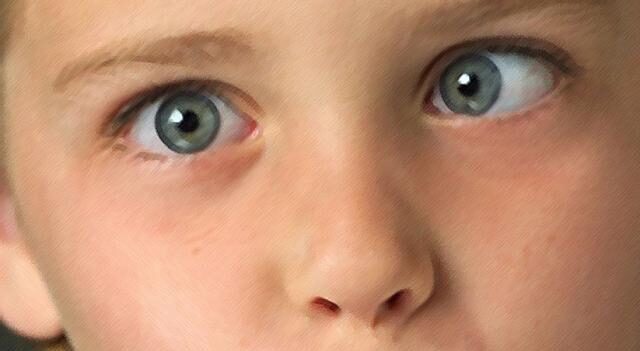
What is meant by sudden eye deviation (acute strabismus) in children?

Sudden eye deviation in children refers to a rapid and noticeable change in the alignment of one or both eyes, so that they no longer point in the same direction at the same time after having previously appeared normally aligned.
This deviation develops acutely over days or weeks, and presents as a sudden inward (esotropia), outward (exotropia), upward (hypertropia), or downward (hypotropia) turn of the eye. Parents may notice it when the child focuses on objects either near or far.
Acute onset strabismus in children is a concerning sign because it may indicate a problem in the extraocular muscles, the cranial nerves controlling eye movements, or a sudden decrease in vision. In some cases, it can be linked to deeper neurological or systemic causes.
For this reason, any sudden change in eye position, an abnormal head posture, or complaints such as double vision (diplopia) or headache warrants urgent assessment by a pediatric ophthalmologist, in order to identify the cause early and start treatment before the child’s vision is permanently affected.
Why is sudden eye deviation a cause for concern?
A sudden eye turn (strabismus) in children is considered a red‑flag symptom because it may indicate an underlying problem in the eye itself, the cranial nerves, or the brain, all of which require prompt evaluation.
While mild strabismus can be present from birth and gradually improve over time, a new, abrupt deviation of one or both eyes—especially if it appears after a period of normal alignment—may be linked to acute weakness of the extraocular muscles, dysfunction in the visual centers of the brain, or neurological conditions such as palsy of one of the cranial nerves responsible for eye movements.
Sudden eye deviation may also result from severe visual impairment in one eye, head trauma, or intraocular/intracranial inflammation. These issues can interfere with normal visual development and may lead to amblyopia (lazy eye) if not treated early.
For this reason, parents should never ignore any sudden change in eye position or the abrupt onset of strabismus. They should seek prompt assessment by a pediatric ophthalmologist to ensure early diagnosis and treatment of the underlying cause, and to prevent long-term visual complications.
Common Causes of Sudden Eye Deviation in Children
Head and Facial Trauma
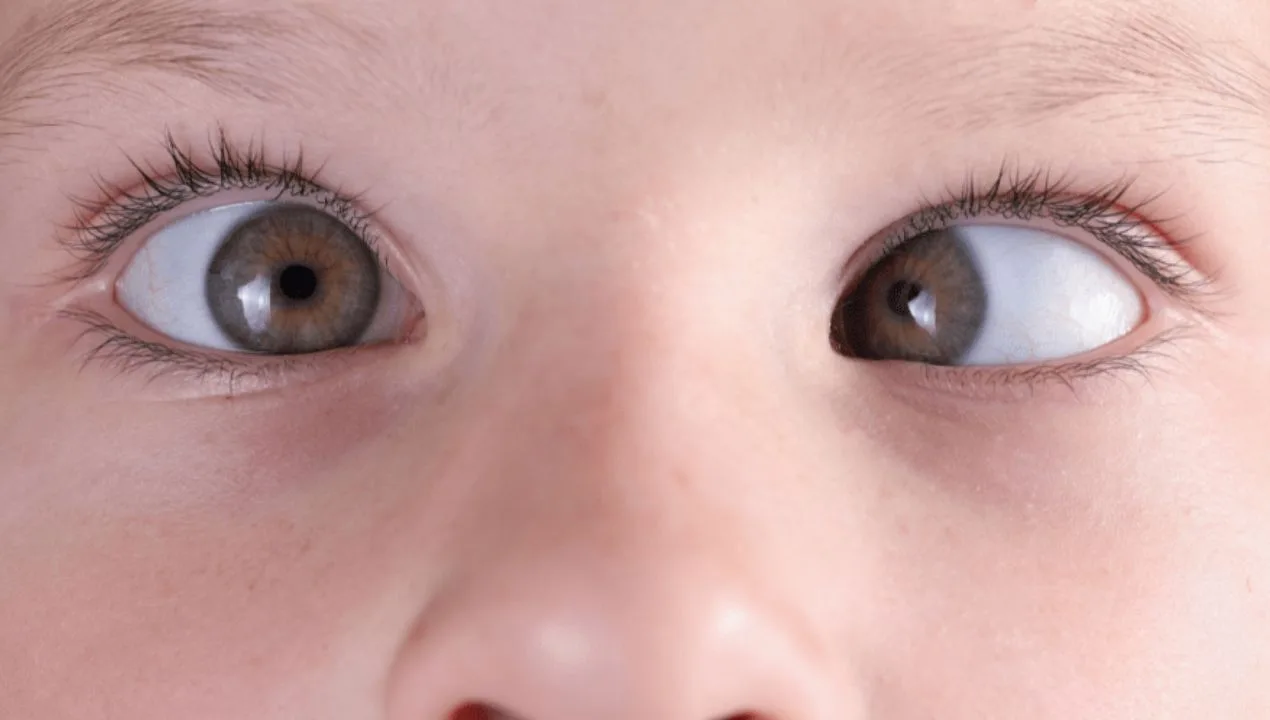
Head injuries or facial trauma are among the important causes of sudden eye deviation in children, especially after falling from a height or receiving a direct blow to the eye area or forehead.
Such trauma may lead to bleeding or swelling within the orbit (eye socket), or damage to the cranial nerves that control eye movements, resulting in acute strabismus or abnormal eye positioning.
If a sudden eye deviation is noticed after an accident or injury, the child should be seen immediately by an ophthalmologist or at an emergency department, as delays in diagnosis and treatment may have long‑term consequences for vision.
Brain Tumors and Orbital Tumors
In rare cases, sudden eye deviation in children can be caused by a tumor in the brain or within the orbit pressing on the extraocular muscles or the cranial nerves responsible for eye movement.
This type of deviation may be accompanied by additional symptoms such as persistent headache, vomiting, impaired balance, or noticeable protrusion or swelling of the eye or eyelid.
Not every sudden strabismus indicates a tumor, but the combination of a new eye deviation with these warning signs requires urgent assessment by a pediatric ophthalmologist and pediatric neurologist, along with appropriate imaging studies such as MRI.
Severe Intraocular or Periocular Infections
Severe inflammation inside the eye or in the surrounding tissues, such as orbital cellulitis, can cause sudden eye deviation in children due to swelling and increased pressure on the extraocular muscles or the optic and ocular motor nerves.
These infections are often associated with eye pain, marked redness, fever, and limitation of eye movements in certain directions.
Such situations are considered medical emergencies, as delaying treatment can endanger the eye and vision. Therefore, prompt evaluation by an ophthalmologist is essential when these symptoms appear together with a sudden eye deviation.
Acute Refractive Changes and Significant Anisometropia
Sometimes, the underlying cause of sudden eye deviation in children is a large difference in refractive power between the two eyes (a condition known as anisometropia), or the development of significant hyperopia (farsightedness) or myopia (nearsightedness) in one eye more than the other.
In this situation, the child’s brain begins to rely predominantly on the eye with clearer vision, gradually suppressing the weaker eye, which can lead to manifest strabismus or deviation, especially during near work or when the child is tired.
This cause is usually identified through a comprehensive pediatric eye examination, and treatment often involves prescribing appropriate corrective glasses and, in some cases, patching the stronger eye to stimulate the weaker one and prevent amblyopia.
Weakness or Imbalance of Extraocular Muscles

Any dysfunction or weakness affecting the extraocular muscles, which coordinate eye movements, can result in sudden eye deviation in children, particularly if there is an acute imbalance in the strength or function of these muscles.
The deviation may initially appear only in certain gaze positions or when the child is fatigued, then become more apparent and constant over time.
This cause requires careful assessment of ocular motility. Management may include special prism glasses, orthoptic (eye muscle) exercises, and in some cases surgery on the extraocular muscles to realign the eyes and restore binocular balance.
Systemic Neurological or Inflammatory Disorders
Certain neurological or inflammatory conditions affecting the central nervous system—such as demyelinating diseases (e.g., multiple sclerosis in older age groups) or inflammatory neuropathies—can also manifest as sudden eye deviation in children.
In these cases, strabismus or eye deviation is rarely the only symptom; it may be accompanied by headache, vertigo, limb weakness, or gait and balance disturbances.
Therefore, if sudden eye deviation occurs alongside other neurological signs, evaluation by a pediatric neurologist in addition to an ophthalmologist is crucial to establish an accurate diagnosis and develop an appropriate treatment plan.
Effects of Specific Medications or Toxins
The use of certain medications or exposure to particular toxins can affect the nerves or muscles involved in eye movement, leading to sudden eye deviation in children as an adverse effect.
This may occur with high doses of some drugs, or in cases of accidental household poisoning with chemicals or medications.
It is therefore important to inform the ophthalmologist about all medications the child is taking and any potential toxic exposures. Discontinuing the offending drug or treating the poisoning can, in many cases, lead to gradual improvement in the eye deviation if it is directly related.
Congenital Causes That Emerge or Worsen Suddenly
Some children are born with an underlying predisposition to eye misalignment—such as mild, initially unnoticed strabismus or subtle extraocular muscle weakness—that may not be apparent in early infancy, but becomes evident later as the child grows or after an intercurrent illness.
Factors such as fatigue, fever, or any systemic stress can unmask this latent misalignment, causing a suddenly obvious strabismus that parents readily notice.
In such cases, the ophthalmologist will review the child’s history from birth and perform a thorough eye examination to determine whether the cause is congenital, and to initiate early treatment to prevent amblyopia and preserve normal binocular vision.
Best Specialist for Sudden Eye Deviation in Children in Jeddah – Dr. Ahmed Batal

Dr. Ahmed Batal is considered one of the leading ophthalmologists in Jeddah specializing in the diagnosis and treatment of sudden eye deviation (acute onset strabismus) in children. He has extensive experience managing the various underlying causes of this condition, including extraocular muscle weakness, uncorrected refractive errors, and acute neuro‑ophthalmic disorders.
Dr. Ahmed Batal is committed to performing a comprehensive ophthalmic examination for children, which includes assessment of visual acuity, ocular motility, and evaluation of the retina and optic nerves. This thorough workup helps pinpoint the exact cause of the deviation and enables the development of an early treatment plan that can prevent progression to established strabismus or amblyopia (“lazy eye”).
He offers a stepwise treatment approach, starting with prescription eyeglasses and orthoptic (eye) exercises, and progressing to surgical intervention when indicated. This is accompanied by close, regular follow‑up to ensure the child’s condition remains stable and to optimize both the cosmetic appearance and visual function of the eyes.
For these reasons, many parents in Jeddah seeking the best doctor to treat sudden eye deviation in their children turn to Dr. Ahmed Batal. His expertise and strong professional reputation provide an important source of reassurance, helping families protect their children’s eyesight and address the problem at its root in line with the latest medical standards.
Book Your Child’s Appointment Now at Batal Specialist Eye Center
If you notice a sudden eye deviation or unexpected squint in your child, don’t wait for the condition to worsen. Book an appointment now at Batal Specialist Eye Center for a comprehensive, accurate evaluation by pediatric ophthalmology consultants who are experts in diagnosing and treating sudden onset strabismus in children using the latest diagnostic technologies and medical techniques.
The center offers a full assessment of visual acuity, detailed evaluation of the extraocular muscles, and early detection of amblyopia (lazy eye), nerve-related problems, or refractive errors. Based on the findings, an individualized treatment plan is tailored to your child’s condition—whether it involves prescription glasses, vision therapy/eye exercises, occlusion therapy (patching), or surgical intervention when indicated.
Schedule a pediatric eye appointment easily by phone or online booking, so your child can receive specialized care in a safe, well-equipped environment. Ensure the health of their vision and visual development with regular follow-up by a medical team experienced in managing strabismus and ocular misalignment in children.