
Med info
Glaucoma Eye Drops: What to Do If You Miss a Dose or Experience Side Effects


You may occasionally forget to use your glaucoma eye drops at the scheduled time or notice redness after applying them. This can raise important questions: Should you use an extra dose to make up for the missed one? Can you stop using the drops if they cause discomfort?
Glaucoma eye drops help lower intraocular pressure (IOP) and reduce the risk of further optic nerve damage. If you miss a dose, the appropriate action depends on the medication and when your next dose is scheduled. For many medications, the missed dose can be taken when remembered unless the next dose is approaching. However, some products have different instructions, and doses should never be doubled.
Side effects may be mild, such as temporary redness or stinging, but persistent or severe symptoms may require medical assessment.
Most importantly, never stop or change your glaucoma treatment without consulting your ophthalmologist, as eye pressure can rise without causing noticeable symptoms.
Why Are Glaucoma Eye Drops Prescribed?
Glaucoma is a group of eye diseases that can cause progressive damage to the optic nerve, which carries visual information from the eye to the brain.
Elevated intraocular pressure is one of the most important risk factors for glaucoma progression, but it is not the only factor. Glaucoma can also develop in patients whose eye pressure measurements fall within the usual range.
Glaucoma eye drops lower intraocular pressure by reducing the production of aqueous humor, the fluid inside the eye, or improving its drainage, depending on the medication.
These drops cannot restore vision already lost due to optic nerve damage. Instead, their purpose is to slow disease progression and preserve remaining vision.
Understanding the difference between high eye pressure and glaucoma helps explain why treatment may be necessary even when patients do not notice any changes in their vision.

What Types of Glaucoma Eye Drops Are Available?
Glaucoma medications differ in how they work, how frequently they must be used, and their potential side effects.
An ophthalmologist selects the most appropriate medication based on the patient’s target eye pressure, overall health, and other medications.
| Medication Class | Examples | How It Works |
|---|---|---|
| Prostaglandin analogues | Latanoprost, Travoprost | Increase aqueous humor drainage |
| Beta blockers | Timolol | Reduce fluid production inside the eye |
| Carbonic anhydrase inhibitors | Dorzolamide, Brinzolamide | Reduce aqueous humor production |
| Alpha-2 adrenergic agonists | Brimonidine | Reduce fluid production and may increase drainage |
| Rho kinase inhibitors | Netarsudil | Improve fluid drainage through the trabecular meshwork |
Some patients may be prescribed combination eye drops containing two active ingredients to simplify treatment or improve pressure control.
Important: Certain medications, particularly beta blockers such as timolol, may not be suitable for patients with asthma or specific heart conditions.
Always inform your ophthalmologist about your medical history and all medications you take before starting glaucoma treatment.
What Should You Do If You Miss a Dose of Glaucoma Eye Drops?
The correct action depends on the prescribed medication and its dosing schedule.
For many glaucoma eye drops, patients are advised to use the missed dose as soon as they remember, unless it is almost time for the next scheduled dose.
If the next dose is approaching, the missed dose is generally skipped and the usual schedule resumed.
However, missed-dose instructions vary between medications. Some once-daily eye drops have specific instructions not to make up for a missed dose.
Always follow the approved medication leaflet or the instructions provided by your ophthalmologist or pharmacist.
Can You Use Two Drops to Make Up for a Missed Dose?
No. Doubling a dose to compensate for a missed application is not recommended.
Using additional medication does not necessarily improve eye pressure control and may increase the risk of side effects.
What If You Frequently Forget Your Eye Drops?
If you repeatedly miss doses, discuss the problem with your ophthalmologist rather than adjusting the schedule yourself.
Helpful strategies may include setting a daily reminder, linking your eye drops to an established routine, or asking whether a simpler treatment regimen is available.
The absence of symptoms does not mean that missed doses are harmless. Optic nerve damage can progress gradually without obvious changes in vision.
How to Apply Glaucoma Eye Drops Correctly
Proper application helps ensure that the medication reaches the eye and may reduce unnecessary absorption into the bloodstream.
Unless your ophthalmologist advises otherwise, follow these steps:
- Wash your hands thoroughly before applying the drops.
- Tilt your head backward and gently pull down your lower eyelid to create a small pocket.
- Place one drop into the pocket without touching your eye or eyelashes with the bottle tip.
- Close your eye gently without squeezing your eyelids.
- If appropriate for you, gently press the inner corner of your eye near your nose for one to two minutes to reduce drainage into the tear duct.
- Wipe away excess liquid with a clean tissue.
- If you use more than one type of eye drop, allow the interval recommended by your ophthalmologist between medications, commonly at least five minutes.
Patients who have difficulty handling eye drop bottles may benefit from application aids or practical guidance from their eye care team.
What Are the Common Side Effects of Glaucoma Eye Drops?
Side effects depend on the active ingredient and may affect the eye itself or, in some cases, other parts of the body.
Eye Redness and Stinging
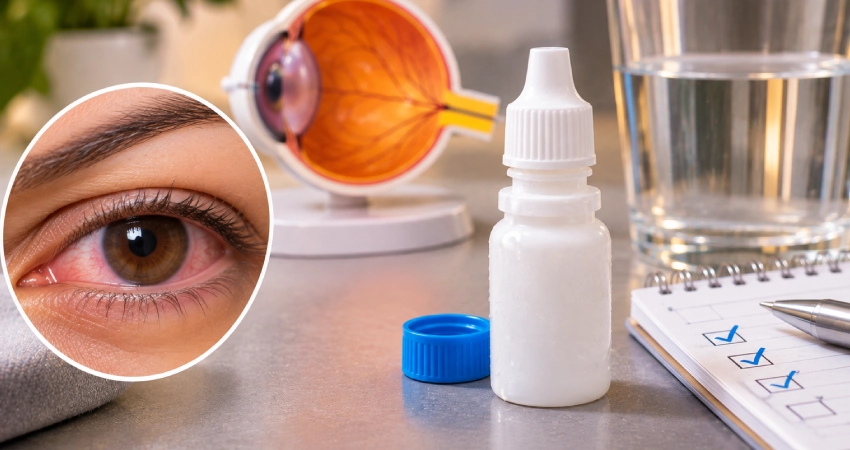
Mild redness or temporary stinging may occur after applying certain glaucoma medications, especially when treatment is first started.
However, persistent or worsening redness, particularly when accompanied by pain or reduced vision, requires medical assessment.
Dry Eyes and Irritation
Some glaucoma eye drops or the preservatives they contain can irritate the ocular surface, especially with long-term use.
If irritation continues, your ophthalmologist may consider a preservative-free formulation or an alternative medication.
Changes in Iris Color or Eyelashes
Certain prostaglandin analogues can gradually increase iris pigmentation, stimulate eyelash growth, or cause changes in the skin around the eyes.
Changes in iris color may be permanent, while some other effects may diminish after the medication is discontinued.
Fatigue or a Slow Heart Rate
Some glaucoma medications, particularly beta blockers, can be absorbed into the bloodstream and cause systemic effects.
These may include a slower heart rate or breathing difficulties in susceptible patients.
Inform your ophthalmologist if you have asthma, heart disease, or develop new symptoms after starting treatment.
When Are Glaucoma Eye Drop Side Effects Serious?
Seek urgent medical assessment if you experience:
- Severe or sudden eye pain.
- Sudden or significant vision loss.
- Severe swelling around the eye or a noticeable allergic reaction.
- Difficulty breathing or wheezing.
- Severe dizziness, fainting, or an unusually slow heart rate.
Severe breathing difficulties, loss of consciousness, or signs of a life-threatening allergic reaction require immediate emergency medical assistance.
Not every symptom that occurs during treatment is necessarily caused by the eye drops. Some symptoms may indicate another eye or medical condition requiring diagnosis.
Can You Stop Glaucoma Eye Drops When Your Eye Pressure Becomes Normal?
No. Reaching your target eye pressure while using medication does not necessarily mean that glaucoma has resolved or that treatment is no longer needed.
The lower pressure may be a direct result of the medication, and pressure may rise again if treatment is stopped.
Your ophthalmologist determines whether treatment should continue or be adjusted based on intraocular pressure measurements, optic nerve health, and follow-up test results.
This is particularly important for patients with normal-tension glaucoma, where optic nerve damage can occur even without clearly elevated eye pressure readings.
Are There Alternatives to Glaucoma Eye Drops?
Yes. Other treatment options are available for certain patients, including laser procedures and glaucoma surgery.
Selective Laser Trabeculoplasty (SLT) is one option for lowering eye pressure in selected patients with open-angle glaucoma.
It may be recommended as an initial treatment or when maintaining a regular eye drop schedule is difficult.
SLT works by improving fluid drainage from the eye and may reduce the need for medication in some patients. However, it does not guarantee that eye drops can be discontinued.
The choice between medication, laser treatment, and surgery depends on the type of glaucoma, the extent of optic nerve damage, target eye pressure, and response to previous treatment.
How Does Your Ophthalmologist Know If Glaucoma Eye Drops Are Working?
The effectiveness of glaucoma treatment is not determined by whether patients notice an improvement in their vision.
Glaucoma eye drops generally do not produce a noticeable improvement in visual acuity.
Instead, the ophthalmologist measures intraocular pressure and compares the results with the patient’s individualized target pressure.
The optic nerve is also monitored for signs of progression.
Follow-up testing may include Optical Coherence Tomography (OCT) and visual field testing.
These complementary examinations help assess structural changes in the optic nerve and functional changes in vision associated with glaucoma.
Regular monitoring remains important even when eye pressure readings appear stable, because the long-term goal is to preserve optic nerve function.
Glaucoma Treatment and Follow-Up with Dr. Obaidah Kilani
Glaucoma management requires specialist monitoring to establish an appropriate target eye pressure, evaluate the effectiveness of prescribed medications, and consider alternative treatments when necessary.
Dr. Obaidah Kilani is a Consultant Ophthalmologist specializing in glaucoma diagnosis, treatment, and surgery, with more than 15 years of professional experience.
He holds a Fellowship of the Royal College of Ophthalmologists (FRCOphth).
His expertise includes glaucoma management, advanced glaucoma surgery, and minimally invasive glaucoma surgery (MIGS).
Specialist assessment helps determine whether current treatment is adequately controlling eye pressure and whether alternative approaches may be appropriate if side effects interfere with medication adherence.
Experiencing Side Effects from Glaucoma Eye Drops? Contact Batal Eye Center
If you find it difficult to use your glaucoma eye drops consistently, frequently miss doses, or experience uncomfortable side effects, your treatment plan may need to be reviewed.
Batal Eye Center in Jeddah provides glaucoma diagnosis, monitoring, and treatment services, including intraocular pressure assessment, optic nerve evaluation, and discussion of appropriate treatment options.
Do not stop or replace prescribed glaucoma medication without medical advice, even if your most recent eye pressure measurement was within the normal range.
You can contact the center to arrange an appointment and review your glaucoma treatment with a specialist.
Frequently Asked Questions About Glaucoma Eye Drops
What Should I Do If I Forget My Glaucoma Eye Drops?
Follow the instructions for your specific medication.
For many eye drops, the missed dose can be used when remembered unless the next scheduled dose is approaching.
Do not double the dose to compensate for a missed application.
Can I Use Two Different Glaucoma Eye Drops at the Same Time?
If your ophthalmologist has prescribed two different medications, you may need to use both while allowing an appropriate interval between them.
However, taking an extra dose of the same medication without medical instructions is not recommended.
Can Glaucoma Eye Drops Cause Dry Eyes?
Yes. Some glaucoma medications or their preservatives can cause dryness and irritation.
Your ophthalmologist can assess the cause and discuss suitable alternatives.
Can Glaucoma Eye Drops Affect the Heart?
Certain medications, particularly beta blockers such as timolol, may cause systemic effects, including a slower heart rate or breathing difficulties in some patients.
Will I Need Glaucoma Eye Drops for Life?
Many patients require long-term treatment.
However, the type and duration of treatment depend on the glaucoma diagnosis, response to medication, and whether other treatment options are suitable.
Can I Stop Using Eye Drops Once My Eye Pressure Goes Down?
You should not stop treatment without consulting your ophthalmologist.
The reduction in pressure may be caused by the medication, and eye pressure can increase again after treatment is discontinued.
Can Glaucoma Eye Drops Restore Lost Vision?
No. Glaucoma eye drops lower intraocular pressure and help slow further optic nerve damage.
They generally cannot restore vision already lost due to glaucoma.
Can I Use Lubricating Drops Alongside Glaucoma Medication?
In many cases, lubricating eye drops can be used alongside glaucoma treatment.
However, the appropriate product and the interval between medications should be confirmed with your ophthalmologist.
When Should I See a Doctor About Glaucoma Eye Drop Side Effects?
Consult your ophthalmologist if redness or irritation persists or if new symptoms make treatment difficult to tolerate.
Severe eye pain, sudden vision loss, or breathing difficulties require urgent medical attention.