
Med info
Ask Your Doctor: Vision Correction Clinics at Batal Specialty Center

Like every other part of the body, the eyes change as we age. Some age-related changes can be annoying over time, even if they’re not dangerous. For example, it may become harder to see objects clearly up close, or the opposite—distant objects become harder to see. However, there are other changes that can lead to serious eye problems and may put your vision at risk.
That’s why it’s always important to consult an ophthalmologist about any changes you notice in your eyes. They are the specialists who can determine how serious your problem is and whether it could threaten your eyesight.
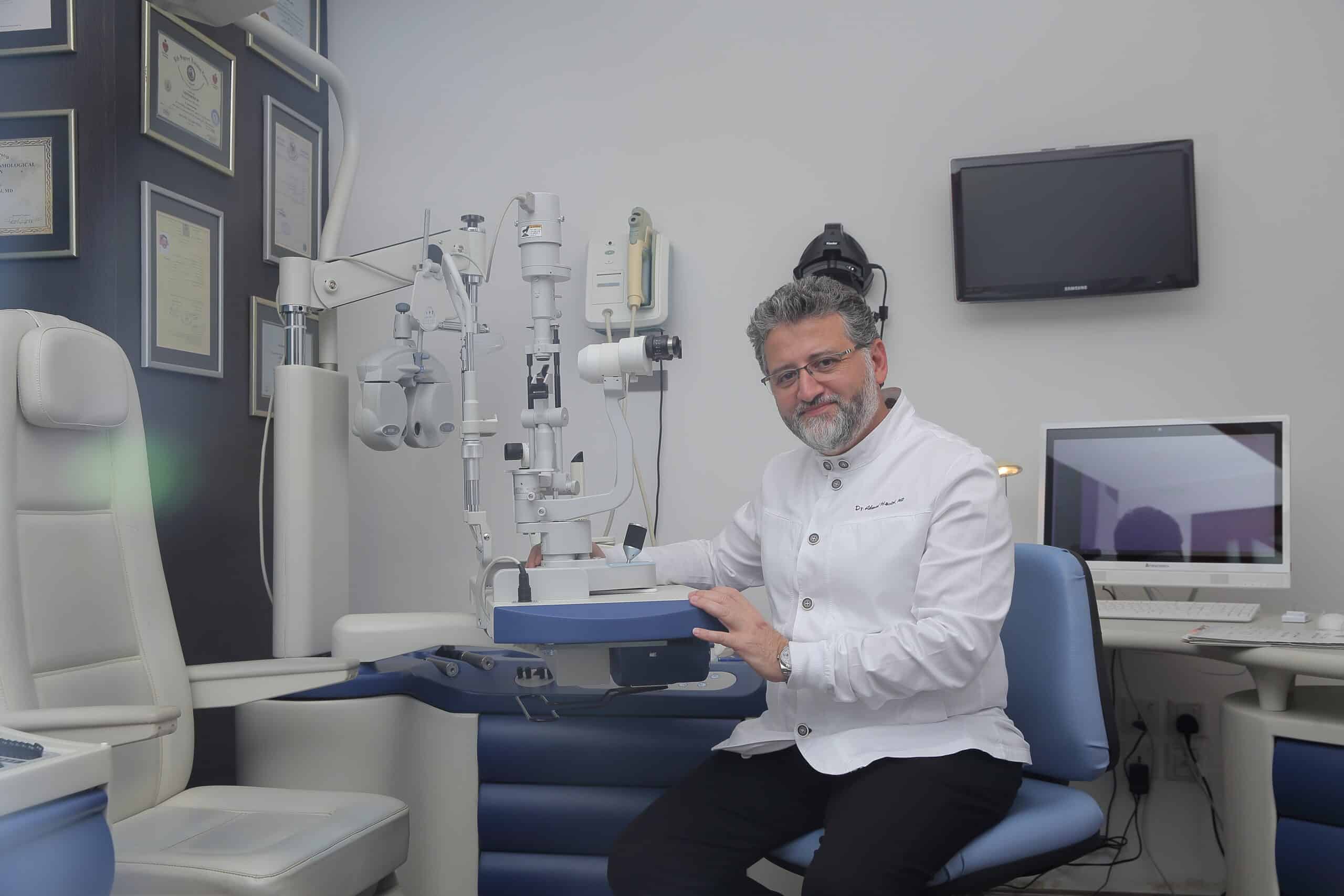
Ask Ophthalmologist Dr. Ahmed Hassan Al Batal
How can you tell if an eye problem is minor or a warning sign of something serious? There are certain signs and symptoms that require you to get in touch with an eye doctor if you notice them. Contact your ophthalmologist if you notice:
When Should I See an Eye Doctor?
We don’t visit an eye doctor only when there is a problem. You might need their advice about changing your glasses prescription, whether contact lenses are suitable for your eyes, when it’s appropriate for your child to start wearing contact lenses, or what general steps and tips can help you maintain healthy eyes. Even if some of these tips seem familiar, doctors are always up to date and can offer new recommendations.
You can also ask Dr. Ahmed Hassan Al Batal or any member of our medical team about the best vision correction options for your specific case and get an idea of the cost of each. We use the latest vision correction technologies, including PRESBYOND, femto-LASIK, SMILE (femto SMILE), standard LASIK, phakic intraocular lens (IOL) implantation, and astigmatic keratotomy.
We have performed hundreds of surgical procedures and treated hundreds of patients of all ages, and we are always proud of the trust they place in our team.
Ask Your Doctor Online
Send your eye-health questions to our experienced ophthalmologists and receive instant medical advice and a second opinion. Our medical team includes several qualified eye doctors who are always ready to answer questions and concerns related to your eye health. You can contact our medical team via WhatsApp from here, or submit your question by filling out the form at the bottom of the page and clicking “Send.”
When You Consult Our Doctors Online, You’ll Benefit From Several Advantages:
There’s no need to leave home, deal with traffic, or spend long hours in crowded waiting rooms. All you need to do is enter your correct details, and you’ll receive a reply from our medical team as soon as possible.
You might wonder how a doctor can assess your condition without examining your eyes in person. In fact, understanding a patient’s medical history accounts for about 90% of the clinical assessment. The symptoms and complaints you share with your doctor are often just as important as the findings of an in‑office eye examination.
In the end, although online consultations are very helpful and allow the doctor to prescribe appropriate treatment for mild or straightforward conditions, they also help the doctor decide whether you need an in‑person eye examination or urgent medical care.
Ask the Ophthalmologist at Batal Center
Asking questions helps you get the most out of your eye exam and ensures your doctor understands everything that worries you about your eye health. Ask your ophthalmologist whether you need a new glasses or contact lens prescription and why, whether glasses or contact lenses are better for you, or whether you might benefit more from a surgical procedure. You can also ask if computer glasses would be useful in your particular case.
Discussing your situation with the eye doctors at Batal Specialty Eye Center will help you choose the most suitable vision correction procedure. Your doctor will also determine how often you should have your eyes examined, based on your age, eye condition, and medical history.
Consulting an Eye Specialist
We offer the latest treatment options for cataracts, eye misalignment (strabismus) in children, amblyopia (lazy eye), nearsightedness (myopia), farsightedness (hyperopia), astigmatism, glaucoma, dry eye, contact lenses, and general eye care. We are also ready to answer any questions you have about LASIK, femto SMILE, and PRESBYOND procedures.
Detecting serious eye problems early is key to preserving your vision. Even eye conditions that do not threaten your sight can and should be treated to relieve discomfort and protect your eyes and eyesight as much as possible.