
Med info
Latest Vision Correction Procedures

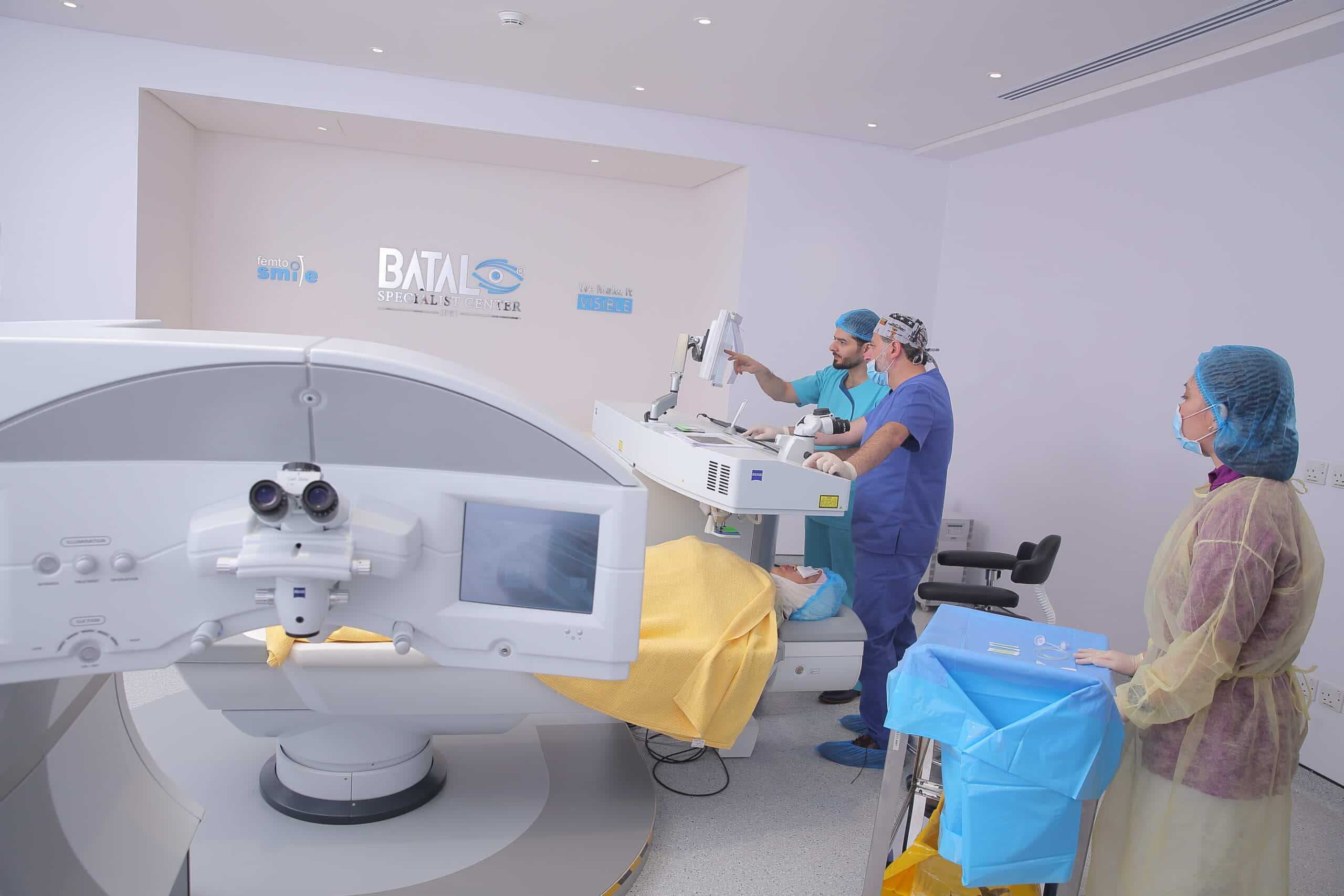
God has blessed humans with many gifts that help us cope with the challenges of daily life. Our eyes and sense of sight are among the greatest of these blessings and the most used to perceive the outside world. However, the eye is also prone to many diseases and risks; it is rare to find a family without at least one member suffering from an eye condition and wearing prescription glasses. This has driven scientists and technology developers to search for effective ways to treat these conditions and help people get rid of glasses and contact lenses.
Researchers have successfully developed several techniques that have gained wide acceptance. Some have delivered excellent results and high patient satisfaction, while others showed multiple complications and side effects and gradually fell out of use. Below we review the latest techniques that have proven successful and well‑accepted by patients and helped many of them dispense with prescription eyewear:
Femto-LASIK Technique
Femto-LASIK is a modern form of LASIK surgery in which a femtosecond laser is used to create the corneal flap instead of traditional mechanical methods. This approach offers several advantages:
– It allows LASIK to be performed in patients with relatively thin corneas who would not be suitable candidates for conventional LASIK.
– It enables more precise correction of refractive errors.
– It shortens the recovery period after surgery.
– It avoids many of the issues associated with traditional flap creation methods, significantly enhancing the safety profile of the procedure.
– It provides superior visual quality after surgery.
Femto-LASIK is suitable for most patients who are eligible for standard LASIK, and it is used to correct refractive errors such as myopia (nearsightedness), hyperopia (farsightedness), and astigmatism. This is achieved by reshaping the curvature and thickness of the cornea so it can once again focus light accurately onto the retina, instead of in front of it or behind it, which is what causes blurred vision.
What sets this technique apart is that it can be used in some cases where conventional LASIK is not recommended, due to very thin corneas or excessive corneal curvature that may increase the risk of complications with traditional methods.
Femto-LASIK represents a major leap forward in refractive surgery because it relies entirely on laser technology without the use of traditional surgical blades or mechanical instruments during the procedure.
ReLEx SMILE (Femto-SMILE) Technique
ReLEx SMILE (often referred to as “Femto-SMILE”) differs from other laser vision correction procedures such as LASIK, PRK, and Femto-LASIK. The SMILE procedure is performed through a very small keyhole incision that allows the laser energy to reach the cornea, without creating a large flap or removing the entire outer layer of the cornea as is done in many conventional techniques.
The procedure is performed using a highly accurate femtosecond laser system, specifically the VisuMax laser, which is considered one of the most advanced technologies in the field of corneal refractive surgery.
SMILE is a minimally invasive procedure that does not involve entering deeper internal structures of the eye. The laser is used to create a small, lens-shaped piece of corneal tissue (called a lenticule) within the cornea, with a shape and size precisely calculated by the surgeon to correct the patient’s refractive error.
This laser step takes about 23 seconds. The surgeon then manually removes the lenticule through a very small incision in the outer layer of the cornea.
Within a single year, the SMILE technique was able to correct myopic refractive errors for more than one million people worldwide across more than 60 countries.
The procedure is an excellent option for many patients who suffer from multiple refractive problems at the same time, such as myopia, hyperopia, and astigmatism. There are also specific post‑operative instructions after laser vision correction that patients need to follow carefully.
Is Vision Correction with the SMILE Technique Right for You?
SMILE vision correction is suitable for patients with myopia and astigmatism, and it can be used to treat one or both conditions at the same time, including age‑related myopia in some cases. Before undergoing the procedure, it is essential to have a comprehensive eye examination to assess the entire visual system and ensure that the eyes are healthy and suitable for surgery.
As one of the main types of modern refractive surgery, SMILE is considered highly appropriate for the majority of patients with mild to moderate, and even high, degrees of myopia and/or astigmatism.
Presbyond Technique: Helping People Over 40 Get Rid of Reading Glasses
As we age and approach midlife, our near vision gradually weakens. The eye’s natural lens loses flexibility, and light focuses behind the retina instead of directly on it. This results in blurred near vision and difficulty seeing close objects clearly.
For the first time in Saudi Arabia and the Middle East, “Batal Specialized Center” has successfully introduced the Presbyond technique, which helps people over the age of 40 get rid of their reading glasses and correct their vision after forty.
Presbyond has proven effective in treating various types of refractive errors, including myopia, hyperopia, and astigmatism. It has also achieved remarkable outcomes in preserving night vision quality, with a very low rate of side effects in more than 90% of patients who underwent vision correction using this technique.
Over time, Presbyond has consistently demonstrated excellent results and is now suitable for more than 97% of patients with presbyopia (age‑related near vision decline). Many leading eye surgeons who perform this procedure have chosen to undergo it themselves, reflecting their strong confidence in the technique and the outstanding results they have observed.