
Med info
Vitreous hemorrhage: its causes and treatment options

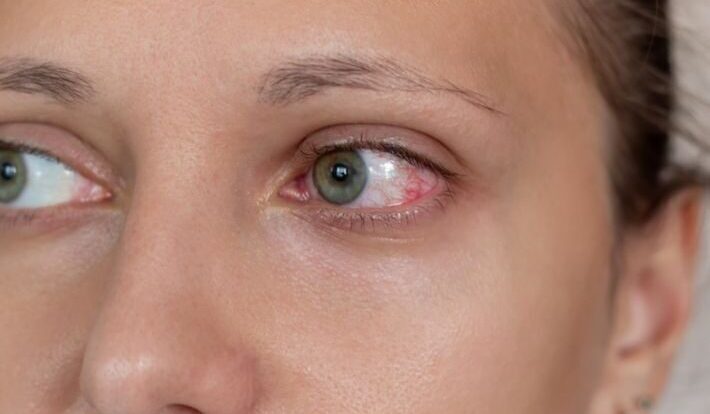
What is a vitreous hemorrhage?

A vitreous hemorrhage is bleeding into the clear, gel‑like substance (the vitreous) that fills the space between the eye’s lens and the retina. It is one of the most common causes of sudden visual disturbance.
This bleeding occurs when the tiny blood vessels supplying the retina or vitreous tear or rupture, often as a result of conditions such as diabetic retinopathy, retinal detachment, or direct eye trauma.
Vitreous hemorrhage typically causes the sudden appearance of dark floaters, hazy or blurred vision, loss of part of the visual field, and in more severe cases, a marked and temporary loss of vision.
Vitreous hemorrhage is not merely a standalone condition; it is an important warning sign of an underlying disorder within the eye. It requires urgent evaluation by an ophthalmologist to identify and treat the root cause early, in order to protect the retina and prevent progressive vision loss.
Causes of Vitreous Hemorrhage
Diabetic Retinopathy and Pathological Neovascularization
Diabetic retinopathy is one of the most common causes of vitreous hemorrhage, particularly in patients with poorly controlled diabetes.
When blood glucose levels remain elevated for long periods, the tiny retinal blood vessels become damaged and the retina receives less blood and oxygen. In response, the eye starts forming fragile, abnormal new vessels known as “pathological neovascularization.”
These new vessels have extremely thin, delicate walls that rupture easily, putting the patient at risk of bleeding into the vitreous cavity even with minor exertion or a sudden rise in blood pressure.
In advanced stages of diabetic retinopathy, vitreous hemorrhages may recur, causing sudden blurred vision or a shower of dark floaters in the visual field, and may progress to severe visual loss if not treated promptly.
Posterior Vitreous Detachment and Retinal Tears or Detachment
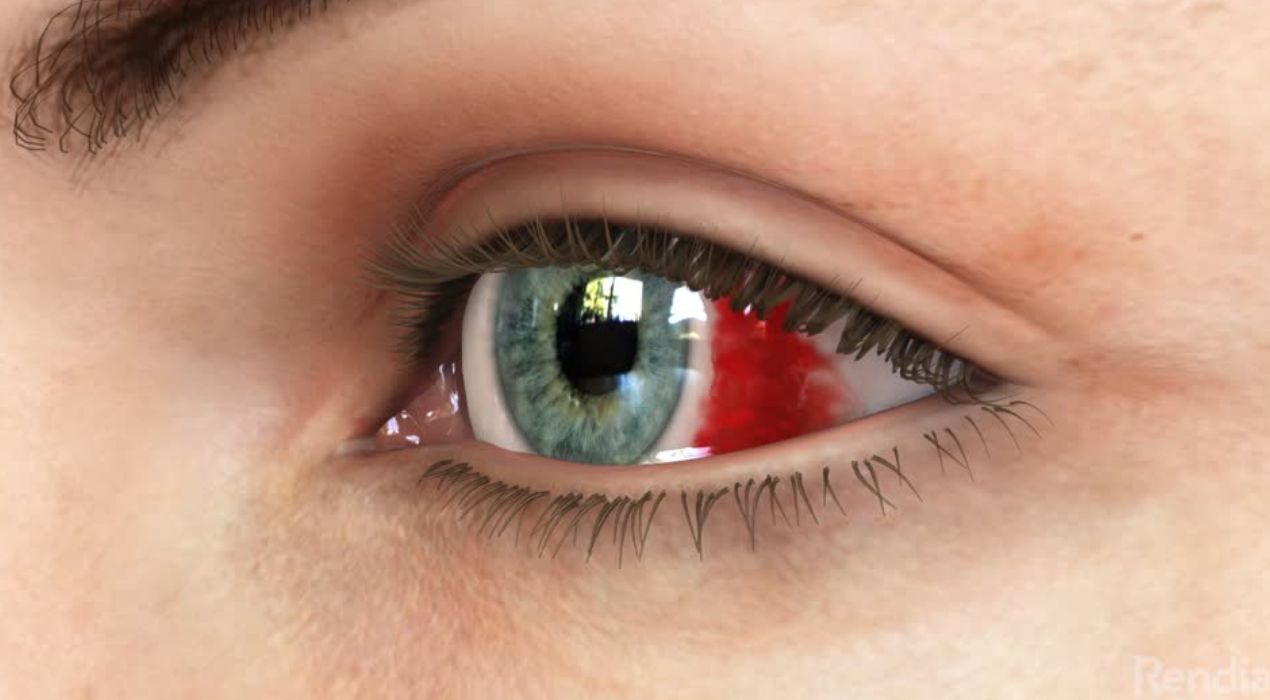
Posterior vitreous detachment is a common age-related condition in which the vitreous gel inside the eye shrinks and pulls away from the surface of the retina.
In many cases this separation is uncomplicated and does not cause serious problems, but sometimes it exerts strong traction on the retina, leading to retinal tears or the early stages of retinal detachment.
When the retina tears, small blood vessels within it may rupture, causing vitreous hemorrhage that manifests as sudden flashes of light, numerous dark floaters, or a dark curtain obscuring part of the visual field.
If a retinal tear is not detected early and sealed with laser treatment or surgery, a small bleed can progress to more extensive hemorrhage along with a full‑thickness retinal detachment. This is an ocular emergency that threatens sight and requires urgent intervention to preserve vision.
Ocular Trauma and Contusions
Direct blows to the eye, accident‑related injuries, or the impact of a solid object or fast‑moving ball can cause acute, sudden vitreous hemorrhage.
Such trauma may damage small blood vessels in the retina, iris, or ciliary body, and can also tear some of the internal ocular tissues, resulting in internal bleeding that tracks into the vitreous cavity.
The severity of trauma‑induced vitreous hemorrhage ranges from a few scattered blood spots causing temporary blurring, to dense hemorrhage that completely obscures the visual field and necessitates surgical intervention such as vitrectomy.
Any significant eye injury associated with pain, sudden loss of vision, or visible external bleeding on the eye surface requires immediate ophthalmologic assessment to evaluate the retina and rule out tears, detachment, or fractures of the orbital bones.
Coagulation Disorders and Antithrombotic Medications
Bleeding and clotting disorders, such as hemophilia or thrombocytopenia, increase the tendency to bleed in different parts of the body, including the vitreous cavity.
Use of blood‑thinning medications, such as warfarin, certain doses of aspirin, and some of the newer oral anticoagulants, can also raise the risk of intraocular hemorrhage, especially when another contributing factor is present, such as retinopathy or uncontrolled hypertension.
In these patients, hemorrhage may be more severe or prolonged than usual, because the body’s ability to stop bleeding is impaired.
It is essential for patients with coagulation problems, or those taking anticoagulants or antiplatelet drugs, to inform their ophthalmologist of their condition and medications so that the risk of vitreous hemorrhage can be accurately assessed, and drug dosages or the timing of ocular surgery can be adjusted when necessary.
Inflammation, Tumors, and Other Uncommon Causes
Certain deep intraocular infections, such as endophthalmitis or retinal vasculitis, can weaken and damage vessel walls, predisposing them to rupture and resulting in bleeding into the vitreous cavity.
Similarly, some intraocular tumors, such as retinal or choroidal tumors, may develop a network of abnormal, fragile blood vessels that bleed easily, making vitreous hemorrhage one of the early presenting signs of the lesion.
There are also less common causes of vitreous hemorrhage, including hereditary vascular disorders, certain autoimmune diseases, severe acute hypertension, and occasionally as a complication of complex ocular surgeries.
Although these causes are less frequent than diabetes or trauma, ruling them out is important when the source of vitreous hemorrhage is not obvious. The ophthalmologist will select appropriate investigations—such as fundus imaging, ocular ultrasonography, or optical coherence tomography (OCT)—to establish an accurate diagnosis.
Risk Factors for Vitreous Hemorrhage
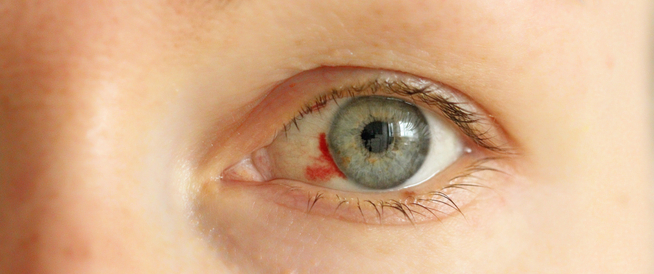
Risk factors for vitreous hemorrhage range from retinal disorders to systemic diseases and direct eye trauma.
Uncontrolled diabetic retinopathy is one of the leading causes, as persistently high blood glucose levels lead to the formation of fragile neovascular vessels on the retina that are prone to rupture and bleed into the vitreous cavity.
Retinal detachment and retinal tears are also major risk factors, since rupture of the associated retinal blood vessels allows blood to leak into the vitreous.
Additional contributors include long‑standing hypertension, vascular diseases, coagulation disorders, and the use of anticoagulant or antiplatelet medications without proper medical supervision, all of which can increase the likelihood of vitreous hemorrhage even after minor eye injuries.
Direct ocular trauma—whether from accidents, contact sports, or penetrating foreign bodies—is a common cause of vitreous hemorrhage in younger individuals.
The risk also rises with advancing age, high myopia, and a history of prior eye surgeries, making regular follow‑up with an ophthalmologist essential for early detection of retinal changes and for reducing the risk of vitreous hemorrhage and its potential impact on vision.
Symptoms of Vitreous Hemorrhage and How to Recognize It
Symptoms of vitreous hemorrhage usually appear suddenly, and it is an eye condition that should never be ignored, as it may indicate serious problems such as diabetic retinopathy or retinal detachment.
The most characteristic symptom is seeing black or brown floaters that look like “flying flies” or cobweb-like strands moving across the field of vision. These floaters may increase significantly over the course of a few hours or days.
Patients may also notice marked blurring of vision, the appearance of dark spots, or a shadow blocking part of their visual field. In dense vitreous hemorrhage, visual acuity can drop sharply, to the point of being unable to recognize faces or read.
Sometimes, symptoms of vitreous hemorrhage are accompanied by sudden flashes of light or a sensation of a dark curtain descending in front of the eye. These are warning signs that require immediate assessment by an ophthalmologist.
To distinguish vitreous hemorrhage from common visual phenomena, it is important to watch for sudden onset of symptoms, a rapid increase in the number of floaters, unusual visual distortion or blurring, or symptoms occurring in one eye only. All of these are strong indicators of a possible vitreous hemorrhage and warrant urgent examination to protect the retina and preserve vision.
Vitreous Hemorrhage vs. Retinal Detachment: How Can You Tell the Difference?.
Treatment plan according to severity and retinal status, in line with the research objectives
The management of vitreous hemorrhage varies according to the severity of bleeding and the condition of the retina, which is carefully evaluated by dilated fundus examination and retinal imaging with B-scan ultrasonography when direct visualization is not possible.
In mild cases of vitreous hemorrhage, particularly in younger patients or when no retinal tears or detachment are present, clinicians often opt for conservative management. This includes regular follow-up, relative rest, and optimal control of systemic diseases such as diabetes mellitus and hypertension, allowing time for the hemorrhage to gradually clear.
In moderate to severe cases, or in the presence of proliferative diabetic retinopathy or suspected retinal tears or detachment, the treatment plan may involve intravitreal injection of anti–vascular endothelial growth factor (anti‑VEGF) agents to control active bleeding and reduce the formation of fragile neovascular vessels.
When the vitreous hemorrhage is dense, recurrent, or obscures adequate visualization of the retina and poses a threat to vision, pars plana vitrectomy is considered. This procedure aims to remove the blood and clear the visual axis, while simultaneously treating any retinal breaks or traction with laser photocoagulation and, when indicated, the use of intraocular gas or silicone oil tamponade, depending on the retinal status.
The final treatment strategy is individualized based on a retinal specialist’s assessment of each case, with an emphasis on strict post-treatment follow‑up after vitreous hemorrhage management to minimize the risk of recurrence and protect the patient from long‑term complications.
Recovery and Follow‑up After Treatment

Recovery from vitreous hemorrhage depends on the underlying cause and the type of treatment given. In most cases, patients need a period of rest and should avoid strenuous activity, heavy lifting, and sudden bending until their ophthalmologist allows them to resume normal activities.
During this time, it is common to experience blurred vision or notice dark floaters. These usually improve gradually as the blood is cleared from the vitreous cavity or after undergoing vitrectomy surgery.
Strict adherence to prescribed eye drops and medications is essential, along with attending all scheduled follow‑up appointments. These visits are important to monitor the resolution of the vitreous hemorrhage and to detect any complications early, such as retinal detachment or recurrent bleeding.
In certain patients—particularly those with diabetes mellitus or hypertension—follow‑up also includes optimal management of these chronic conditions in coordination with an internist, to reduce the risk of another vitreous hemorrhage.
Patients should contact their doctor immediately if they experience sudden eye pain, rapid deterioration in visual acuity, or new symptoms such as photopsia (flashes of light) or the sensation of a dark curtain over part of their visual field. These warning signs may indicate an urgent condition requiring prompt intervention to preserve vision.
Best Specialist for Treating Vitreous Hemorrhage in Jeddah – Dr. Waddah Jalabi
Dr. Waddah Jalabi is considered one of the leading specialists in Jeddah for the treatment of vitreous hemorrhage, thanks to his extensive experience in vitreoretinal medicine and surgery and his use of state-of-the-art diagnostic and therapeutic technologies.
He manages cases of vitreous hemorrhage resulting from diabetic eye disease, retinal tears and detachment, as well as eye trauma. The assessment begins with a thorough diagnosis, including dilated fundus examination and ocular ultrasonography to determine the extent of the bleeding and its impact on the retina.
Dr. Jalabi tailors a treatment plan to each individual patient. Management may range from observation and conservative follow‑up in mild cases, to intravitreal injections, or pars plana vitrectomy in more advanced cases to clear the blood, improve vision, and protect the retina from permanent damage.
If you are searching for the best doctor to treat vitreous hemorrhage in Jeddah, choosing Dr. Waddah Jalabi means receiving subspecialized care, accurate diagnosis, and an evidence‑based treatment plan, with ongoing follow‑up to safeguard your eye health and optimize visual outcomes.
Book Your Consultation Now at Batal Eye Specialty Center
If you’re experiencing sudden blurred vision, new onset of black floaters, or flashes of light—possible signs of vitreous hemorrhage—don’t wait for your condition to worsen. Schedule a consultation now at Batal Eye Specialty Center for an accurate diagnosis and early intervention.
Our center brings together a select team of ophthalmologists specialized in retinal and vitreoretinal diseases. We utilize state-of-the-art diagnostic tools, including Optical Coherence Tomography (OCT) and fluorescein angiography, to precisely assess the cause of the bleeding, whether it is related to diabetes, hypertension, or retinal detachment.
By booking a consultation at Batal Eye Specialty Center, you will receive a personalized treatment plan tailored to your condition. This may include regular monitoring, intravitreal injections, laser therapy, or surgical intervention when indicated, with a clear and simple explanation of each option and its expected impact on your visual acuity.
Book now by phone or through the online appointment system on the Batal Eye Specialty Center website, and ensure a comprehensive evaluation of vitreous hemorrhage at the earliest possible time—reducing the risk of serious complications and helping you preserve your vision safely.