
Med info
What to Expect During Laser Eye Surgery

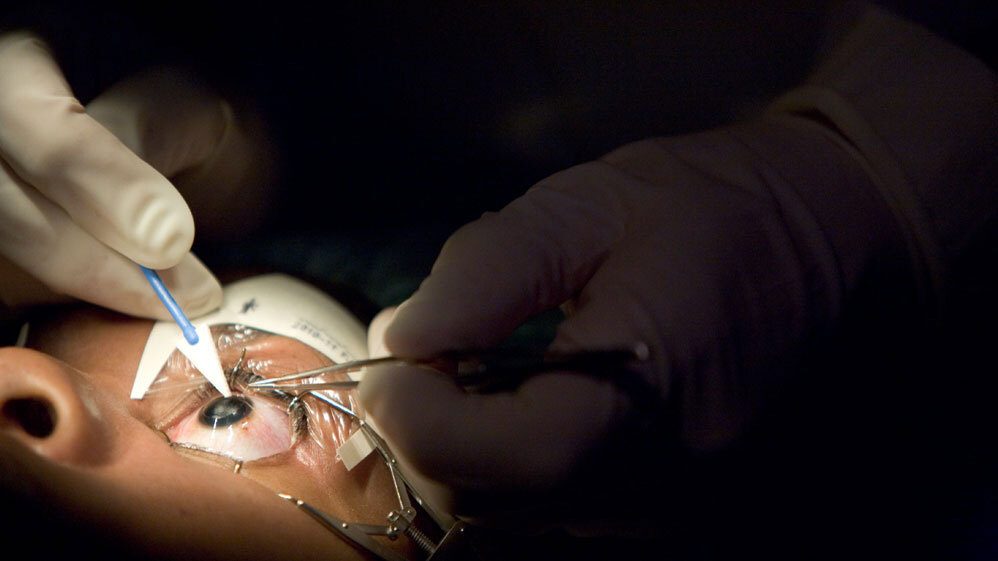
What to expect during laser eye surgery: many people feel anxious before undergoing laser eye surgery and often have questions like “Are you awake during LASIK?” and “How long does the procedure take?” Fortunately, there’s usually no need to worry.
This surgery is performed roughly 700,000 times a year in the United States. In the few decades since it became routine, laser eye surgery has proven to be a safe and reliable way to correct vision.
But what actually happens during laser eye surgery? It’s completely understandable to want to know what to expect before having the procedure, and understanding the steps can be especially helpful for patients who feel nervous and wonder how to stay calm during LASIK.
So, what can you expect before, during, and after your surgery? Keep reading for the information you need to feel informed and prepared for LASIK—and to understand exactly what to expect during laser eye surgery.
Also read: Can I Have LASIK If I Have Thin Corneas?
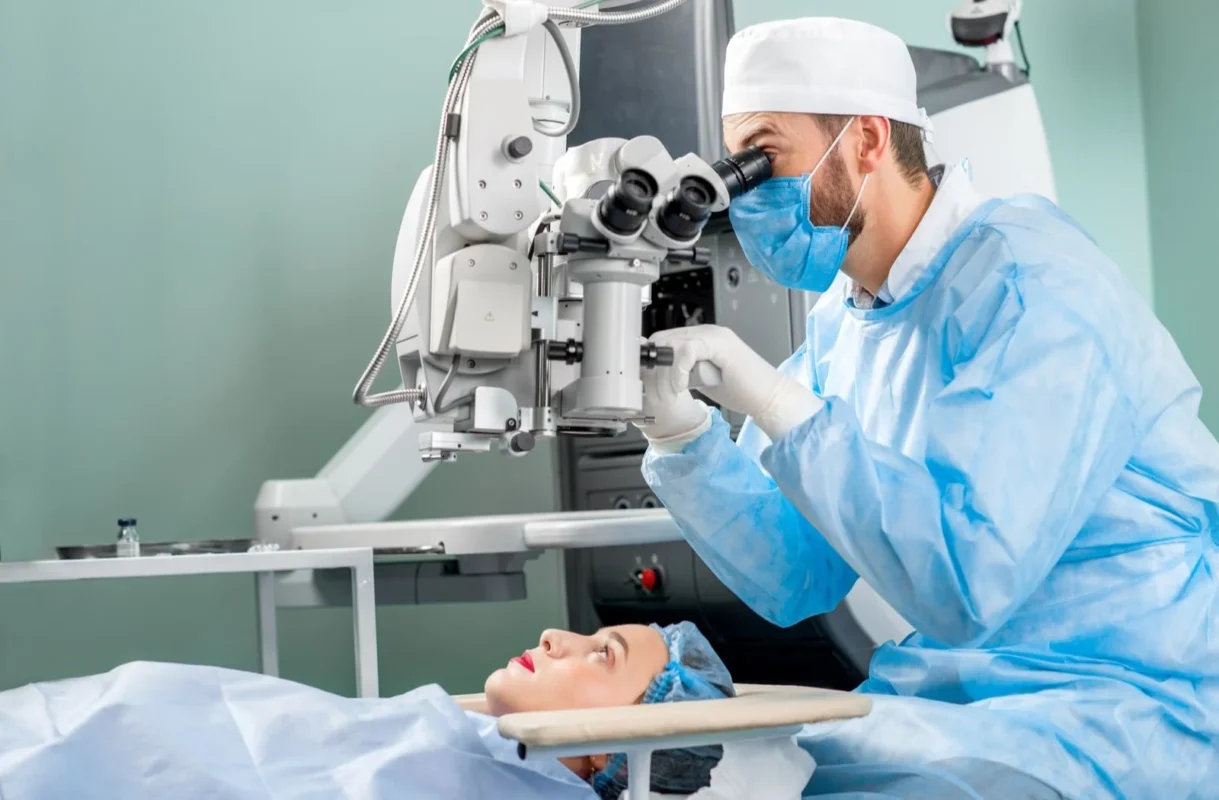
LASIK Eye Surgery
LASIK is a type of refractive surgery and is considered one of the top procedures in vision correction. This kind of surgery uses a laser to treat vision problems caused by refractive errors. You have a refractive error when your eye does not bend (refract) light properly.
For you to see clearly, light rays must pass through the cornea and the lens. The cornea and lens bend the light so that it focuses on the retina. The retina then converts this light into signals that travel to your brain and become images. With refractive errors, the shape of the cornea or lens prevents light from bending correctly. When light doesn’t focus on the retina as it should, your vision becomes blurry.
To have LASIK surgery, you need to meet certain criteria:
Also read: Femto-LASIK Vision Correction Surgery
Before You Decide on Laser Eye Surgery
Your initial evaluation by an ophthalmologist will determine whether you’re a good candidate for laser eye surgery. If your doctor decides that laser eye surgery is a suitable option for you, you’ll have the chance to ask questions and learn more about the procedure.
Be sure to ask your doctor about the benefits and risks of laser eye surgery, as well as any special considerations related to your particular case. Of course, you should also carefully weigh your options before deciding that surgery is the best choice for you.
After all, it’s an excellent option for many people, but it’s not the only one. If you and your doctor decide that this surgical procedure is the best way to improve your vision, it’s time to learn more about what happens during laser eye surgery.
Before Laser Eye Surgery
Many people wonder, “Are you awake during LASIK or other laser eye procedures?” Laser eye surgery is an outpatient procedure, so you will be awake the entire time. If that makes you feel uneasy, talk with your eye surgeon about strategies to help you stay calm during LASIK.
Keep in mind that you’ll receive numbing eye drops to keep you comfortable. However, once you’ve scheduled your surgery date, you’ll need to plan for someone to come with you. Because of the medications and blurred vision afterward, it will not be safe for you to drive yourself home.
You’ll also need to take a few steps in advance to get ready for surgery. If you wear contact lenses, you’ll have to stop wearing them for several weeks before the procedure. This allows your corneas to return to their natural shape so your eye surgeon can accurately evaluate your eyes before surgery. Ask your surgeon how long you’ll need to stay out of your contacts prior to the procedure.
Also read: What Is the Best Vision Correction Surgery in 2024?
During Laser Eye Surgery
Laser eye surgery is a very quick procedure; in fact, it usually takes less than 30 minutes. However, if you’re feeling anxious, you should talk with your surgeon about how to stay relaxed during LASIK. If needed, a mild sedative can be given.
In all cases, your eyes will be numbed beforehand with special anesthetic eye drops, and then carefully cleaned. The doctor will use a device called a lid speculum to gently keep your eye open.
Some surgeons use a small microkeratome blade to create a flap in the cornea, while others use a specialized femtosecond laser to make the incision instead. After that, suction is applied to the cornea. This doesn’t hurt, but you may feel some pressure, and your vision will become blurry. Once the cornea is stabilized, you’ll be able to see again, though your vision will dim and fade at different levels until the surgery is completed.
At this point, your surgeon will lift the corneal flap and ask you to focus on a fixation light from the excimer laser. The laser will then reshape your cornea according to your specific prescription.
Also read: Learn About the Benefits of Laser Cataract Surgery

After Laser Eye Surgery
Now that you know the answer to “Are you awake during LASIK?”, you might also wonder whether you need to stay awake after the procedure. In reality, it’s very important to rest your eyes for several hours following surgery. Many surgeons actually encourage their patients to take a nap after the operation.
Keep your protective eye shields on, just in case you accidentally rub your eyes while you sleep. If you’re unable to nap, you should still rest your eyes in a dark room and avoid screens, reading, or any activities that require intense visual effort.
Also read: Everything You Need to Know About YAG Laser Treatment After Cataract Surgery
Eye Surgeries in Jeddah
Before you decide whether to undergo laser eye surgery, you’ll need to meet with an ophthalmologist so they can evaluate you thoroughly. Your surgeon should order a range of tests to check the health of your eyes and your vision, and to determine whether you’re a suitable candidate for surgery.
These tests may include measuring the shape and thickness of your cornea and assessing your pupil size. Most clinics don’t charge separately for these tests, but some do, so be sure to confirm this in advance.
Your surgeon will ask you not to wear contact lenses before this evaluation. Contact lenses can temporarily alter the shape of your cornea, which may affect the accuracy of the measurements taken during your assessment. The no-lens period may range from three to five days for soft contact lenses, and up to two weeks for rigid (hard) lenses.
Also read: The Best Vision Correction Technology in Saudi Arabia

Whatever vision problems or refractive errors you may have, this delicate medical condition requires a thorough eye exam and the right treatment from a skilled, experienced ophthalmologist using effective medical tools to achieve the best possible results. Whatever eye disease or issue you’re dealing with, you can book an appointment at Batal Specialized Medical Complex for a comprehensive eye examination and to begin addressing your eye problems, no matter how complex they may be.