Med info
What Is Astigmatism and How Does a Person With Astigmatism See?

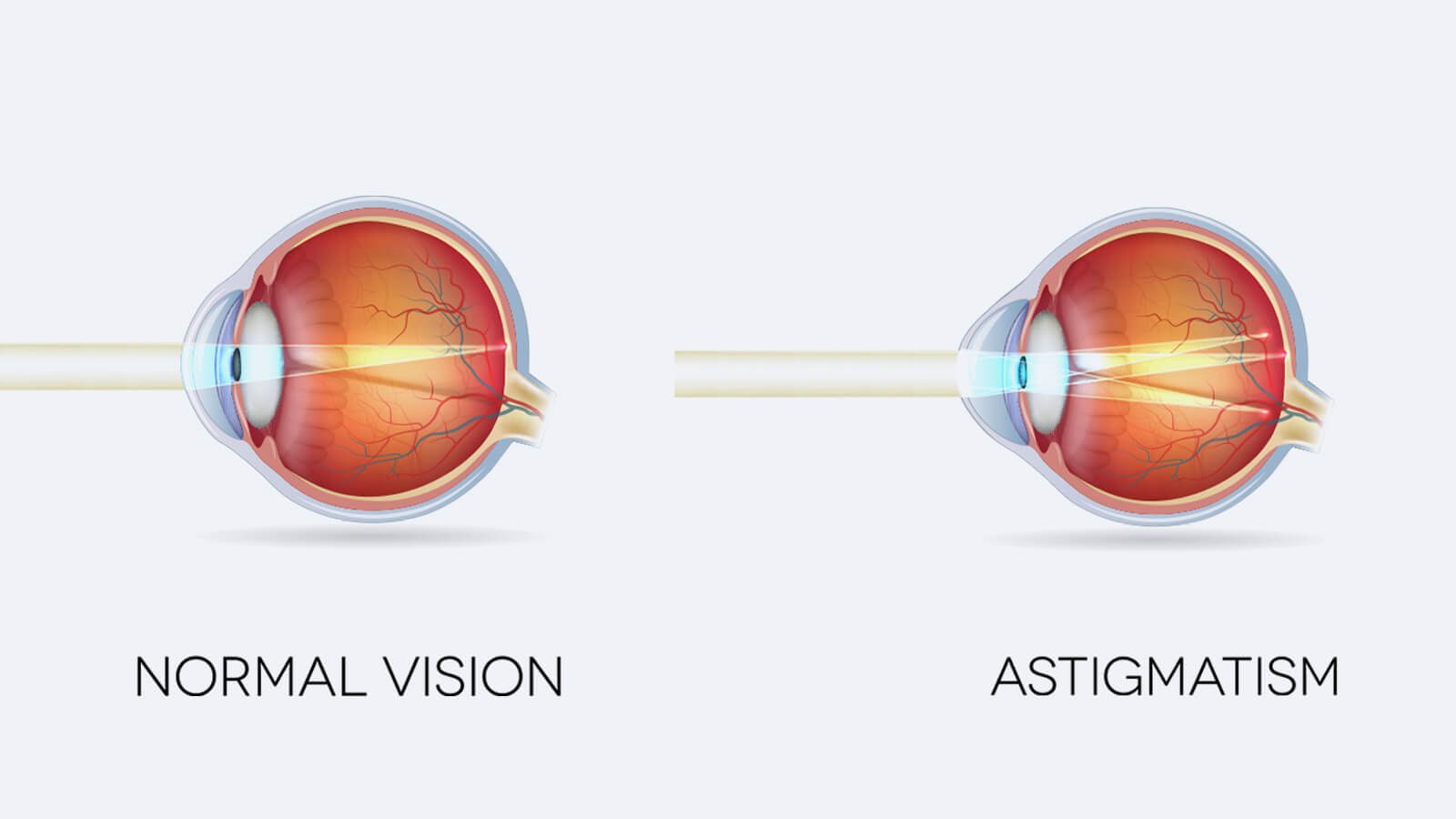
Have you ever heard of astigmatism (also called “irregular curvature” or “non-uniform focus”)? Maybe a family member has it, or you’ve noticed some of its symptoms yourself, such as blurry vision when looking at objects both near and far. Astigmatism is a very common condition; you’ve probably heard the term many times, but in this article we’ll explain exactly what it is.
Astigmatism is one of the most common eye conditions and can affect one or both eyes. It can cause blurred or distorted vision at all distances.
It can affect people at any age. In astigmatism, the way light passes through the eye and focuses on the retina is altered. This condition often becomes more noticeable at night or in dim lighting, because the pupil dilates to let in more light.
How Do You Develop Astigmatism?
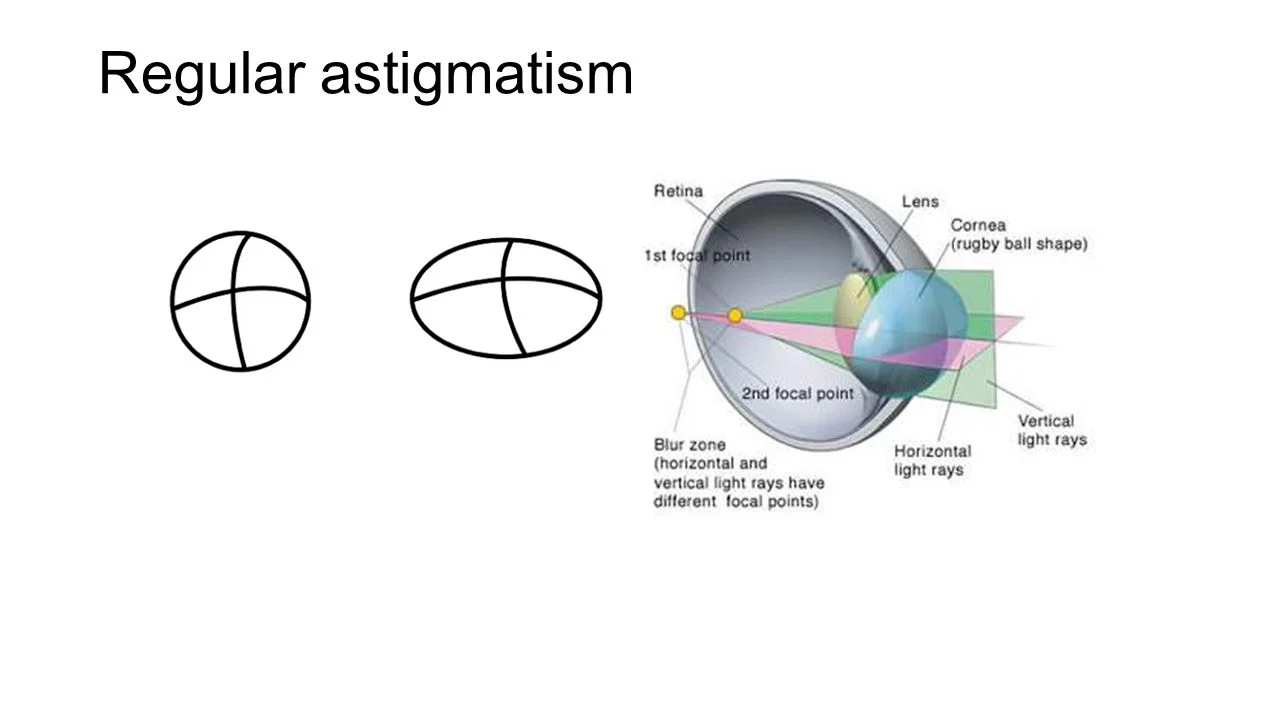
Simply put, astigmatism is a problem that affects the curvature of the cornea. Instead of having a perfectly round, basketball‑like shape, the cornea of someone with astigmatism is often shaped more like a football or an oval. This irregular curvature leads to a refractive error.
As a result, light is bent unevenly when it enters the eye, which causes images to appear blurred or distorted. Children and adults with astigmatism may struggle to read text or see fine details in objects at both near and far distances.
No one knows the exact cause in every case, but there are several possible reasons. A major well‑known factor is genetics. If you have blurry vision, it’s worth looking at your family history (parents or other relatives), as one of them may also have astigmatism.
Is astigmatism always inherited? Not necessarily. Sometimes trauma to the eye can cause astigmatism. Another cause is keratoconus, a disorder in which the cornea becomes thinner and bulges into a cone‑like shape, making astigmatism more severe. Keratoconus usually requires some form of medical or surgical correction to achieve clear vision. Fortunately, most cases of regular astigmatism‑related blur can be corrected easily.
Types of Astigmatism
There are two main types of astigmatism:
Regular Astigmatism
In regular astigmatism, the cornea is curved more in one direction than in the other, but this curvature changes in a smooth, predictable way. This is the most common type of astigmatism and can usually be corrected easily with eyeglasses or contact lenses.
Irregular Astigmatism
Irregular astigmatism is much less common. It occurs when the corneal surface is uneven or asymmetric. It may result from an eye injury and related corneal damage, or from a condition such as keratoconus, in which the central cornea becomes thin and assumes an irregular, cone‑like shape. This type of astigmatism cannot always be corrected with regular eyeglasses, but it may be improved with specialized contact lenses.

How Is Astigmatism Detected?
Having trouble seeing both near and distant objects clearly? Do you get frequent headaches? Schedule an appointment with your eye doctor. Blurry vision does not always mean you have astigmatism; it can be a sign of other conditions as well.
With a few quick, painless tests, an eye doctor (optometrist or ophthalmologist) can determine whether you or a family member has astigmatism and how severe it is. In general, if you notice any blurring of vision in either eye, you should book an eye exam to get a proper medical evaluation and the right advice.
Symptoms of Astigmatism
Astigmatism can cause blurred vision when you try to focus on distant objects such as road signs. It can also affect near tasks like reading, sewing, or using a digital device. If left uncorrected, astigmatism may lead to:
– Persistent eye strain
– Frequent headaches
– Squinting to see more clearly
– Difficulty seeing clearly at night
Treatment of Astigmatism
Most forms of astigmatism are straightforward to treat, and you have several corrective options. These include:
– Prescription eyeglasses
– Contact lenses (including toric lenses for astigmatism)
– Refractive surgery such as LASIK or PRK (for suitable candidates)
Keep in mind that when it comes to vision correction, not all options are suitable for every person. If you are over 40, you may also need multifocal or bifocal lenses to address presbyopia (age‑related difficulty focusing up close). Talk with your eye doctor about the best option for your eyes and your lifestyle.
Contact Lenses
Contact lenses are commonly prescribed for patients with astigmatism. These lenses, called toric lenses, often have a slightly thicker or weighted area near the bottom to keep them from rotating while on the eye. This design helps the lens stay properly oriented, which is crucial for clear, stable vision, and it also makes fitting them easier and more efficient during your eye exam.
Toric contact lenses can correct astigmatism and, at the same time, can be designed to correct nearsightedness (myopia) or farsightedness (hyperopia).
For clear vision with astigmatism, contact lenses need to remain stable and not rotate significantly, even if you have a very active lifestyle. Many modern toric lenses feature eyelid‑stabilized designs or other stabilization technologies that help keep your vision steady and sharp throughout the day.
Correcting astigmatism can be as simple as visiting your eye doctor to learn about the recommended options. Don’t hesitate to share your preferences regarding contact lens types and wearing schedules.
Finally, it’s important to see an eye doctor for a comprehensive eye exam. Blurry vision is not always caused by astigmatism, so you need a professional evaluation. Your doctor will perform several tests to determine the exact condition of your eyes and recommend the most appropriate treatment.
Are LASIK or PRK Long‑Term Solutions for Astigmatism?
LASIK (Laser‑Assisted In Situ Keratomileusis) and PRK (Photorefractive Keratectomy) are both types of refractive eye surgery that can be used to correct astigmatism. These procedures are among the safest refractive surgeries available and can provide a long‑lasting solution to many vision problems.
Both LASIK and PRK are used to correct refractive errors such as myopia (nearsightedness), hyperopia (farsightedness), and astigmatism, making them suitable options for people who want to reduce or eliminate their dependence on glasses or contact lenses. For many patients, they offer long‑term improvement in vision and can significantly enhance quality of life, allowing them to return to favorite activities without worrying about blurred or distorted vision.
Many people are understandably concerned about the risks of laser eye surgery. Any surgical procedure carries some risk, but when performed correctly and with proper pre‑operative evaluation and post‑operative care, LASIK and PRK are considered very safe.
LASIK is the more commonly performed procedure. However, if a person has only a small amount of astigmatism, laser surgery may not be necessary and can often be managed with glasses or contact lenses instead.
There are cases in which astigmatism significantly impairs vision; in such situations, refractive surgery may be worth considering. The main difference between LASIK and PRK lies in the first step of the procedure:
– In LASIK, a thin flap is created in the cornea before reshaping the underlying tissue with a laser.
– In PRK, the surface (epithelial) layer of the cornea is removed, and the laser reshapes the cornea without creating a flap.

Recovery after PRK typically takes longer and may involve more discomfort compared with LASIK, but both procedures can effectively correct astigmatism in appropriately selected patients. An ophthalmologist can determine which approach, if any, is best for your specific eye condition and lifestyle.