
Med info
What Are the Treatment Options for Lacrimal Gland Tumors?

A clinical trial is a research study that tests a new treatment approach to determine whether it is safe, effective, and potentially better than the current standard of care. Clinical trials may evaluate new medications, new combinations of standard treatments, or new doses of existing therapies.
At the Eye Center in Batal Specialized Complex in Saudi Arabia, patients can review and discuss the most effective, evidence‑based treatment options currently available for lacrimal gland tumors.
Read also: Eyelid Retraction Surgery | Causes and Treatment
Overview of Lacrimal Gland Tumor Treatment
For lacrimal gland tumors, different types of doctors work together to develop a comprehensive treatment plan that may combine several treatment modalities. This is known as a multidisciplinary team approach. For example, patients receiving radiation therapy to the eye often also need to be evaluated by an ophthalmologist or oculoplastic surgeon to help preserve vision and eye function after treatment.
At the Eye Center in Batal Specialized Complex, this team includes a range of healthcare professionals such as physician assistants, oncology nurses, social workers, pharmacists, counselors, dietitians, and others.
Treatment choices and recommendations depend on several factors, including:
Read also: Eyelid Retraction Surgery | Causes and Treatment
Surgery for Lacrimal Gland Tumors
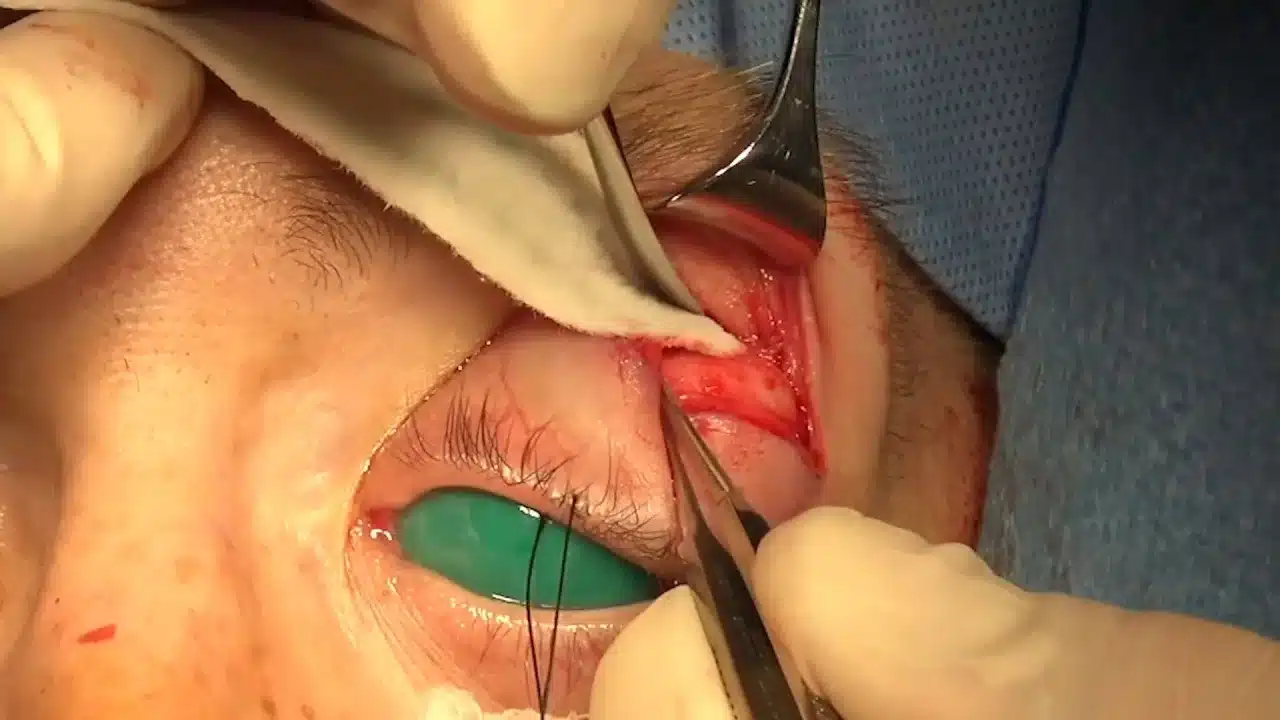
Surgery involves removing the tumor along with a margin of healthy tissue around it. Eye surgery is a common treatment for lacrimal gland tumors. During the operation, the ophthalmic surgeon removes the affected parts of the eye and surrounding structures, and in some cases may need to remove the entire eye (enucleation), depending on the size of the tumor and how far it has spread.
Potential side effects of eye surgery are similar to those of other operations and may include risk of infection, anesthesia-related complications, and pain.
Read also: Entropion Repair | Definition, Types, Treatment, and Causes
Enucleation (Removal of the Eye)
In some situations, removal of the eye is medically necessary. Because of the resulting loss of vision, a person with only one functioning eye may experience difficulty with depth perception. Most people gradually adapt to these changes with the support of the healthcare team.
Many patients worry about their appearance after eye removal. However, modern reconstructive and oculoplastic techniques usually provide very good cosmetic outcomes. To fill the space left by the removed eye, the patient is fitted with an ocular prosthesis (artificial eye). The prosthesis is designed to closely match the appearance and movement of the natural eye.
Read also: Brow Lift Surgery | What It Is and How It Is Performed in Detail
Radiation Therapy
Radiation therapy uses high‑energy X‑rays or other particles to destroy cancer cells. It is often used to treat lymphomas involving the lacrimal gland. A doctor who specializes in using radiation to treat cancer is called a radiation oncologist. A radiation therapy regimen (treatment schedule) consists of a specific number of treatment sessions given over a defined period of time.
There are different types of radiation therapy, including:
Read also: Eye Massage | Detailed Information About Eye Massage
Chemotherapy for Lacrimal Gland Tumors
Chemotherapy uses drugs to destroy cancer cells by stopping their ability to grow and divide. Chemotherapy is prescribed and managed by a medical oncologist, a physician who specializes in treating tumors with medications.
Systemic chemotherapy is delivered into the bloodstream so it can reach cancer cells throughout the body. Common methods of administration include an intravenous (IV) line inserted into a vein with a needle, or oral medications in the form of tablets or capsules.
For lacrimal gland tumors, chemotherapy can also be delivered directly into the blood vessels (intra‑arterial chemotherapy) that supply the eye and the tumor. This is done by inserting a catheter through the groin and guiding it under imaging (fluoroscopy or other imaging techniques) into the vessels in the head that feed the tumor.
A chemotherapy regimen (treatment schedule) consists of a set number of cycles given over a specific period. A patient may receive a single drug or a combination of different drugs at the same time.
Chemotherapy side effects depend on the specific drugs and doses used as well as on individual factors. Possible side effects include fatigue, increased risk of infection, nausea, vomiting, hair loss, loss of appetite, and diarrhea. These effects are usually temporary and tend to improve after treatment is completed.
Patients can visit the Eye Center at Batal Specialized Complex in Saudi Arabia to learn more about the basics of chemotherapy and how to prepare for it. Cancer drugs are continuously evaluated and updated as new evidence becomes available.
Read also: Ptosis (Droopy Eyelids) in Children and Adults | Causes and Treatment
Lacrimal Gland
Immunotherapy for Lacrimal Gland Tumors
Immunotherapy, also known as biologic therapy, is designed to enhance the body’s natural defenses to fight tumors. It uses substances produced either by the body or in a laboratory to improve, direct, or restore the function of the immune system.
Rituximab (Rituxan) is the most commonly used immunotherapy for lacrimal gland lymphomas. It is also widely used in the treatment of non‑Hodgkin lymphoma.
Read also: Zinc Tablets: Detailed Information | Benefits of Zinc for the Eyes
Treatment According to Lacrimal Gland Tumor Type
Below is a general outline of common treatment approaches based on the specific type and stage of lacrimal gland tumor, in addition to standard therapies:
Read also: Blood Sugar Levels and the Eye

It is recommended to contact the Eye Center at Batal Specialized Complex in Saudi Arabia and discuss options with experienced physicians. Speaking with other patients who have faced similar conditions can also be helpful. Regardless of the chosen treatment plan, palliative care will play an important role in relieving symptoms and managing side effects.