Med info
Surfer’s Eye: Everything You Need to Know About Pterygium

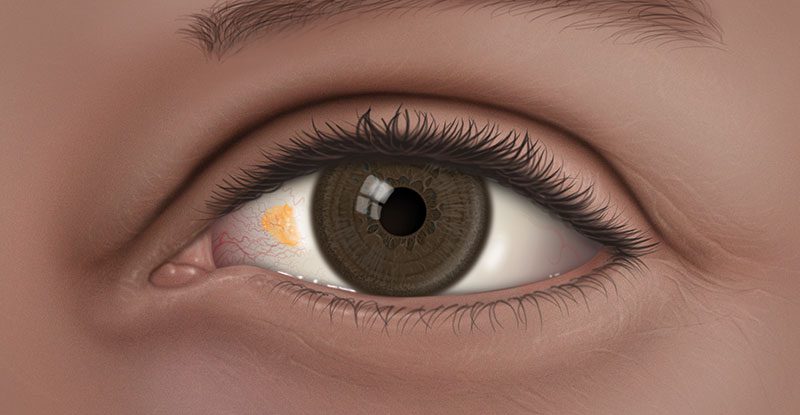
Surfer’s eye is a raised, fleshy, triangular-shaped growth on the conjunctiva of the eye. Long-term exposure to ultraviolet (UV) radiation is considered the main cause. In mild cases, your eyes may become red, swollen, and irritated. If the pterygium (surfer’s eye) grows, it can block or blur your vision. Treatment options include eye drops to relieve symptoms, ointments, and surgery if your vision is affected.
Read also:
What Is Surfer’s Eye (Pterygium)?
A pterygium (pronounced tur-IJ-ee-um) is a fleshy, raised growth on the conjunctiva of the eye. The conjunctiva is the clear membrane that covers the white part of your eye (sclera). It normally ends at the clear part of the eye, the cornea, and also lines the inside of your eyelids.
The word “pterygium” comes from the Greek words “pteryx,” meaning “wing,” and “pterygion,” meaning “fin.” A pterygium is a wing-shaped or triangular thickening of the conjunctival tissue. It can grow from either corner of your eye, but it most commonly starts at the inner corner, closest to your nose, and extends outward, sometimes onto the cornea. Surfer’s eye can affect one or both eyes, though it usually doesn’t appear in both at exactly the same time. When it does occur in both eyes, it’s called bilateral pterygium.
Read also: Everything You Need to Know About YAG Laser Capsulotomy After Cataract Surgery
Why Is Pterygium Called Surfer’s Eye?
The nickname “surfer’s eye” comes from the idea that surfers are constantly exposed to the same environmental factors that cause pterygium: intense sun, wind, and dust. A pterygium is not a cancer, but it can grow large enough to cover part of the cornea (the clear dome that covers the pupil and iris). When this happens, it can interfere with your vision. In rare cases, a pterygium can cause scarring of the cornea. Without treatment, you may lose part of your vision.
The Difference Between Pterygium and Pinguecula
Both pterygium and pinguecula are types of growths on the conjunctiva.
A pinguecula is a yellowish or whitish, slightly raised bump on the white of your eye. It stays confined to the conjunctiva and does not extend onto the cornea. It usually causes little to no symptoms and generally does not need to be removed.
Surfer’s eye (pterygium), on the other hand, is a fleshy growth that contains many blood vessels. It may remain small, or it can grow and extend onto the cornea.
Read also: Retinal Tear | Causes, Symptoms, Treatment, and Complete Information
Signs and Symptoms of Surfer’s Eye
Sometimes you may not notice any symptoms before the pterygium becomes visible. When symptoms do develop, they can range from mild to severe. Early signs and symptoms can include:
Read also: Learn About the Causes of Dry Eye
Later signs and symptoms can include:
What Causes Surfer’s Eye?
Surfer’s eye is an overgrowth of conjunctival tissue. It is believed to be caused by:
Read also: Can I Get Rid of My Glasses? The Complete Guide to Ditching Your Eyeglasses
Treatment for Surfer’s Eye (Pterygium)
If your symptoms are mild, not bothersome, and do not affect your vision, you may not need active treatment. Your eye care provider will likely schedule regular follow-up visits to monitor whether the pterygium is growing or starting to affect your vision. Your eye care professional may:
Read also: Do You Really Need Computer Glasses? Benefits and When They’re Necessary
How Long Does Surfer’s Eye Last?
A pterygium (surfer’s eye) can slowly grow and extend over the course of your life, or it may stop growing at some point and remain stable.
Who Gets Pterygium?
Pterygium can develop in anyone who spends a lot of time outdoors in the sun without proper eye protection. It is more common in older adults (over about 80 years of age) who live in regions close to the equator. Children rarely develop pterygium.
How Is Pterygium Diagnosed?

Pterygium is usually diagnosed with a slit-lamp examination. A slit lamp is a type of microscope that shines a narrow, bright beam (“slit”) of light into your eye. It allows your eye care provider to examine the front structures of your eye in detail, as well as parts of the inside. A slit-lamp exam is a routine part of a comprehensive eye exam.
When Might Surgery Be Needed?
You may need surgery if: