
Med info
Squamous Blepharitis: Everything You Need to Know About Causes and Treatment

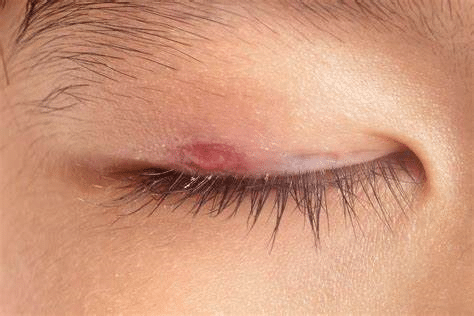
Squamous blepharitis is a type of eyelid inflammation that develops as a result of seasonal allergies or other allergic reactions. It can cause red, swollen eyelids with white or gray patches of flaky skin.
This form of blepharitis can be treated with steroid eye drops or home remedies if it doesn’t clear up on its own. In this article, we’ll explain this type of blepharitis in more detail, how it differs from other forms, why it develops, and what you can do to treat this eyelid condition.
See also: Graves’ Disease | Everything You Need to Know About the Most Common Cause of Hyperthyroidism
What Is Squamous Blepharitis?
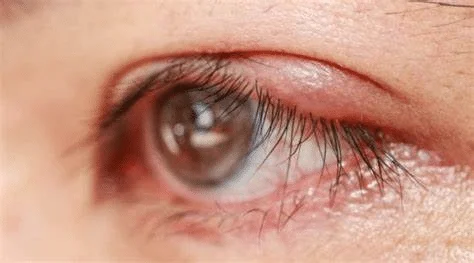
Squamous blepharitis
“Blepharitis” is a general term that refers to inflammation of the eyelids. It can be caused by:
Different Types of Blepharitis
Blepharitis is classified as anterior or posterior, depending on which part of the eyelid is affected:
Doctors also classify blepharitis as ulcerative or non‑ulcerative.
It can also be described as acute if it appears suddenly, or chronic if it lasts for a long time. Chronic blepharitis is the most common form.
How Do the Types of Blepharitis Differ?
Squamous and ulcerative blepharitis share many of the same symptoms. However, ulcerative blepharitis is characterized by small open sores (ulcers), while squamous blepharitis causes white or gray, scale‑like crusts of skin.
Squamous blepharitis is usually triggered by allergies, whereas the ulcerative form is more likely to be caused by infection. Infectious ulcerative blepharitis also tends to produce more crusting because of increased discharge.
See also: Phosphene Phenomenon – Seeing “Stars” | Causes, Symptoms, and Treatment 2024
What Are the Symptoms of Squamous Blepharitis?
Signs and symptoms of non‑ulcerative blepharitis may include:
Other general symptoms of blepharitis can include:
Why Does This Eyelid Condition Occur?

Why does this eyelid condition occur?
As mentioned above, squamous blepharitis usually develops due to an allergic reaction or exposure to eye irritants. It may be caused by seasonal allergies when the immune system overreacts to pollen from:
Other common airborne irritants that may trigger blepharitis include:
In a 2017 study, researchers found that 18% of a group of 61 people with allergic contact dermatitis also developed blepharitis. The three most common allergy triggers were:
Is Squamous Blepharitis Cancerous?
Squamous blepharitis is not a type of cancer and does not have the potential to turn into cancer. However, its name is similar to “squamous cell carcinoma,” which is a form of skin cancer.
Squamous cell carcinoma develops in the flat cells that make up the outer layers of the skin. About 5%–10% of all skin cancers occur on the eyelid, and roughly 5% of those are squamous cell carcinomas.
See also: Chalazion (Eyelid Lump) | Causes, Symptoms, and Treatment
Can You Get Squamous Blepharitis in Both Eyelids?
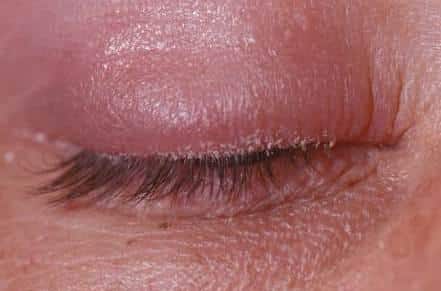
Can you get squamous blepharitis in both eyelids?
Blepharitis often affects both eyelids, and it’s uncommon for it to occur in just one eye. However, this can happen if a specific trigger comes into contact with only one eye. For example, you might get a substance you’re allergic to on your hand and then touch just one eye.
How Can an Eye Doctor Help With This Type of Blepharitis?
Your eye doctor can diagnose blepharitis by performing a comprehensive eye exam. They can examine your eyes and eyelids with specialized instruments and may take a swab to test for signs of infection.
Blepharitis is primarily a clinical diagnosis, meaning your doctor can usually identify it based on your signs and symptoms alone. They can also prescribe steroid eye drops to help you control the inflammation.
How Is This Type of Blepharitis Treated?
The mainstay of treatment for blepharitis is good eyelid hygiene and avoiding known triggers. If your symptoms are caused by allergies, staying away from the allergen can help prevent recurrent flare‑ups.

It’s a good idea to follow these eyelid care steps two to four times a day when you have symptoms, and once daily if you have chronic blepharitis.
Your doctor may also recommend additional treatments to help manage your symptoms, such as: