Med info
Post-PRK (Surface Laser) Eye Surgery Tips


Having clear instructions after PRK (photorefractive keratectomy) is essential so you know what you should and shouldn’t do during recovery. PRK is a type of laser eye surgery used to treat nearsightedness (myopia), farsightedness (hyperopia), and astigmatism. It is most often recommended for patients with mild to moderate refractive errors.
Understanding what to expect before and after PRK, as well as its long‑term effects, helps you prepare better and recover more comfortably. Below are practical, medically accurate guidelines and tips to follow after surface laser eye surgery.
Preparing for PRK Laser Surgery
Before undergoing PRK, you will meet with your ophthalmologist, who will explain what to expect during and after the procedure and will answer all your questions. Preparation generally includes the following steps:
Initial Consultations
During your consultation, your eye doctor will determine whether you are a good candidate for PRK laser eye surgery by reviewing your full medical and ocular history and performing a detailed eye exam. Your personalized treatment plan is then created based on:
– Measuring corneal thickness
– Corneal topography (mapping the cornea)
– Checking intraocular pressure
– Measuring your refractive error (degree of nearsightedness, farsightedness, or astigmatism)
If you wear contact lenses, you will need to stop wearing them before your pre‑operative evaluation, because contacts can temporarily change the shape of your cornea and affect the accuracy of the measurements:
– Soft contact lenses: usually stopped about 3 days before the exam
– Other types (e.g. rigid gas permeable lenses): often require a longer break, as directed by your doctor
Your ophthalmologist will give you specific instructions based on the type of lenses you use.
On the Day of Surgery
On the day of your PRK procedure:
– Eat a light breakfast
– Take all prescribed medications as directed
– For women: do not wear eye makeup, facial creams around the eyes, or bulky hair accessories that could interfere with comfortably positioning your head under the laser
– Arrange for someone to drive you to and from the clinic; you must not drive yourself
– Your doctor may prescribe a mild sedative before the procedure to help you relax
What to Expect During PRK Laser Surgery
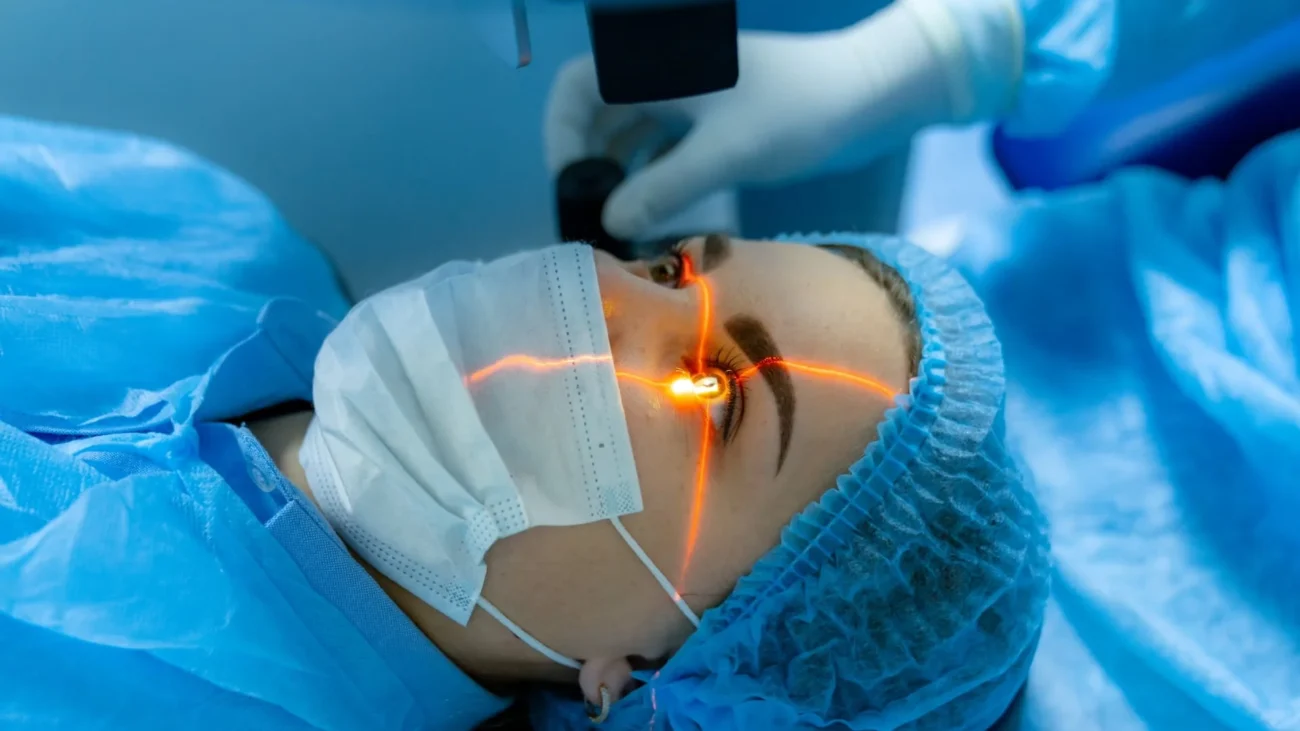
During PRK, numbing eye drops are used so you don’t feel pain. The entire treatment usually takes around 10 minutes or less for both eyes.
The procedure involves:
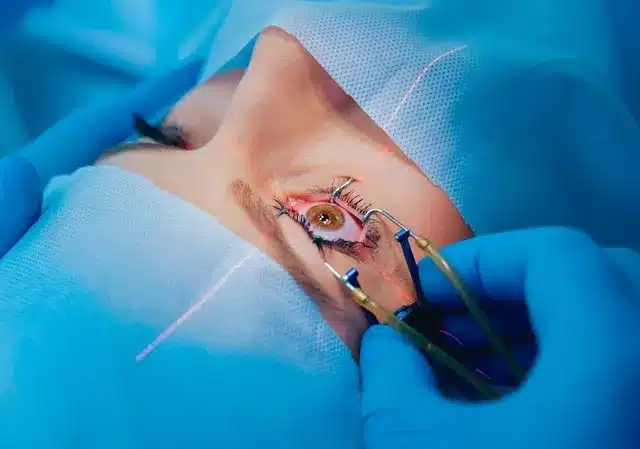
1. Gently removing the thin outermost epithelial layer of the cornea to access the underlying corneal tissue.
2. Using an excimer laser to precisely reshape the curvature of the cornea. The laser is computer‑controlled to deliver very accurate pulses of ultraviolet light, removing microscopic amounts of tissue in a specific pattern.
3. Placing a “bandage” soft contact lens on the cornea at the end of the procedure to protect the surface while it heals over the next 3–5 days.
The main difference between surface PRK and LASIK occurs in the first step of treatment:
– In LASIK, a thin corneal flap is created using either a microkeratome or a femtosecond laser, then lifted to expose the underlying corneal tissue. The excimer laser reshapes the tissue, and the flap is then repositioned.
– In PRK, the superficial epithelial layer is removed (rather than creating a flap), and the excimer laser is applied directly to the surface of the corneal stroma. The epithelium then regenerates naturally over the following days.
A key advantage of PRK over LASIK is that it does not require creating a corneal flap or relying on a thick stromal bed. This makes PRK particularly suitable for patients with relatively thin corneas who may not be ideal candidates for LASIK.
Key Post‑PRK Surface Laser Surgery Tips
Before going home after PRK, you will rest at the clinic for a short period, then a family member or friend can take you home. Your doctor will prescribe:
– Antibiotic eye drops
– Anti‑inflammatory eye drops
– Lubricating (artificial tears) drops
– Oral pain medication if needed
These help control pain, reduce swelling, and lower the risk of infection, supporting proper healing. It is crucial to follow your ophthalmologist’s instructions exactly.
You must attend all scheduled follow‑up visits in the weeks after surgery. PRK recovery is generally longer than LASIK:
– Vision often remains blurry for several days and gradually improves over 1–2 weeks
– It may take several weeks for your vision to fully stabilize
– Many patients can return to driving between about 2–3 weeks after the procedure, depending on their individual healing and the doctor’s approval
To help reduce the risk of infection and complications:
– Avoid non‑contact sports and strenuous activities for at least 3 days
– Avoid contact sports or activities with a high risk of eye trauma (e.g. boxing, football/soccer, hockey, martial arts) for about 2–4 weeks, or as advised by your doctor
– Avoid swimming pools, hot tubs, and jacuzzis for roughly 2 weeks, as these increase the risk of infection
Always check with your ophthalmologist before resuming any vigorous physical activity.
Long‑Term Results of PRK
PRK has a high success rate worldwide, and advances in laser technology have significantly improved outcomes, making PRK one of the leading options for refractive surgery.
Most patients achieve excellent vision after PRK:
– Many reach 20/20 (6/6) vision
– Almost all achieve 20/40 (6/12) or better
Some patients may still need glasses or contact lenses for certain activities (e.g. night driving or reading as they get older), but their prescription is usually much lower than before surgery.
If at any time after PRK you notice symptoms such as severe pain, sudden drop in vision, marked redness, or discharge, you should contact your ophthalmologist at Al‑Batal Specialized Center immediately. These could be signs of a more serious problem that may threaten vision if not treated promptly.
General Tips After Laser Eye Surgery
After reviewing specific tips for PRK surface laser surgery, here are general recommendations that apply after most types of laser eye procedures. These are focused on lowering the risk of infection and ensuring proper healing:
– Use all prescribed eye drops exactly as instructed
– Avoid rubbing or pressing on your eyes
– Wear protective sunglasses outdoors to reduce light sensitivity and UV exposure
– Follow your doctor’s advice about when you can resume work, driving, and screen use
Pre‑Laser Eye Surgery Tips
Laser eye surgery (such as LASIK – laser‑assisted in situ keratomileusis – and other corneal reshaping procedures) is a common and effective way to correct refractive errors like myopia, hyperopia, and astigmatism.
Once your eye surgeon has confirmed that you are a suitable candidate and you decide to proceed, it is important to prepare correctly so you get the best possible outcome.
Important Pre‑Laser Instructions
– If you wear contact lenses, you will need to stop using them for a period before surgery.
Contact lenses can temporarily change the shape of your cornea, which can affect the accuracy of the pre‑operative measurements that guide the laser treatment. Your doctor will tell you exactly when to stop:
– Soft lenses: usually several days before
– Rigid gas permeable or hard lenses: often longer
– Increase your fluid intake in the days leading up to surgery. Drinking adequate water supports your overall health and can help reduce dryness after the procedure. Try to drink at least four glasses of water daily, unless your physician has restricted your fluid intake for other medical reasons.
– Inform your surgeon about all medications and supplements you are taking.
Some drugs may increase the risk of complications during or after laser eye surgery, and your surgeon may advise you to stop certain medications beforehand if it is safe to do so.
– Avoid alcohol on the day of surgery, as it can dehydrate you and interact with medications.

– Avoid smoking as much as possible, especially around the time of surgery, because smoke and chemical vapors can irritate the eyes and may slow healing.
Eye diseases and vision problems are common. If you suffer from any vision issues and are considering laser correction, you can book an appointment at Al‑Batal Specialized Center, where you will receive comprehensive care from some of the best ophthalmologists in Jeddah.