Med info
Ocular Herpes: Everything You Need to Know

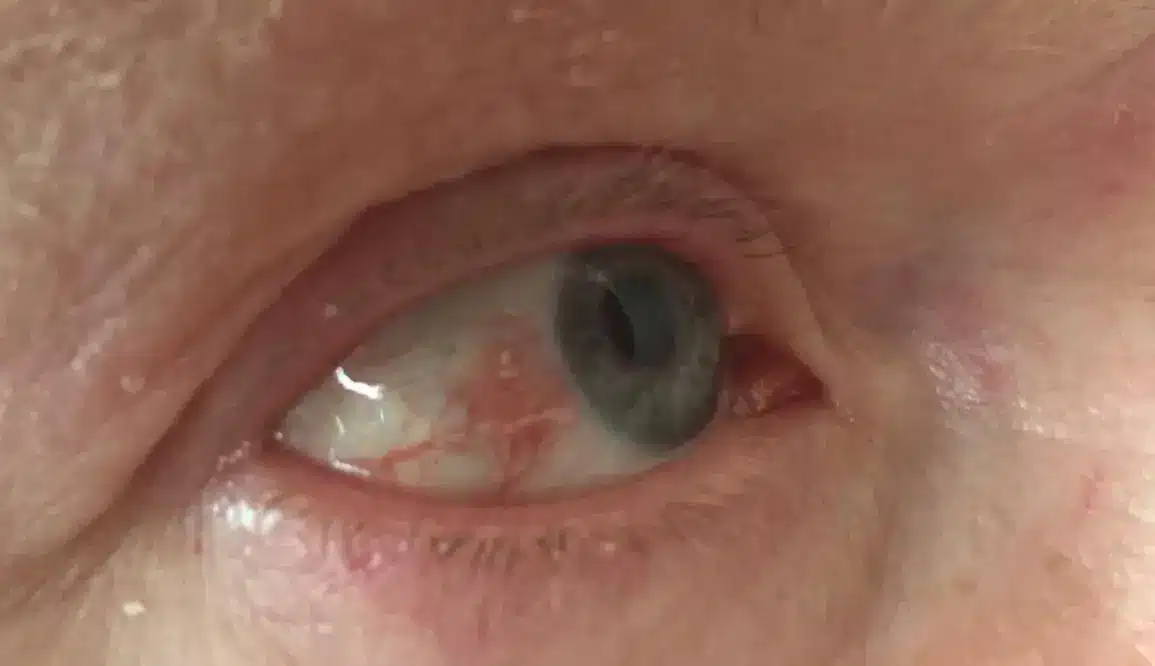
Ocular herpes (herpes of the eye) is caused by herpes simplex virus and varicella-zoster virus. These viruses are not the same as the ones that cause genital herpes, but they can lead to a painful eye condition with redness and a skin rash around the eye.
Read also: Eye Freckles | Causes, Symptoms, and Treatment
What Is Ocular Herpes?
Herpes simplex virus (the cause of “cold sores” or “fever blisters” on the lips and face) and varicella-zoster virus (the cause of chickenpox and shingles) are two viruses that can sometimes infect the eyes.
When this happens, the condition is known as ocular herpes. Most people are exposed to these viruses in childhood and then carry them in a dormant (inactive) state in their bodies for life.
In 1995, most children in the United States began receiving the varicella (chickenpox) vaccine, so they do not carry the wild varicella-zoster virus. These two viruses are different from the virus that causes genital herpes (herpes simplex virus type 2), and ocular herpes is not considered a sexually transmitted infection.
Although both conditions are caused by herpes viruses, different medications may sometimes be required to treat each flare-up.
Read also: Macular Hole | Causes, Diagnosis, and Treatment
How Does Ocular Herpes Develop?
Like many viruses, herpes simplex virus type 1 and varicella-zoster virus are already present in most adults. Herpes-family viruses typically live along nerve fibers in humans without causing any problems.
From time to time, the viruses may reactivate, multiply, or travel from one area of the body to another. That is when herpes disease “breaks out” or spreads. This often occurs when the immune system is weakened by another health problem or significant stress.
Read also: Corneal Transplant (with Images) | Accurate Information and Facts
How Is Ocular Herpes Diagnosed?
The two main forms of ocular herpes have different symptom patterns. What they share in common is that both can be very painful because they directly affect the nerves.
Your doctor may suspect herpes zoster ophthalmicus (shingles involving the eye) if some or all of these features are present:
– A painful, blistering rash on one side of the forehead or around one eye
– Red, irritated eye on the same side as the facial rash
– Sensitivity to light (photophobia)
– Blurred vision or eye pain
The problem may be due to herpes simplex keratitis (herpes simplex infection of the cornea) if your doctor sees signs such as:
– Red, watery, painful eye
– Foreign-body sensation (feeling like something is in the eye)
– Light sensitivity
– Decreased or blurry vision
– Characteristic branching (“dendritic”) ulcers on the corneal surface seen during the eye exam
Many other eye conditions can cause similar symptoms, so it is essential for a physician—preferably an ophthalmologist—to perform a complete eye examination to determine the exact cause. Your doctor may also use special diagnostic tests if ocular herpes is suspected.
For example, they will likely check the pressure inside the eye (intraocular pressure). There is also a special dye called fluorescein that may be placed on the eye. This dye glows under ultraviolet (blue) light and can help show whether the virus is damaging the corneal surface.
Read also: Low Vision Symptoms and Everything You Need to Know
How Is Ocular Herpes Treated?
Because herpes is caused by a virus, antibiotics such as penicillin are not effective. Only antiviral medications work against herpes infections. Depending on how severe the herpes zoster ophthalmicus is and which parts of the eye are involved, your doctor may prescribe oral antiviral tablets, antiviral eye drops, or both.
Whatever type of medication is recommended, it is crucial to continue using it for the full duration prescribed by your doctor. Even if the eye looks and feels better, stopping the medication too early can allow the infection to come back.
If the infection involves the cornea, your doctor may also prescribe a different type of eye drop called a corticosteroid.
Corticosteroids can help control the inflammation caused by the infection, but in some patients they can also raise the pressure inside the eye. If corticosteroid eye drops are used, it is very important to return for follow-up visits so the doctor can monitor your intraocular pressure.
In some cases, a pupil-dilating eye drop may be prescribed to help prevent damage to the iris (the colored part of the eye) caused by inflammation.
Unfortunately, ocular herpes can remain painful for several days even after treatment has started and the eye is beginning to improve. This can be discouraging, but it does not mean the treatment is failing. The medications are still helping, and the pain usually resolves with time.
In some people, however, post-herpetic neuralgia (chronic nerve pain following shingles) may persist due to nerve damage from the infection. In rare cases, long-term medications may be needed to manage these ongoing symptoms.
Read also: Cornea Transplant Surgery | Everything You Need to Know
Treatment of Herpes Simplex Keratitis
Herpes simplex keratitis is generally treated with the same types of antiviral eye drops and oral antiviral tablets. It is equally important to use these medications exactly as prescribed and to keep all follow-up appointments with your eye doctor.
Read also: Requirements for Vision Correction Surgery | Are You a Good Candidate?

Whatever your ocular herpes symptoms or other eye problems may be, this is a delicate medical condition that requires careful examination and appropriate treatment by a skilled, experienced ophthalmologist using effective medical tools to achieve the best possible outcome. Whatever eye disease you are dealing with, you can book an appointment at Batal Specialized Center to have a thorough eye examination and start addressing your eye problems appropriately.
Read also: Seborrheic Blepharitis | Causes and Treatment Options You Need to Know