Med info
Nasolacrimal Duct Obstruction: Causes, Symptoms, and Treatment

When the tear (nasolacrimal) duct is blocked, your tears can’t drain normally, leaving your eye watery and irritated. This condition occurs due to a partial or complete blockage in the tear drainage system. Nasolacrimal duct obstruction is common in newborns and usually improves on its own during the first year of life.
In adults, the blockage may result from trauma, infection, or, more rarely, a tumor. Treatment depends on the underlying cause of the obstruction and the patient’s age.
Read also: Femtolasik: Everything You Need to Know
Symptoms of Nasolacrimal Duct Obstruction
When Should You See an Eye Doctor?
Causes of Nasolacrimal Duct Obstruction
Read also: Causes of Blurred Vision and Everything Related to It
How the Tear Drainage System Works
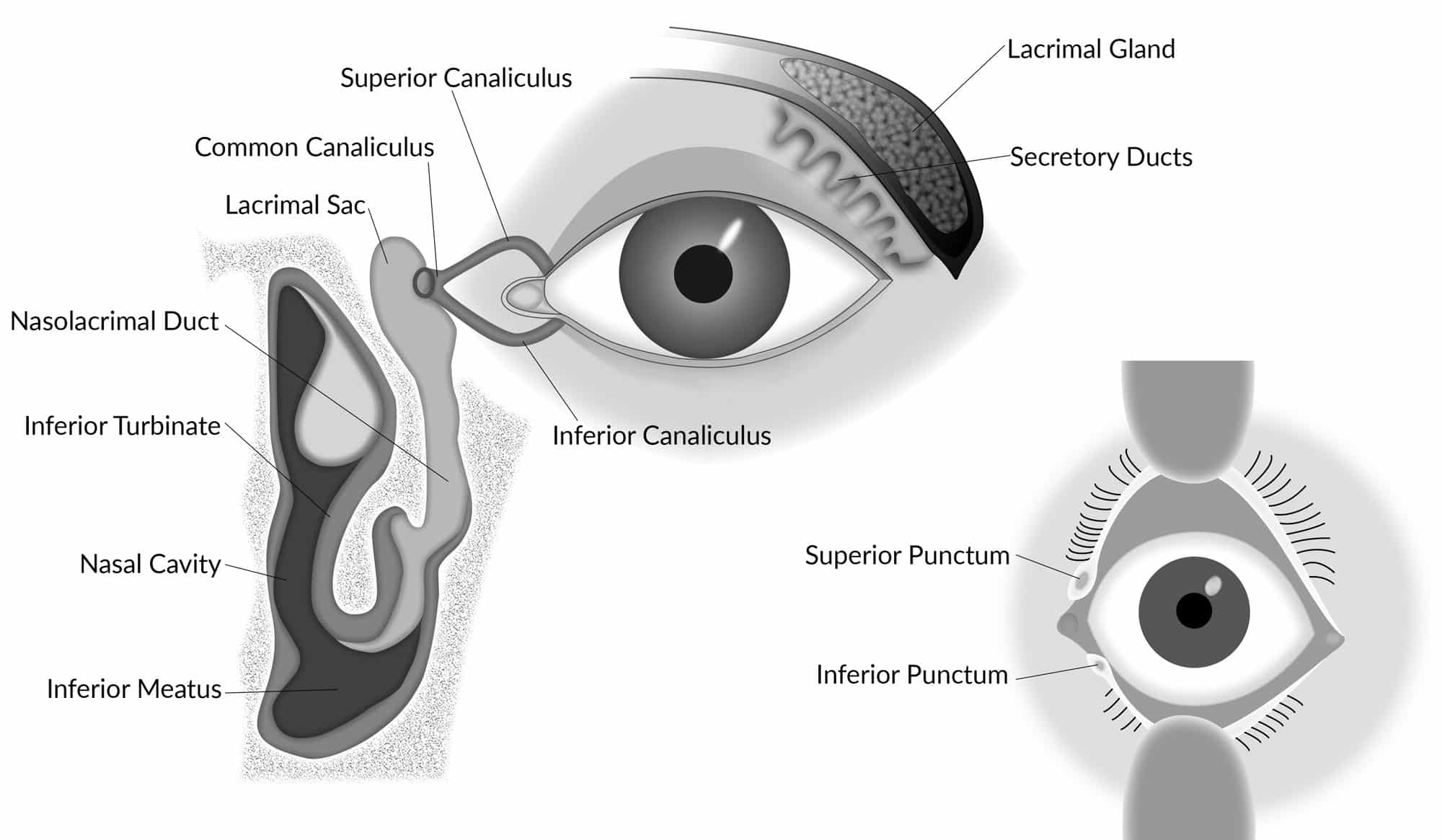
The lacrimal glands produce most of your tears. These glands are located inside the upper eyelid above each eye. Normally, tears flow from the lacrimal glands across the surface of your eye, then drain into tiny openings called puncta found at the inner corners of the upper and lower eyelids.
From the puncta, tears pass through small channels (canaliculi) into a reservoir on the side of the nose called the lacrimal sac. From the lacrimal sac, tears move down through the nasolacrimal duct and empty into the nasal cavity. Once in the nose, tears are absorbed.
A blockage can occur at any point along this tear drainage pathway—from the puncta to the nose. When this happens, tears don’t drain properly, causing persistent tearing (epiphora) and increasing the risk of eye infections and inflammation.
Read also: The 10 Most Important Symptoms of Myopia and How to Treat It
Risk Factors
Read also: Causes of Yellow Eyes, Treatment, and Indications
Complications of Nasolacrimal Duct Obstruction
Because your tears are not draining as they should, they stagnate within the tear drainage system. This stagnant fluid creates an ideal environment for bacteria, viruses, and fungi to grow, which can lead to recurrent eye infections and inflammation.
Any part of the tear drainage system can become infected or inflamed, including the clear membrane covering the white of the eye and inner eyelids (the conjunctiva), as a consequence of nasolacrimal duct obstruction.
Prevention
To reduce the risk of developing a blocked tear duct later in life, seek prompt treatment for any eye inflammation or infection. Also, follow these recommendations to help prevent eye infections in the first place:

If your symptoms worsen or the condition becomes more advanced, you can visit Al-Batal Specialized Eye Center to receive proper evaluation and management from some of the best ophthalmologists in Jeddah.
Read also: Is It True That Contact Lenses Can Be Used to Treat Hyperopia (Farsightedness)?