Med info
Myopia: New Techniques, New Hope in 2026

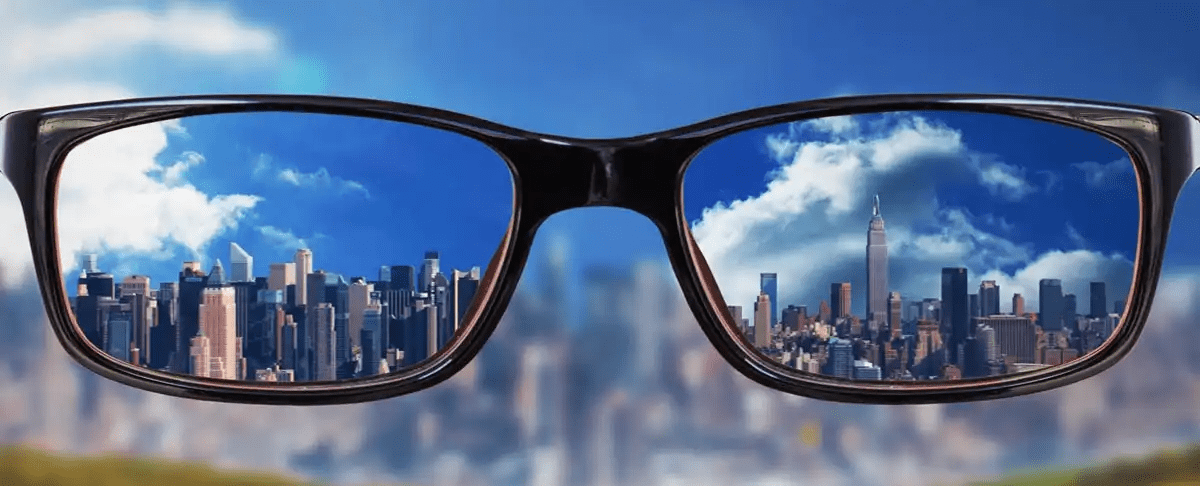
Myopia is a common eye condition that is usually diagnosed before the age of 20. It affects your distance vision — you can see nearby objects clearly, but you struggle to see faraway objects, such as aisle signs in the supermarket or road signs. Treatments for myopia include eyeglasses, contact lenses, and surgery.
Myopia is a common refractive problem that often begins between the ages of 6 and 14. It affects an estimated 5% of preschool children, about 9% of school-age children, and 30% of teenagers.
Children are more likely to develop myopia if one or both parents are nearsighted. However, myopia is increasing overall, especially in children. No one is completely sure why, but experts believe it may be related to spending more time on near work such as using computers and playing video games.
From treatment to correction options and everything in between, here is what you need to know about this common condition.
What Does Myopia Mean?
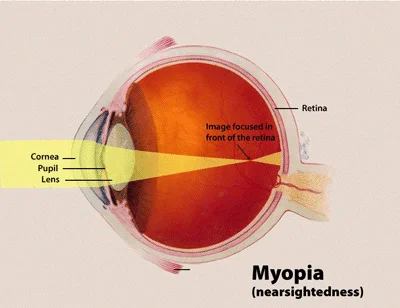
Myopia is a type of refractive error, an eye disorder that affects how light is bent (refracted) inside the eye, leading to difficulty seeing distant objects clearly.
People with myopia can usually see well up close, but distant objects appear blurry.
Myopia in English
The medical term for قصر النظر is “myopia,” and it is also commonly called “nearsightedness.”
Causes of Myopia
Although genetics are the main underlying cause of myopia, eye strain from prolonged near work, such as reading or using a computer, may also contribute to its development.
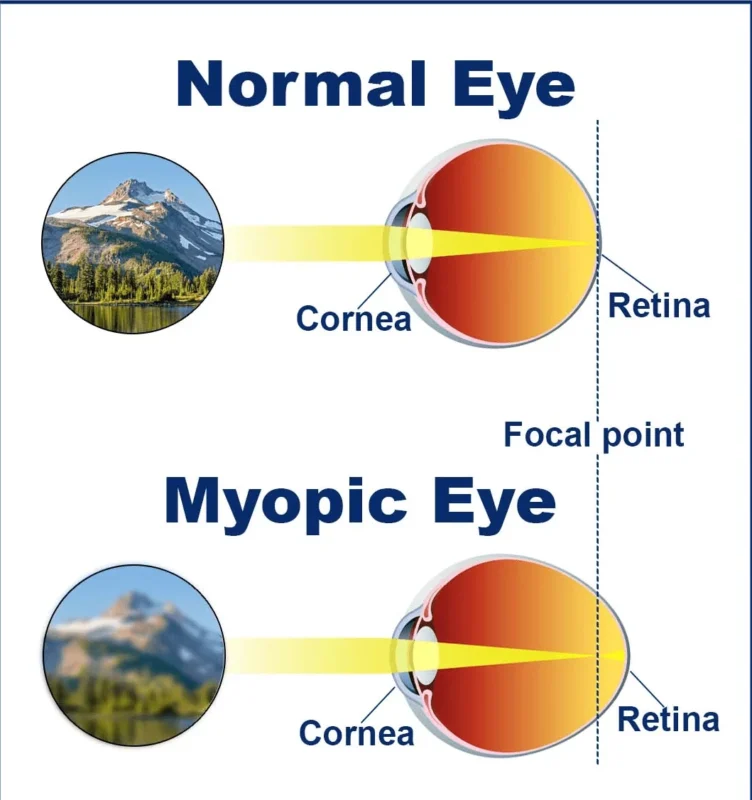
In an eye without myopia, light is focused directly on the surface of the retina, and the image is transmitted to the brain via the optic nerve.
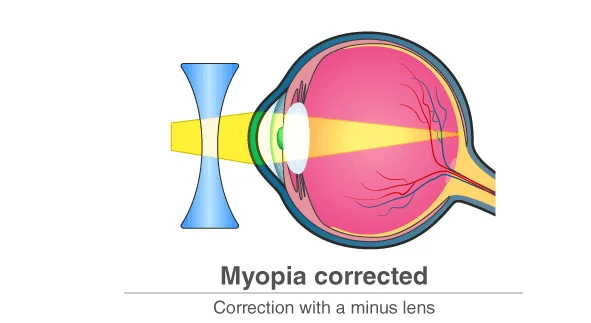
In a myopic eye, light cannot be focused on the retina in the same way. This is often because the eyeball is longer than normal, the cornea is more oval than round, or the cornea is more steeply curved than usual.
These changes cause light rays to focus at a point in front of the retina instead of directly on it. Light that does not reach the retina correctly results in a blurred image being sent to the brain.
Risk Factors for Developing Myopia
Myopia is believed to result from a combination of genetic and environmental factors. Risk factors associated with its development include:
Diagnosis of Myopia
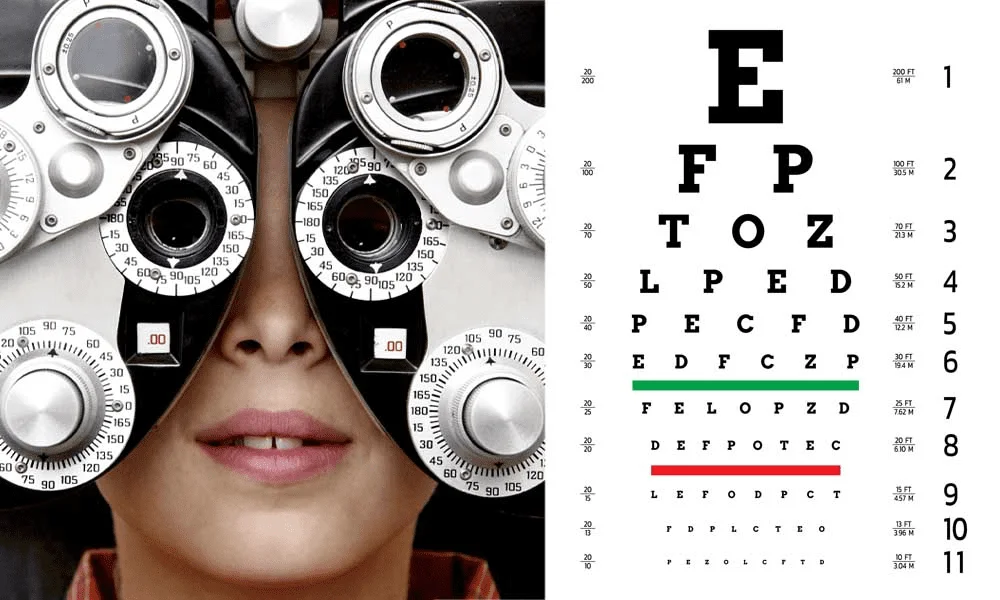
Myopia is diagnosed through a refraction assessment during a routine eye exam. Refraction is often evaluated using the familiar chart with rows of letters that get progressively smaller, known as the Snellen chart.
A special trial frame is placed on your face, and different lenses are inserted until you can see clearly. This test can also detect astigmatism, a condition in which an irregularly shaped cornea cannot focus light sharply at any distance.
Your eye doctor may also use an instrument called a phoropter to measure how your eyes focus light, along with a handheld illuminated tool called a retinoscope. This testing helps determine how your eyes respond under normal viewing conditions.
Symptoms of Myopia
Signs of Myopia
People often first notice myopia in their teenage years, when they may start experiencing headaches and realize that others can see distant objects more clearly than they can. This can be surprising for a young person who doesn’t remember how sharp their vision was as a child. Many teenagers are amazed at how clear the world looks after getting their first glasses or contact lens prescription.
A person with myopia may squint to see clearly, blink frequently, and rub their eyes. They may also hold books or other reading materials very close to their face.
Myopia can lead to poor performance at school. If a student’s grades start to decline around age 10 to 12, undiagnosed myopia may be one of the reasons.
If you have myopia, you may notice:
Additional myopia symptoms to watch for in your children include:
Myopia Treatment Options
Eyeglasses or contact lenses can correct myopia in both children and adults. In addition, several types of refractive surgeries offered at Al Batal Specialized Complex in Jeddah can also treat myopia.
Modern Laser Procedures
There are several advanced laser procedures used to treat myopia, including:
Prescription Contact Lenses
Some people achieve sharper distance vision with contact lenses. However, the potential downside is that contacts require more care and strict hygiene to keep them clean and safe.
Prescription Eyeglasses
Eyeglasses are the most popular option for correcting myopia. Depending on how much correction you need, you may wear your glasses all day or only when you need to see clearly at a distance.
Single-vision lenses can make distance vision much clearer. However, people over 40 who have myopia may also need bifocal or progressive lenses so they can see both near and far objects clearly.
What Are Myopia Levels?
Optometrists measure the focusing power of your eye in diopters (D), a technical term describing how strong a lens must be to correct your focus and give you clear vision.
On your glasses prescription, myopia is written as a negative power. For example, a prescription of minus three and a half diopters would be written as -3.50 D.
Most people with myopia less than -6.00 D do not develop additional eye problems. This is sometimes called “simple myopia,” meaning that the eyes are otherwise healthy and the blurriness from myopia can be easily corrected with glasses or contact lenses.
Prevention Tips from the Eye Center at Al Batal Specialized Complex
Although there is currently no cure for myopia, there are daily steps you can take to support overall eye health. Today, it is especially important to set limits for your children (and yourself) on activities that cause eye strain.
The Eye Center at Al Batal Specialized Complex recommends the following tips to help reduce the risk of myopia:
Frequently Asked Questions About Myopia
People with myopia generally see better up close but may have difficulty with distance vision.
Myopia is the inability to see distant objects clearly, whereas low vision is a level of visual impairment that interferes with daily activities and cannot be fully corrected with glasses, contact lenses, or standard treatments such as medication or surgery.
Although there is no definitive cure for myopia, it can be successfully managed with corrective lenses or refractive surgery, such as LASIK.
Myopia does not usually improve with age. It typically develops in childhood, progresses through the teenage years, and then stabilizes in early adulthood.
Myopia can lead to certain complications, such as myopic macular degeneration (MMD), retinal detachment (RD), cataracts, and primary open-angle glaucoma (OAG).
Studies show that high levels of screen time are associated with about a 30% increase in the risk of developing myopia.
The natural way to help reduce the progression of myopia includes adopting a healthy lifestyle and positive visual habits, such as allowing your eyes to relax regularly so the eye muscles do not remain under constant strain.
Myopia occurs when there are problems with the shape of the cornea (the clear front surface of the eye) or the lens (the internal structure that helps the eye focus).
Mild myopia (usually less than 3 diopters) is also referred to as low myopia. Moderate myopia ranges from 3 to 6 diopters. Severe myopia (greater than 6 diopters) is also called high myopia.
Myopia usually develops between the ages of 6 and 12 and tends to worsen or progress every few to several months until the late teenage years.
Depending on the degree of myopia, you may only need to wear glasses for specific activities, such as watching a movie or driving. If you are highly nearsighted, you may need to wear your glasses all the time.
About 50% of people have stable myopia by age 15, around 75% by age 18, and about 90% by age 21. Almost all cases of myopia are stable by age 24.
There is no cure for myopia, but available treatment options can help manage the symptoms. Myopia progression usually slows down or stops by about age 20.
In myopia, images of distant objects are focused in front of the retina rather than directly on it.
It is characterized by blurred vision when looking at distant objects and is usually the result of an abnormally elongated eyeball.
A concave (minus) lens is a diverging lens. It spreads incoming light rays so that they focus on the retina, which is why concave lenses are used to correct myopia.
Astigmatism is a condition in which abnormal curvature of the cornea causes two focal points to fall at different locations, making both near and distant objects appear blurry. Astigmatism can cause eye strain and is often found in combination with myopia.