MicroPulse Laser System
Strabismus (eye misalignment) has different severity levels, and the condition can change over time. A treatment that was suitable a year ago may no longer be effective today. At Batal Specialist Medical Center, our specialists focus on accurate vision and eye alignment assessment before selecting the most appropriate vision correction procedure at the right time. This is because there are multiple treatment and surgical options available, and choosing the correct one depends on precise diagnosis and individual eye condition.
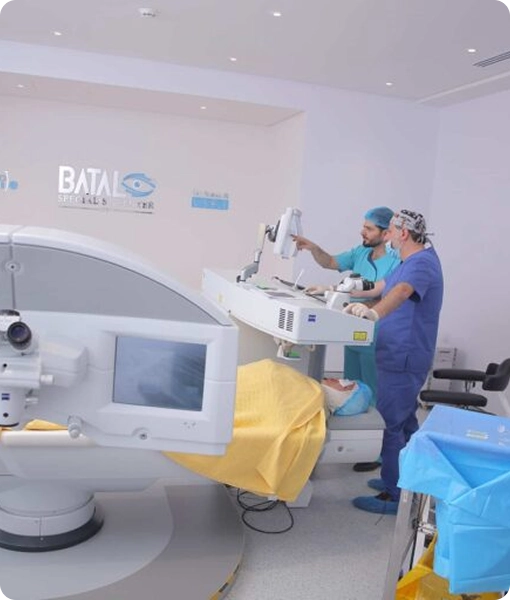
MicroPulse Laser System
Strabismus (eye misalignment) has different severity levels, and the condition can change over time. A treatment that was suitable a year ago may no longer be effective today. At Batal Specialist Medical Center, our specialists focus on accurate vision and eye alignment assessment before selecting the most appropriate vision correction procedure at the right time. This is because there are multiple treatment and surgical options available, and choosing the correct one depends on precise diagnosis and individual eye condition.
Laser Eye Surgery
Eye misalignment (strabismus) in children may be genetic and often appears from birth. In some cases, it may be caused by pressure from the eyelids or facial bones on the cornea. Strabismus can also result from severe eye trauma, neurological disorders, or muscle spasms. It is important to note that untreated strabismus in children can lead to progressive vision loss and reduced visual acuity over time. Early detection and proper diagnosis are essential to determine the most suitable vision correction treatment and prevent potential complications, including amblyopia (lazy eye).
Symptoms of Strabismus (Eye Misalignment)
People with strabismus often adopt an abnormal head posture to maintain visual alignment. For example, they may tilt or turn their head slightly to focus on objects and improve visual clarity.
Strabismus symptoms can overlap with other eye conditions, which is why accurate diagnosis is essential before determining the appropriate treatment, including whether laser vision correction is suitable. Common symptoms include:
Blurred vision
Double vision (diplopia)
Difficulty reading small text
Eye strain, especially after prolonged use of phones or computers
Difficulty distinguishing colors
Light sensitivity (photophobia)
Headaches
Vision Correction Surgery (Laser Eye Surgery)
Some cases of strabismus can be treated with prescription glasses or contact lenses, especially in mild cases. In certain situations, patients may even need to wear corrective lenses during sleep. However, for more advanced degrees of eye misalignment or other eye conditions, surgical vision correction may be the most appropriate treatment option.
The goal of laser vision correction surgery is to improve visual clarity and reduce or eliminate the need for glasses or contact lenses. Laser eye surgery is a minimally invasive procedure that usually takes only a few minutes, depending on the level of correction required. The laser is used to reshape the cornea, resulting in clearer vision. Many of our patients are amazed by how quickly they recover and how soon they can stop using glasses.
One of the key advantages of laser eye surgery is that it is virtually painless compared to traditional surgical procedures.
Why the MicroPulse Laser System?
With some traditional laser eye treatments, even slight patient movement during the procedure can affect accuracy or damage delicate eye tissues. However, with the MicroPulse laser system, minor patient movement does not harm the eye—it may only slightly extend the treatment time.
After MicroPulse laser treatment, vision may be slightly blurry for the rest of the day, and mild irritation at the front of the eye is normal for a few hours. Our doctors usually prescribe lubricating eye drops to reduce this irritation and keep the eye comfortable.
By the next day, vision typically returns to its pre-treatment level, with gradual improvement over the following months. Some patients at Batal Eye Specialty Center have reported noticeable vision improvement within days to weeks after the procedure.
What You Should Know About MicroPulse Laser for Glaucoma
Glaucoma is a leading cause of irreversible blindness worldwide, affecting more than 70 million people. Traditional treatment options include topical medications (eye drops), laser trabeculoplasty, surgical procedures, glaucoma drainage devices (GDD), and cyclodestructive procedures. Typically, GDD implantation and ciliary body destruction are reserved for refractory or end-stage glaucoma cases with limited visual potential.
MicroPulse laser therapy is a safe and effective option for reducing intraocular pressure, especially in moderate to advanced glaucoma. Unlike traditional cyclodestructive treatments, MicroPulse can also be used in eyes with good visual potential, making it a promising and less invasive treatment alternative.
MicroPulse Laser System
MicroPulse laser therapy is an advanced and precise laser treatment option for a wide range of eye conditions, including retinal disorders and other ophthalmic diseases. Its primary goal is to preserve current vision levels and prevent further vision loss, although some patients treated at Batal Specialist Medical Center have also experienced noticeable visual improvement. Unlike conventional laser systems, the MicroPulse laser offers highly effective results in vision correction and in treating eye misalignment associated with glaucoma, with fewer side effects such as retinal burns or tissue damage. It is also associated with less discomfort compared to traditional laser treatments. For these reasons, MicroPulse laser therapy is one of our preferred treatment options at Batal Specialist Medical Center, as it is safe, effective, and cost-efficient for selected eye conditions.
Facts and Insights About MicroPulse Laser
Diabetic Retinopathy Examinations and Treatment Options with Dr. Ahmed Al-Batal
Laser eye surgery has become increasingly common as an intermediate treatment option between medications and traditional glaucoma surgery. The most common type of laser procedure for open-angle glaucoma is known as Argon Laser Trabeculoplasty (ALT).
The goal of laser treatment is to improve fluid drainage from the eye and reduce intraocular pressure, which can otherwise damage the optic nerve and lead to vision loss.
How Does MicroPulse Laser Work?
MicroPulse laser uses repetitive low-energy laser pulses separated by short rest periods. This “micropulsing” technique allows the trabecular meshwork to cool between pulses, helping to prevent tissue damage.
MicroPulse laser significantly reduces or eliminates many risks and side effects associated with conventional laser treatments, making it a safe and repeatable treatment option when needed.
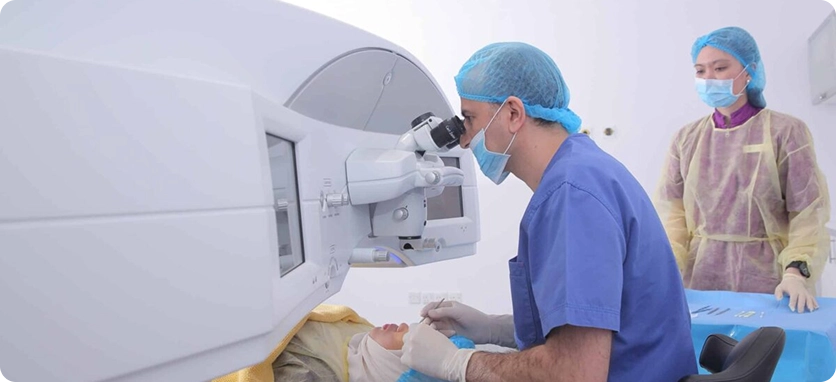
Laser Eye System
Laser eye surgery—often referred to as LASIK—can correct many vision problems. However, there are potential risks and side effects, and not everyone is a suitable candidate for this procedure.
The eye has an outer layer called the cornea, and changes in corneal shape can lead to vision problems such as astigmatism and myopia (nearsightedness).
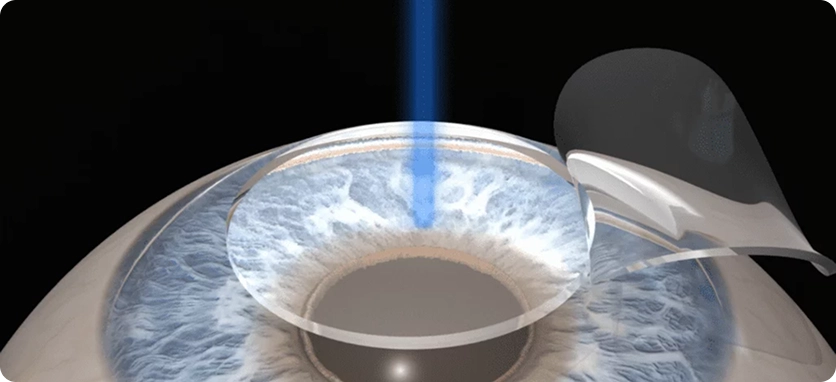
Laser eye surgery is a medical procedure that reshapes the cornea. The exact technique used depends on the type and severity of the vision problem being treated.
Laser vision correction can treat conditions such as nearsightedness, farsightedness, and astigmatism. The procedure is usually quick, and patients remain awake throughout the surgery. It is generally painless—if significant pain occurs, it may indicate a complication.
The MicroPulse laser system also helps treat a wide range of vision irregularities and eye conditions with high precision and safety.

How Do I Know Which Laser Eye Procedure Is Right for Me?
Are you a suitable candidate for laser eye surgery? And which type of laser procedure is best for your condition? Read on to find answers to these questions and more.
LASIK Surgery
LASIK is the procedure most people think of when considering laser eye surgery options.
This procedure takes about 15 minutes and does not use blades. Instead, a femtosecond laser is used to reshape the cornea by creating a thin flap in the corneal tissue.
Whether you have nearsightedness, farsightedness, or astigmatism, LASIK can help reduce or eliminate the need for glasses or contact lenses.
Good candidates for LASIK are typically between 20 and 50 years old with a stable and moderate vision prescription.
LASEK Surgery
If you are not eligible for LASIK due to thin corneas, LASEK may be a suitable alternative.
This procedure uses an excimer laser to remove and reshape a thinner layer of the cornea. Although the technique differs slightly, the visual outcomes are similar to LASIK.
ReLEx® SMILE Procedure
ReLEx® SMILE is a newer laser vision correction procedure and is ideal for active individuals or those involved in contact sports.
It is a minimally invasive procedure that can correct higher degrees of myopia than LASIK. Since no corneal flap is created, there is no risk of flap displacement after surgery.
PRESBYOND (Laser Blended Vision)
PRESBYOND, also known as laser blended vision, is designed to correct age-related vision problems (presbyopia).
It is an excellent option for adults over 45 years old who may not be suitable candidates for other laser procedures.
In this technique, one eye is optimized for near vision and the other for distance vision, reducing or eliminating the need for reading or bifocal glasses.
How to Choose the Right Laser Eye Surgery
Choosing the right laser eye procedure is not as complicated as it may seem. After reviewing your symptoms and comparing available procedures, you will be able to have an informed discussion with your ophthalmologist and make the best decision for your vision needs.

Laser Eye Surgery
Laser vision correction is suitable for 4 out of 5 people, and it can be an effective alternative to glasses or contact lenses—especially for those who struggle with foggy glasses while wearing masks or face coverings.
The first step in treating vision problems is determining whether laser vision correction is suitable for your condition and identifying the most appropriate type of laser treatment based on accurate diagnosis. This is where Batal Eye Specialty Center plays a key role.
By using leading ophthalmic technologies—especially in diagnosing and treating eye misalignment—we are proud to perform vision correction procedures that have transformed the lives of many patients.

MicroPulse Laser Treatment
MicroPulse laser therapy is a safe and effective treatment option for retinal diseases and glaucoma. This technology uses repetitive low-energy laser pulses separated by short rest intervals, allowing precise treatment while protecting healthy eye tissues.
It is often preferred over other laser treatments because it reduces or eliminates many of the risks and side effects associated with traditional laser therapy. Another key advantage is that MicroPulse treatment can be safely repeated if needed.
MicroPulse laser therapy is commonly recommended to control intraocular pressure when medications are no longer sufficient and to treat glaucoma. However, some patients may still need to continue glaucoma medications even after the procedure.

Which Retinal Diseases Can Be Treated with Laser Surgery?
Retina specialists successfully use thermal laser therapy and MicroPulse laser treatment to manage retinal tears. Macular edema is commonly seen in diabetic retinopathy and retinal vein occlusion, and laser therapy is also used to treat abnormal blood vessel growth in the retina associated with diabetic retinopathy, retinal vein occlusion, and retinal artery occlusion.
Laser treatment is also used for choroidal neovascularization, which is commonly observed in wet age-related macular degeneration (AMD) and ocular histoplasmosis syndrome.
At Batal Specialist Medical Center, our doctors provide the highest level of medical expertise and exceptional patient care. If you need more information about laser procedures, you can book an appointment or contact our support team for guidance.
Laser Vision Correction
Up to 90% of patients are suitable candidates for laser vision correction surgery. While some traditional eye treatments have proven effective in managing retinal disorders, multiple studies have shown that MicroPulse laser technology can improve visual outcomes with no serious eye complications reported.
At Batal Specialist Medical Center, we use advanced laser technologies to deliver safe, precise, and effective vision correction tailored to each patient’s condition.
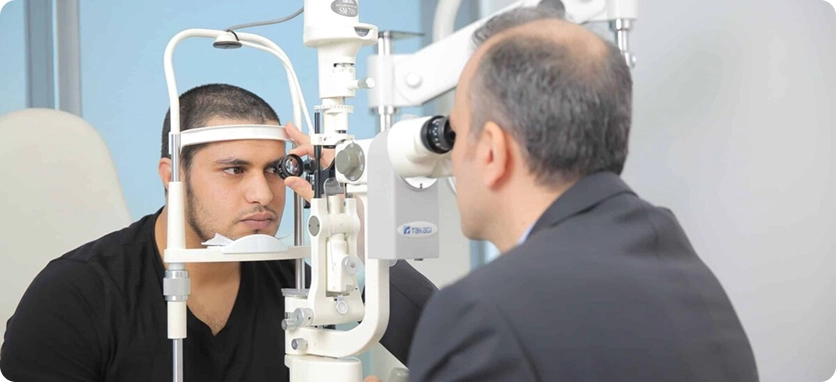
Day Surgery Center
The Batal Specialist Medical Center Day Surgery Unit is the first of its kind in the Middle East, distinguished by its luxurious design, advanced infrastructure, and state-of-the-art medical and technical equipment.
The Day Surgery Center provides minor and minimally invasive eye procedures that do not require general anesthesia or hospital admission, allowing patients to return home on the same day while still receiving comprehensive medical care and follow-up.
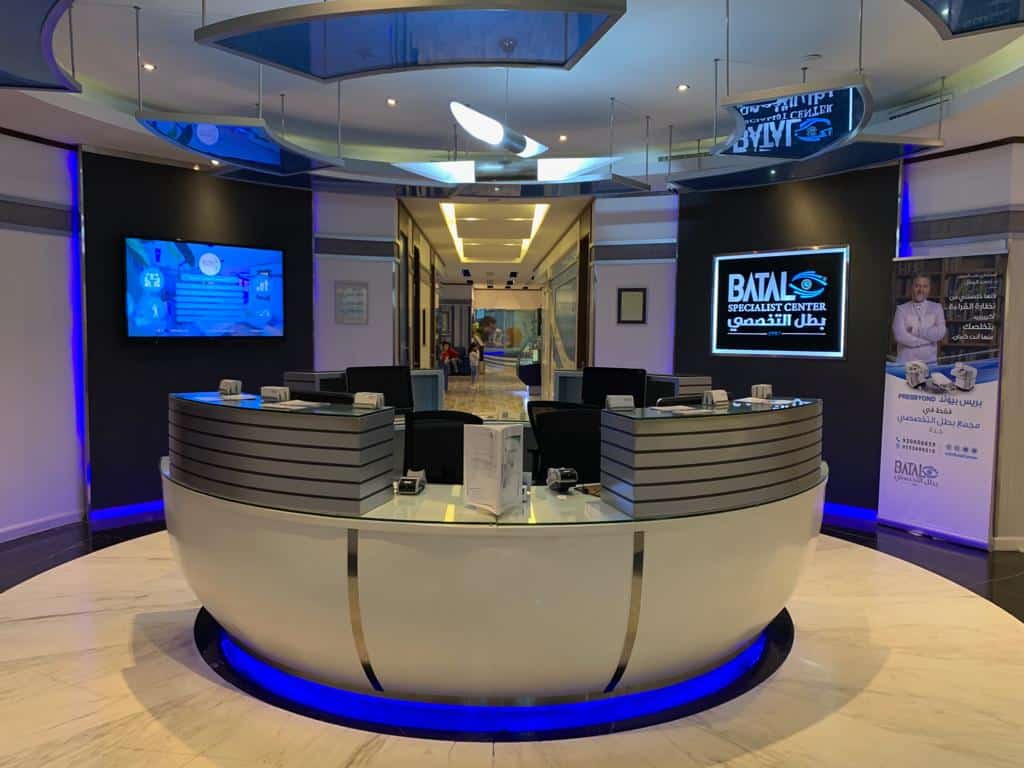
Our Doctors – Batal Specialist Medical Center
Dr. Ahmad Hassan Batal
Senior Consultant, Pediatric Surgery and Eye Surgery Fellow of the British Royal Surgical College Fellow of the American Academy of Ophthalmology
Dr. Wadah Chalabi
Member of the British Royal College of Surgeons<br>Vitreoretinal and cataract surgery
Dr. Baraa Faham
Dr. Issa Baissa
Consultant in Ophthalmology & Vision Correction
Dr. Mohamad Jeed
15 years of experience in pediatric eye diseases and strabismus.
Dr. Saud al-Jahani
fellowship in the subspecialty glaucoma and cataracts operations
Dr. Aziz Al-Balawi
Saudi Board of Ophthalmology<br>
Diseases and surgery of the Retina, Vitreous and laser
Dr. Tarek Al Najjar
more than 25 years of experience in eyes Oculoplastic surgeries and the lacrimal system.
Dr. Mohamed hantira
the certificate of the Scientific Council of Ophthalmology Glaucoma, laser vision correction and corneal surgery
Dr. Mohammed Al-Mousa
Consultant in Corneal Surgery, Vision Correction & Cataract
Get comprehensive medical care


Installment plans available up to 100% via Tamara and Tabby