
Med info
Lens Implant Surgery for Vision Correction


Lens implant surgery for vision correction involves placing an advanced artificial lens inside your eye to correct refractive errors such as nearsightedness, farsightedness, and reduced visual acuity. The implanted lens can also replace a cloudy natural lens (cataract), and the visual outcomes are typically very predictable, providing excellent clarity.
In general, laser eye surgery is one of the most widely used methods for permanent vision correction. The most popular modern techniques are LASIK and femto-LASIK. However, despite being highly advanced, these methods have limitations when it comes to correcting very high refractive errors.
In such cases, the most effective solution is lens implantation. The type of intraocular lens (IOL) selected is determined based on detailed examinations performed before the procedure.
Lens implant surgery is usually performed to treat severe refractive errors, significant corneal irregularities, and cataracts. In addition, lens implants are used to address age-related loss of reading vision (presbyopia).
Just like LASIK, lens implant surgery is performed with the goal of eliminating the need for glasses or contact lenses. In this article, the ophthalmologist at Batal Specialized Center explains everything related to lens implant surgery for vision correction.
Which is better: lens implantation or LASIK?
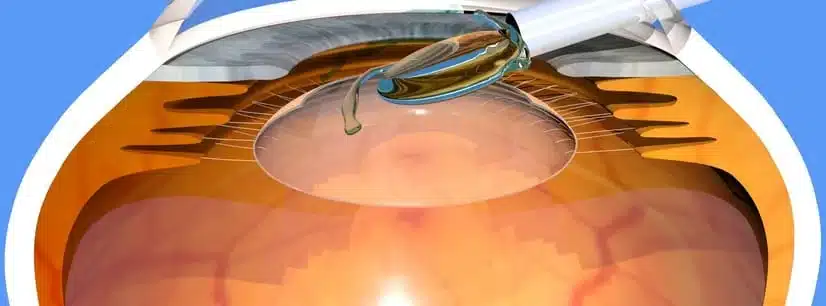
What Is Lens Implant Surgery for Vision Correction?
The intraocular lens implanted inside the eye is made of a transparent biocompatible plastic material and is roughly one-third the size of a dime. Cataract is the gradual clouding of the eye’s natural lens over time, leading to impaired vision.
This usually affects people over the age of 60, but it can also occur in younger individuals. The change is not sudden; over time, patients begin to report increasing difficulty seeing clearly.
Cataracts were once thought to cause permanent vision loss. However, ophthalmic surgeons discovered they could successfully treat cataracts by removing the cloudy lens and replacing it with an artificial intraocular lens.
Lens implant techniques for vision correction have been used to treat cataracts since the early 1980s. Before that, patients who had cataract surgery had to rely on very thick glasses or special contact lenses to replace the eye’s natural focusing power.
Lens implant surgery for vision correction is also used to correct refractive problems related to presbyopia. Presbyopia is caused by a loss of flexibility in the natural lens, making it very difficult to focus on near objects or read comfortably.
Reasons for Lens Implantation to Correct Vision

Many people begin to notice changes in their near vision around the age of 40. The ability to focus on objects such as phones, tablets, newspapers, and other near tasks gradually declines until about age 60.
The age-related loss of near vision is called presbyopia. Presbyopia is a normal part of the aging process and is characterized by progressive changes in the eye’s natural lens.
The lens is responsible for bending (refracting) light toward the retina at the back of the eye. Presbyopia causes the lens to harden and change its shape and/or size in a way that makes it difficult to see clearly at close distances.
Presbyopia eventually affects everyone. If you have never needed glasses or contact lenses before, these age-related visual changes can be especially frustrating. People who have worn corrective lenses all their lives for myopia (nearsightedness) or hyperopia (farsightedness) may initially adapt by simply updating their prescription.
It’s very helpful to establish a long-term relationship with an ophthalmologist at Batal Specialized Center. Experts recommend a comprehensive eye exam around age 40, even if you’ve never had vision problems before. Your eye doctor can answer any questions you have about age-related vision changes, advise you on the right time to start using reading glasses, and discuss when you might benefit from lens implant surgery for vision correction.
The Difference Between Lens Implants and LASIK
LASIK can be used to treat myopia, astigmatism, and hyperopia. This procedure uses an excimer laser to reshape the cornea by removing microscopic amounts of corneal tissue in order to correct your vision. It can correct a wide range of refractive errors, from very mild (about –0.50 diopters) up to high levels of refractive error (10 diopters or more).
In fact, some studies show excellent LASIK outcomes in patients with up to –18 diopters of myopia. The laser treatment itself takes less than one minute per eye, and the entire procedure typically takes about 15 minutes per eye.
Lens Implants for Vision Correction
The main limiting factor in how much correction can be achieved with LASIK is corneal thickness. The higher the prescription, the more corneal tissue must be removed. For patients with very high myopia, the cornea may not be thick enough to allow full correction, and this is where your second option comes in.
Intraocular lenses (IOLs) are medical devices implanted inside the eye to replace the natural lens when it is removed during cataract surgery. IOLs are also used in a type of refractive surgery called Refractive Lens Exchange (RLE). This procedure does not require removal of corneal tissue.
Instead, your vision is corrected by placing a lens inside the eye itself. The procedure takes about 20–30 minutes per eye. Often, the two eyes are operated on about a week apart. Today, there is a wide range of premium intraocular lenses to choose from.
The best IOL for you depends on many factors, including your lifestyle and specific visual needs. Two types of phakic intraocular lenses used for high myopia correction are the Visian ICL and the Verisyse lens.
They differ slightly in where they are positioned inside the eye, but they work in essentially the same way. Both lenses complement your natural lens, combining their focusing powers to provide 20/20 vision or better.
Lens implantation for vision correction

LASIK Surgery
LASIK is less invasive in terms of entering the inside of the eye, but it does involve permanent removal of corneal tissue and is not reversible. In contrast, IOL implantation requires the surgeon to enter the interior of the eye to place the lens, which makes it a more invasive procedure; however, it is reversible if needed, since the lens can be removed or exchanged.
The most important difference between LASIK and lens implants is that LASIK cannot be performed in a significant number of patients who require more than about –6.00 diopters of correction because their corneas are not thick enough.
On the other hand, lens implants can correct very high levels of myopia. However, there are currently no intraocular lenses designed to correct very low refractive errors in otherwise healthy eyes, so in such cases LASIK may be the only realistic option.
Candidates for Lens Implant Surgery for Vision Correction
While multifocal IOLs offer the convenience of reduced dependence on glasses, they may involve some trade-offs in visual quality, such as halos or reduced contrast in certain conditions. Your willingness to accept these trade-offs plays an important role in determining whether you are a good candidate for multifocal intraocular lenses.
Multifocal lens implantation for vision correction is ideal for patients with cataracts and is best performed during laser cataract surgery to ensure optimal positioning and the best possible outcomes.
To be considered a candidate for multifocal IOLs, your ophthalmologist may recommend having your cataract surgery performed with a laser platform to enhance precision. In a small percentage of patients, a minor LASIK enhancement may be recommended afterward to fine-tune the refractive result.
Pre-existing eye conditions such as macular degeneration may mean that multifocal IOLs are not suitable for you. Only an ophthalmologist can recommend the best treatment plan to restore your vision. At Batal Specialized Center, you’ll have a comprehensive preoperative consultation with an eye surgeon to determine whether you are an ideal candidate for lens implant surgery.
Types of Lenses Used in Vision Correction
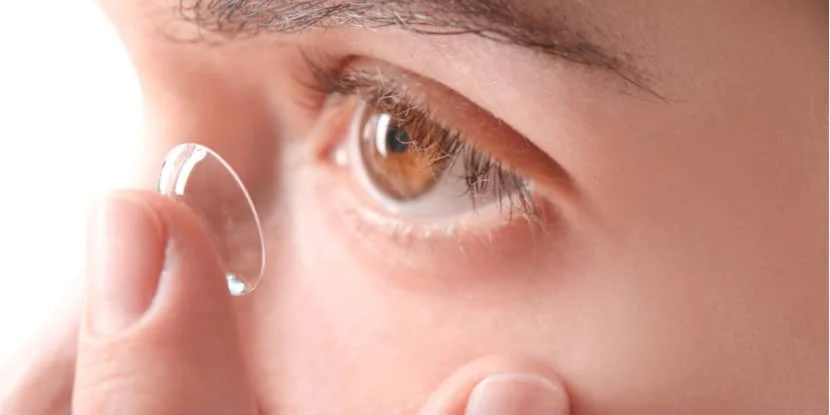
Types of lenses in vision correction surgery
Choosing the right frame for your glasses is important, but selecting the appropriate lenses is absolutely critical. Glasses have long been a popular option for correcting vision, even with the availability of alternatives such as contact lenses and refractive eye surgery. For many people, glasses remain the preferred choice because they are easy to use, comfortable, and versatile in correcting a wide range of visual impairments.
In general, the types of lenses used for vision correction at Batal Specialized Center include a spectrum of options tailored to the patient’s refractive error and lifestyle, such as:
– Monofocal intraocular lenses (for clear distance or near, but usually set for one focal point)
– Multifocal and trifocal IOLs (for near, intermediate, and distance vision)
– Toric IOLs (for patients with astigmatism)
– Phakic IOLs / ICLs (implanted without removing the natural lens for high myopia or mixed refractive errors)
Advantages and Disadvantages of Lens Implantation
Lens implant surgery for vision correction is an alternative to laser vision correction procedures. In this approach, a specially designed implantable lens—often referred to as an Implantable Collamer Lens (ICL) or implantable contact lens—is placed inside the eye. Despite being internal, it functions similarly to a traditional external contact lens in refracting light, but it offers important benefits and some potential drawbacks.
Advantages of Lens Implantation
– Can correct very high degrees of myopia and some complex refractive errors that are beyond the safe range for LASIK.
– Does not involve removing corneal tissue, preserving corneal structure and strength.
– Typically provides stable, high-quality vision with excellent contrast sensitivity.
– Reversible: the lens can be removed or exchanged if necessary.
– Suitable for many patients with thin corneas or irregular corneas who are not candidates for LASIK.
Disadvantages of Lens Implantation
– More invasive than corneal laser procedures since it involves entering the inside of the eye.
– Higher cost compared to standard LASIK in many cases.
– Carries a small risk of complications such as increased intraocular pressure, cataract formation, or infection.
– Requires careful preoperative measurements and long-term follow-up with an eye specialist.
ICL Lens Implantation
ICL surgery is an alternative to LASIK. Instead of creating a corneal flap with a laser, a permanent lens is implanted inside the eye. This procedure is used for people with high levels of refractive error, including:
– High myopia (nearsightedness)
– Certain cases of astigmatism
– Patients with thin or irregular corneas who are unsuitable for corneal laser surgery
ICL uses a small, flexible lens implanted inside the eye to properly focus light so you can see clearly without glasses or contact lenses. During the procedure, the surgeon makes a tiny incision at the edge of the iris and inserts the ICL lens into position in front of or just behind the iris, and in front of the natural lens.
This small implant is curved, somewhat like a tiny, flexible mirror, to focus light more precisely onto the retina so you can see more clearly at all distances—near, far, and intermediate—without glasses or contact lenses.
If you are nearsighted, you can see objects close to you, but you struggle to focus on distant objects. The farther away something is, the blurrier it appears. When your eye loses the ability to focus correctly, you need corrective treatment, and one of the options is ICL lens implantation for vision correction.
Disadvantages of ICL Lens Implantation

Like any medical procedure, ICL surgery carries certain risks. You should discuss the benefits and potential complications with your ophthalmologist before making a decision. Possible disadvantages of ICL lens implantation include:
– Risk of elevated intraocular pressure (which can lead to glaucoma if untreated)
– Risk of cataract formation if the ICL is positioned too close to the natural lens
– Possible glare or halos around lights, especially at night in some patients
– Very small risk of infection or inflammation inside the eye
– May require future adjustment or replacement if refractive error changes significantly
ICL lens implantation
The Appropriate Age for Lens Implantation
The following are general criteria for a suitable candidate for lens implantation:
– Typically age 21 or older, with a stable glasses or contact lens prescription for at least one to two years
– No active eye diseases such as uncontrolled glaucoma, advanced macular degeneration, or significant diabetic retinopathy
– Adequate anterior chamber depth and healthy corneal endothelium (for phakic ICLs)
– Realistic expectations about the results and willingness to adhere to follow-up appointments
Your ophthalmologist at Batal Specialized Center will perform a comprehensive evaluation to confirm whether lens implantation is appropriate for your age, eye health, and refractive status.
Success Rate of Lens Implant Surgery at Batal Center in Jeddah
Lens implant surgery for vision correction is an advanced option for treating and improving vision. You can call or book an appointment for a consultation at Batal Specialized Center. The success rate of lens implant surgery at Batal Center in Jeddah exceeds 95%.
How Long Does Lens Implant Surgery Take?
It is understandable to feel anxious on the day of your lens implant procedure. At Batal Specialized Center, you can be confident that you are in safe hands with a highly trained team that includes consultant eye surgeons, nurses, laser technicians, and other professional support staff.
We always ask our patients to bring a close friend or family member with them on the day of the procedure. On average, lens implant surgery takes about seven minutes per eye. It is a very short procedure with permanent, life-changing results.
After the operation, you can relax while our nurses explain your post-operative care plan. You will receive a post-op information pack containing eye drops and a detailed schedule on how and when to use them.
Which Is Better: Lens Implantation or LASIK?
If you are considering LASIK to correct your myopia, you may be wondering whether ICL lenses are a better option. ICL technology offers a permanent solution with virtually no need for retreatment later in life, while LASIK may sometimes require enhancement procedures years down the line.
In some patients, LASIK can cause significant side effects such as dry eye and increased sensitivity to glare. In rare cases, abnormal corneal healing after flap creation or tissue removal can lead to progressive corneal thinning and bulging, a condition known as keratoconus. This can cause dizziness, double vision, and difficulty focusing.
In some patients, the condition remains stable; in others, it may progress over several years and become severe enough to require additional surgery. In certain cases, multiple procedures over many years are needed before the corneal condition stabilizes. Even after that, regular follow-up with an ophthalmologist is essential.
For these reasons, it is critical to have careful preoperative screening and to choose the most appropriate procedure—whether LASIK, PRK, ICL, or another method—based on your corneal thickness, refractive error, eye health, and lifestyle. An experienced ophthalmologist at Batal Specialized Center can help you decide which option is best for you.
Frequently Asked Questions About Lens Implant Surgery for Vision Correction
Laser Vision Correction or Lens Implantation: Which Is Better?
If you have mild to moderate refractive errors and no history of eye injury, trauma, or disease, you will most likely be a candidate for laser vision correction. Lens implants, however, can correct almost all types and degrees of refractive error, and in many cases, the results are more predictable and stable than those achieved with LASIK.
Does Vision Weaken After Lens Implantation?
During the early postoperative period while you are recovering at home, you may find it difficult to see surrounding objects clearly. This is normal and usually improves gradually over time. This adaptation period typically lasts from about one to six months after surgery, depending on the type of lens and your individual healing response.
Is Lens Implant Surgery Dangerous?
Serious complications such as raised intraocular pressure, retinal detachment, damage to the natural crystalline lens, or even vision loss are very rare but remain a remote possibility. Choosing a highly experienced and reputable eye surgeon—such as the ophthalmologists at Batal Specialized Center—helps to significantly minimize these risks.
Can the Lens Move After Surgery?
Under normal circumstances, the implanted lens does not move after surgery. However, lens dislocation can occur if there is a tear in the posterior capsule or structural damage during surgery that prevents adequate support of the lens. Proper surgical technique and careful preoperative assessment substantially reduce this risk.
What Happens After Lens Implant Surgery?

You may experience some itching or mild discomfort for a few hours after treatment. As the eye gradually returns to its normal state, your vision typically improves significantly. Light scatter often decreases, and if a multifocal lens has been implanted, your near vision (reading vision) usually improves quite quickly as the brain adapts to the new optics.
If you are considering laser vision correction, lens implantation, or any other treatment for refractive errors, keep in mind that these are delicate medical procedures that require thorough examination and a customized treatment plan by a skilled, experienced ophthalmologist, using effective and modern medical technologies.
Whatever eye condition you are experiencing, you can book an appointment at Batal Specialized Center for a comprehensive evaluation and to begin addressing your eye problems, no matter how complex they may be.