
Med info
LASIK Eye Surgery for Vision Correction: A Detailed Guide

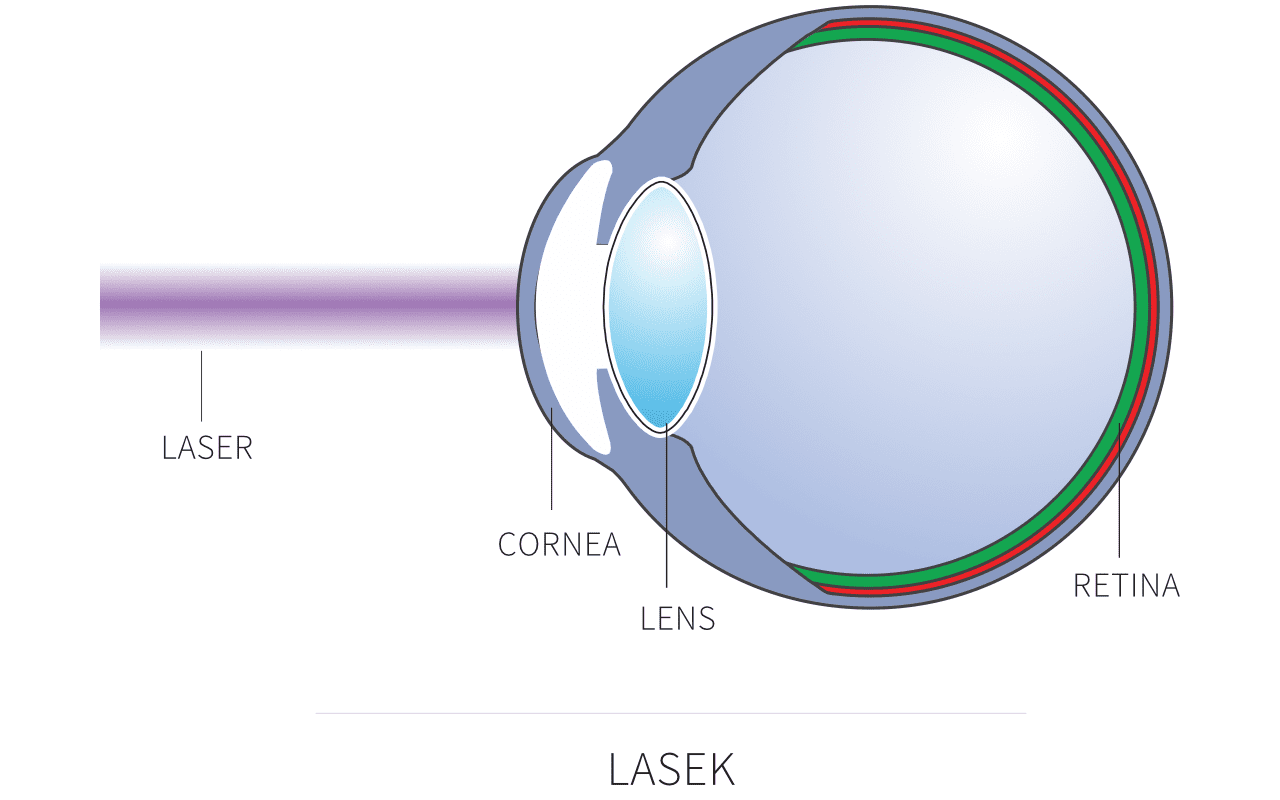
With the latest advances in laser refractive surgery, there are now many treatment options to correct refractive errors such as myopia (nearsightedness), hyperopia (farsightedness), and astigmatism. Laser-Assisted in Situ Keratomileusis (LASIK) and Photorefractive Keratectomy (PRK) are among the most common laser vision correction procedures. Both are performed using an excimer laser, a computer‑controlled laser that reshapes the cornea with high precision to improve visual focus.
The excimer laser emits ultraviolet light in high‑energy pulses that last only a fraction of a nanosecond. In Saudi Arabia, the Eye Center at Batal Specialized Complex is considered one of the leading facilities for treating eye conditions, thanks to the extensive experience of its medical team in performing LASIK procedures and the advanced technologies available there.
Read also: Information About Ultra LASIK
Conditions Treated
A number of vision problems can be corrected with LASIK eye surgery, including:
Read also: Wavefront LASIK Device – Everything You Need to Know
Preparing for the Procedure
It is crucial to have all relevant information available to determine whether LASIK eye surgery is suitable for each individual patient. The Eye Center at Batal Specialized Complex in Saudi Arabia offers a variety of free educational resources to help patients learn more about refractive surgery, including evening seminars, patient education materials, and one‑on‑one consultations.
Ideally, candidates should be between 21 and 70 years of age with no serious underlying eye disease. In addition, their eyeglass or contact lens prescription should have been stable for at least two years. Other factors taken into account include overall eye health, the degree of refractive error, age, professional and lifestyle needs, as well as the patient’s goals and expectations.
During the first visit, the ophthalmologist will perform a comprehensive eye examination and take a detailed medical history, including information about current and past eye conditions. Before this appointment, it is important to stop wearing contact lenses, as they can temporarily alter the natural shape of the cornea and affect the accuracy of the measurements used to determine how much corneal tissue should be removed during surgery.
If the patient is a suitable candidate for LASIK, the doctor will discuss the different available procedures, along with their advantages and limitations, to determine the option that best meets the patient’s needs. If LASIK is not appropriate, the doctor will review other non‑surgical alternatives.
Read also: What Is Super LASIK in Detail?
The LASIK Procedure
LASIK eye surgery is a very short procedure, typically taking less than 30 minutes. The first step is to create a thin, hinged corneal flap made from the outer layers of the cornea. Once the flap is gently lifted back, the excimer laser is applied to the underlying corneal tissue to precisely reshape the cornea to the desired curvature.
At the Eye Center in Batal Specialized Complex in Saudi Arabia, you will have an individual consultation with one of the LASIK surgeons to discuss your laser vision correction options and determine the most appropriate approach for your specific case.

If you suffer from nearsightedness, farsightedness, or astigmatism, the Eye Center at Batal Specialized Complex in Saudi Arabia offers an optimal solution through LASIK eye surgery. Using state‑of‑the‑art laser technology, such as the excimer laser, the shape of your cornea is accurately adjusted to provide clear vision. Under the care of a distinguished medical team—Dr. Issa Ba Aissa, Dr. Bara Foham, and Dr. Saud Al‑Johani—you will receive top‑tier specialized care. Personalized consultations, advanced techniques, and unparalleled expertise are all in place to help you achieve highly satisfying results.