
Med info
Keratoconus Treatment 2026 | Corneal Treatment at Batal Eye Clinic

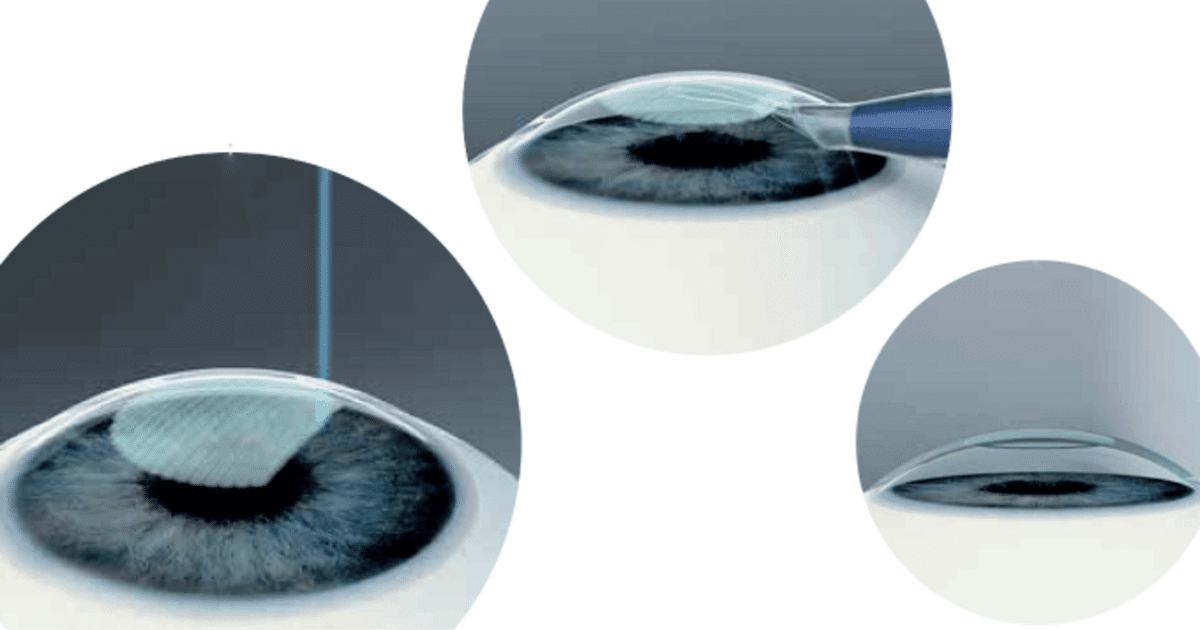
The irregular shape of the cornea in keratoconus leads to a decline in image quality, so vision correction is necessary for most patients. This is particularly challenging in keratoconus and often requires a highly individualized approach.
As a general rule, patients in the early stages of keratoconus can achieve excellent vision with eyeglasses or soft contact lenses as part of keratoconus treatment in 2023. As the disease progresses and the corneal cone becomes more pronounced, glasses and soft contacts are no longer sufficient to provide adequate vision correction.
Read also: How Does a Keratoconus Patient See? | What Is It Like Living With Keratoconus?
Keratoconus Treatment 2025 with Corneal Cross-Linking
Corneal cross-linking, also known as CXL, can be an excellent option for treating keratoconus. This procedure helps flatten and strengthen the cornea and reshapes it into a more regular, rounded form, which improves vision. For many patients, it is considered a first-line treatment for keratoconus in 2023 using corneal cross-linking.
However, CXL is not a cure. It is a minimally invasive, in-office procedure that involves numbing eye drops and a special ultraviolet (UV) light. Cross-linking can stop the cornea from further bulging into a cone shape, but it does not reverse damage that has already occurred. You may still need to wear glasses or contact lenses to see clearly even after undergoing CXL.
Read also: Causes of Poor Vision | 9 Things That Can Damage Your Eyesight
Does Intacs Treat Keratoconus?
Intacs® are small intracorneal ring segments placed inside the cornea to flatten and reshape it. This is a surgical procedure performed by your ophthalmologist. While Intacs do not cure keratoconus, they can improve the corneal shape and give you clearer vision as long as the segments remain in place. If they are removed later, your vision will typically return to its previous state.
In some cases, your eye doctor may recommend combining Intacs with other treatments to improve the overall outcome and stability of the cornea.
Read also: Retina Disease Treatment and Surgery | Treatment for Dry, Red, and Inflamed Eyes
Rigid Contact Lenses as a Keratoconus Treatment Option
If your keratoconus is still in an early stage, prescription glasses or standard soft contact lenses may be sufficient. Once the condition progresses, however, you may find that even with regular glasses or soft contacts, you still experience blurry vision, headaches, and other symptoms. This is when specialty rigid lenses can help.
Because keratoconus is caused by an irregularly shaped cornea, these custom-made lenses are particularly effective. Rigid gas permeable (RGP) or scleral lenses gently vault over and optically “regularize” the corneal surface, allowing light to focus more accurately on the retina and resulting in clearer vision. Although rigid lenses do not cure keratoconus, they can significantly improve visual quality.
Read also: ReLEx SMILE (Femtosmile) | Treatment of Different Degrees of Refractive Error | Advanced Laser Techniques
Intracorneal Ring Segments
One of the most important options for keratoconus treatment in 2025 is intracorneal ring segments (ICRS). These are C-shaped plastic implants used to flatten the corneal surface, allowing it to refract light more effectively.
The procedure, which takes about 15 minutes, is performed by creating small channels within the corneal stroma where the ring segments are inserted. Depending on the severity of keratoconus, patients may still need contact lenses after implantation to achieve their best possible vision. In addition, ring segments do not stop the disease from progressing, so while they are an effective treatment option, they are not a definitive cure.
Read also: Eyelid Surgery and Tear Duct Procedures

Corneal Transplant as a Keratoconus Treatment Solution
Once the above treatments have been exhausted, keratoconus can be managed in 2023 with a corneal transplant (keratoplasty) to restore vision. Corneal transplantation is often performed as an outpatient procedure and usually takes about an hour.
During a corneal transplant, the patient’s diseased cornea is carefully removed and replaced with a donor cornea, which is sutured in place with extremely fine stitches, about one-third the width of a human hair. After transplantation, vision may remain blurred for several months as the eye heals and the cornea stabilizes.
Continuous use of prescribed medications is necessary to reduce the risk of graft rejection, as with any transplanted tissue. This typically includes anti‑inflammatory eye drops. In almost all cases, glasses or contact lenses are still needed after corneal transplant surgery to achieve the sharpest possible vision.
Read also: Electroretinography (ERG) and Visual Evoked Potentials (VEP)
How Is Keratoconus Treated?
In the early stages of keratoconus, vision can often be corrected with glasses or soft contact lenses. As the disease progresses, special rigid lenses—such as rigid gas permeable (RGP) lenses—may be required.
In advanced keratoconus, when glasses and contact lenses can no longer provide adequate vision, a corneal transplant may become necessary. Corneal transplantation involves removing the diseased portion of the cornea and replacing it with healthy donor tissue. For keratoconus, transplant outcomes are generally very good.
Corneal collagen cross-linking is a more recent treatment designed to slow down or halt the progression of keratoconus. It involves applying riboflavin (vitamin B2) eye drops to the cornea and then exposing it to ultraviolet light to strengthen the collagen fibers within the cornea. Although cross-linking cannot restore vision already lost to keratoconus, it helps prevent further visual deterioration.

Read also: Micropulse Laser Device for Treating Eye Deviation and Strabismus
Regardless of the type or severity of your corneal problem, this delicate condition requires a thorough examination and appropriate treatment by a skilled, experienced ophthalmologist using effective medical technologies that deliver real, positive results. Whatever eye condition you are facing, you can book an appointment at Batal Specialized Medical Complex for a comprehensive eye evaluation and to begin addressing your vision problems, whatever they may be.