Med info
Is PRK Vision Correction a Permanent Procedure?


Have you recently found out that you’re not a good candidate for LASIK? You may be an excellent candidate for another procedure called PRK (Photorefractive Keratectomy). Keep reading to learn more about PRK and whether PRK vision correction is a permanent solution.
Also read: Intense Pulsed Light (IPL) Treatment for Dry Eye | Facts and Information
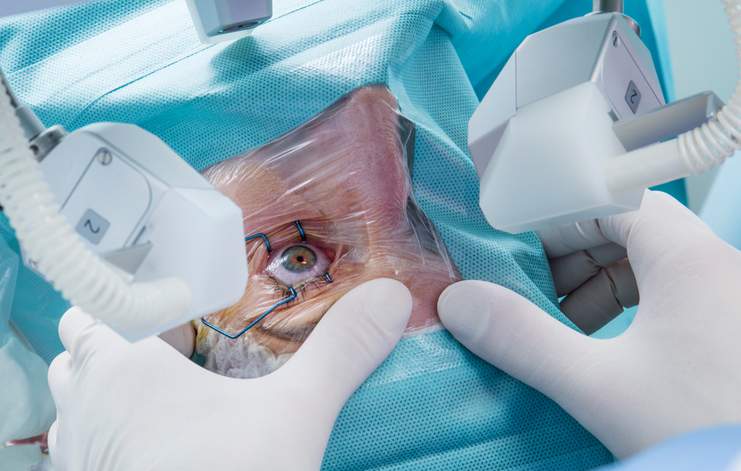
PRK Vision Correction
What Is PRK Vision Correction?
PRK corrects nearsightedness (myopia), farsightedness (hyperopia), and astigmatism by reshaping the cornea. PRK offers similar outcomes to LASIK, and most patients who undergo PRK achieve 20/20 vision without contact lenses or glasses.
Also read: Can Nearsightedness Be Corrected with Laser Surgery?
PRK Technique for Vision Correction
PRK involves applying an excimer laser directly to the surface of the cornea after removing the epithelium (the outermost layer of the cornea). There is no corneal flap created at all.
To fully benefit from PRK, you need to wait several days for the corneal epithelium to grow back and cover the surface again.
While the procedure itself is painless, discomfort usually appears in the hours following the laser treatment and typically lasts for at least 48 hours. For this reason, procedures are often scheduled on Fridays so patients can use the weekend to recover.
In cases of mild to moderate myopia and astigmatism, the visual results of PRK are comparable to those of LASIK.
PRK is performed on both eyes in the same session to speed up visual rehabilitation and avoid having to go through postoperative discomfort twice (once for each eye).
You should plan to take at least three days off from work or professional activities.
The PRK procedure takes about 10 minutes for both eyes, including the time needed to remove the epithelium and apply the excimer laser. Actual laser time is usually less than one minute. The procedure is done under topical anesthesia using numbing eye drops, whose effect lasts well beyond the duration of the surgery.
The effects of PRK are permanent and do not wear off over time. PRK also does not typically cause postoperative dry eye.
Also read: Corneal Astigmatism and Vision Correction at Al-Batal Complex in Jeddah
PRK LASIK Procedure
PRK does not involve any corneal incisions or flap creation. Instead, a calibrated laser is used along with anesthetic eye drops to numb the eye.
Before surgery, a highly detailed topographic map of your corneal surface is generated and displayed on a computer. Your ophthalmic surgeon uses this map to precisely calibrate the excimer laser according to your exact prescription.
Once the laser is calibrated, the technician places a lid speculum (an eyelid holder) to keep your eye open throughout the procedure. To create the desired corneal shape, the surgeon first removes the corneal epithelium (the surface layer), which then regenerates naturally over the next 2–5 days.
The PRK surgeon then smooths the corneal surface and applies computer‑controlled pulses of excimer laser light to reshape the curvature of your cornea. The deeper corneal layers remain essentially unchanged.
After PRK vision correction, you may experience mild irritation or a sensation of a foreign body in the eye for a few days. This discomfort is usually well controlled with prescribed medications. Your surgeon will prescribe eye drops to be used for several months after the procedure.
Typically, patients are given antibiotic eye drops after surgery, along with anti‑inflammatory drops to improve comfort and reduce swelling.
Once the epithelium has fully healed, your doctor will remove the bandage contact lens, usually on the second or third day after surgery. Patients may continue anti‑inflammatory steroid eye drops for more than two months to support complete healing.
Also read: Excellence and Quality… The Best Center for Vision Correction in Jeddah
How Is PRK Different from LASIK?
During PRK, the surgeon removes the thin outer layer of the cornea, called the epithelium, to expose the underlying corneal tissue. An excimer laser is then used to reshape the cornea and correct your vision. The removed epithelium naturally grows back over about one week.
With LASIK, the surgeon uses a femtosecond laser to create a corneal flap. After creating the flap, it is lifted to access the deeper corneal layers. Reshaping these deeper layers with the excimer laser corrects the refractive errors, and then the flap is repositioned.
Also read: 6 Important Facts About Glaucoma You Need to Know
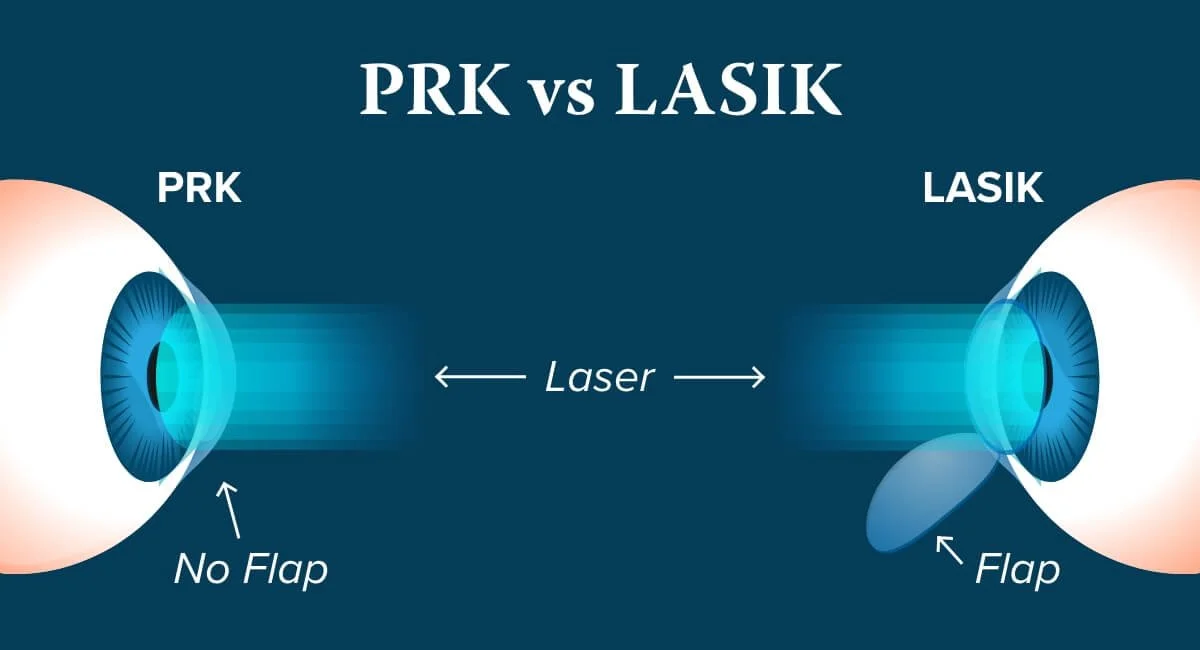
PRK Technique for Vision Correction
Advantages of PRK Laser Surgery
Some of the key advantages of PRK vision correction include:
Also read: The Most Common FAQs About LASIK Surgery
PRK Vision Correction
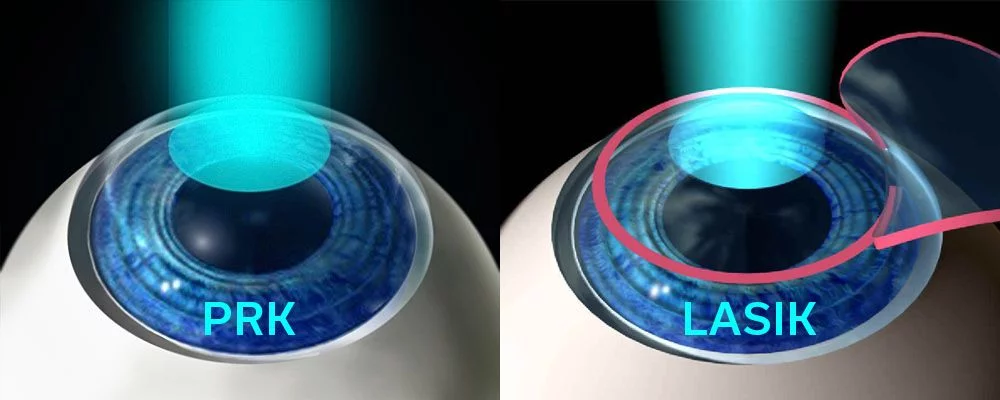
What to Expect During PRK
A PRK eye surgery session takes about 15–20 minutes in total. Here is what you can generally expect from PRK vision correction:
You will usually notice clearer vision after PRK, but it can take around three months to see the final, stable results. With PRK, you can choose to have both eyes treated during the same session. However, you will not be able to drive or return to work for at least a week, until your eyes have healed enough.
Also read: Implantable Contact Lens (ICL) Surgery | Procedure, Care, Risks, and Cost

Whatever your eye condition may be, this delicate medical situation requires a thorough examination and an appropriate treatment plan by an experienced ophthalmologist, using effective medical technology to achieve the best possible outcomes. Whatever eye disease or problem you are facing, you can book an appointment at Al-Batal Specialized Medical Complex for a comprehensive eye evaluation and to start addressing your vision issues, no matter how complex they are.
Also read: The New MicroPulse Laser Device for Treating Eye Deviation and Strabismus