
Med info
Hyperthyroidism | Causes, Symptoms, and Treatment

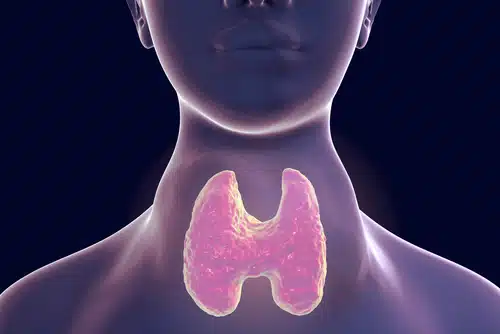
Hyperthyroidism occurs when the thyroid gland produces excessive amounts of thyroid hormones. Several medical conditions can lead to hyperthyroidism, the most common of which is Graves’ disease.
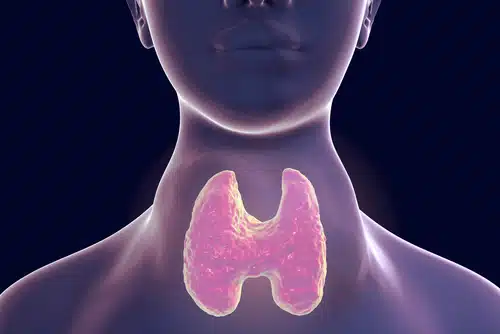
The thyroid is a small, butterfly-shaped gland located at the front of the neck. It produces thyroxine (T4) and triiodothyronine (T3), two essential hormones that control how your cells use energy.
Your thyroid regulates your metabolism by releasing these hormones. When it produces too much T3, T4, or both, it essentially “speeds up” your body systems, which can cause significant discomfort. Timely diagnosis and treatment of hyperthyroidism can relieve symptoms and help prevent serious complications.
Read also: What Is Conductive Keratoplasty?
What Causes Hyperthyroidism?
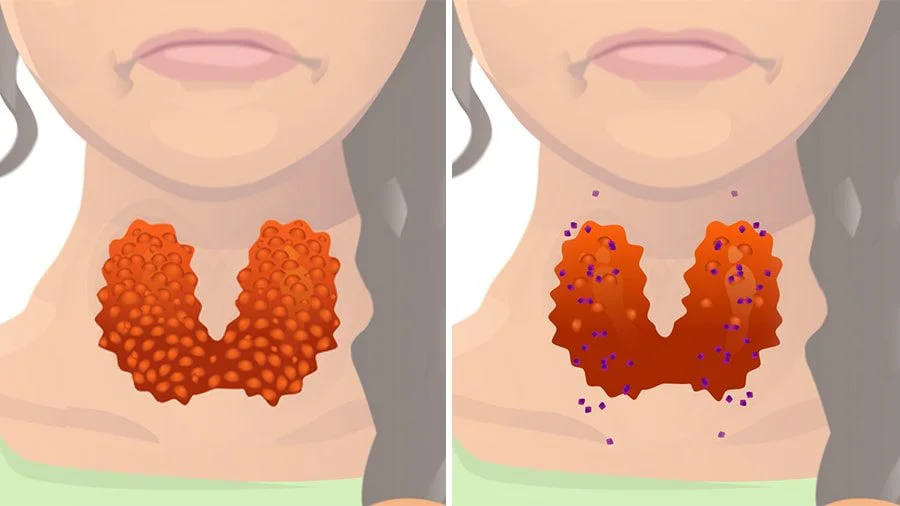
A number of conditions can cause hyperthyroidism. The most common cause is Graves’ disease, an autoimmune disorder. In Graves’ disease, the immune system produces antibodies that attack the thyroid gland, stimulating it to release excessive amounts of thyroid hormones.
Graves’ disease occurs more frequently in women than in men. Research published in 2011 suggests that genetics play a major role in determining who develops Graves’ disease, although environmental factors are also involved.
Family and twin studies indicate that Graves’ disease is not due to a single gene defect, but rather to small variations in multiple genes.
You should inform your doctor if any of your relatives have been diagnosed with hyperthyroidism so they can better understand your overall risk profile. Aside from Graves’ disease, other well‑established causes of hyperthyroidism include:
Excess Iodine
Iodine is a key component of both T4 and T3. Consuming too much iodine can trigger temporary hyperthyroidism. Iodine is found in foods such as fish and dairy products, and it is also present in certain medications, including:
– Amiodarone (used to treat cardiac arrhythmias)
– Some cough syrups
– Iodinated contrast dyes used in imaging studies
Thyroiditis
Thyroiditis refers to a group of conditions that cause inflammation and swelling of the thyroid gland. This inflammation can lead the thyroid to produce either too much hormone (causing hyperthyroidism) or too little (causing hypothyroidism), depending on the phase and type of thyroiditis.
Benign Thyroid Nodules
Thyroid nodules are lumps that form within the thyroid gland, often for reasons that are not entirely understood. Some nodules function independently and produce extra thyroid hormone (so‑called “hyperfunctioning” nodules), which can lead to hyperthyroidism.
Most nodules, however, are noncancerous (benign). They are also referred to as benign tumors or adenomas.
Toxic Thyroid Nodules (Toxic Adenoma)
In some cases, thyroid nodules become “toxic,” meaning they autonomously produce significant amounts of thyroid hormone. A small proportion of thyroid nodules are malignant (cancerous).
Whether a nodule is benign or malignant is typically evaluated using ultrasound and a type of tissue biopsy called fine‑needle aspiration (FNA).
Ovarian or Testicular Tumors and Excess Thyroid Hormone Intake
Certain rare tumors of the ovaries or testes may produce thyroid hormone or thyroid‑like substances. In addition, high blood levels of T4 can result from:
– Taking high doses of thyroid hormone medication (such as levothyroxine)
– Using some dietary or “thyroid support” supplements that contain thyroid hormones or iodine in excessive amounts
Read also: What Are the Treatment Options for Lacrimal Gland Tumors?
Hyperthyroidism and Thyrotoxicosis
Hyperthyroidism (overactive thyroid) and thyrotoxicosis are related but not identical terms, although they are sometimes used interchangeably. In fact, hyperthyroidism and its different forms fall under the broader category of thyrotoxicosis.
Hyperthyroidism specifically refers to the thyroid gland itself producing too much thyroid hormone. Thyrotoxicosis is a broader term that indicates there is an excess of thyroid hormones in the body, regardless of the source—whether from the gland, from medications, or from other causes.
What Are the Symptoms of Hyperthyroidism?
Some symptoms of hyperthyroidism are quite obvious, while others are subtle and easy to overlook in the early stages. Hyperthyroidism is sometimes mistaken for anxiety or panic disorder because of the similarity in symptoms.
According to the U.S. National Institutes of Health (NIH), the hallmark signs and symptoms of hyperthyroidism include:
– Unintentional weight loss, even when eating normally or more than usual
– Rapid or irregular heartbeat (palpitations)
– Feeling nervous, anxious, or irritable
– Tremor in the hands or fingers
– Increased sensitivity to heat and excessive sweating
– Changes in menstrual patterns
– More frequent bowel movements or diarrhea
– Fatigue and muscle weakness
– Difficulty sleeping (insomnia)
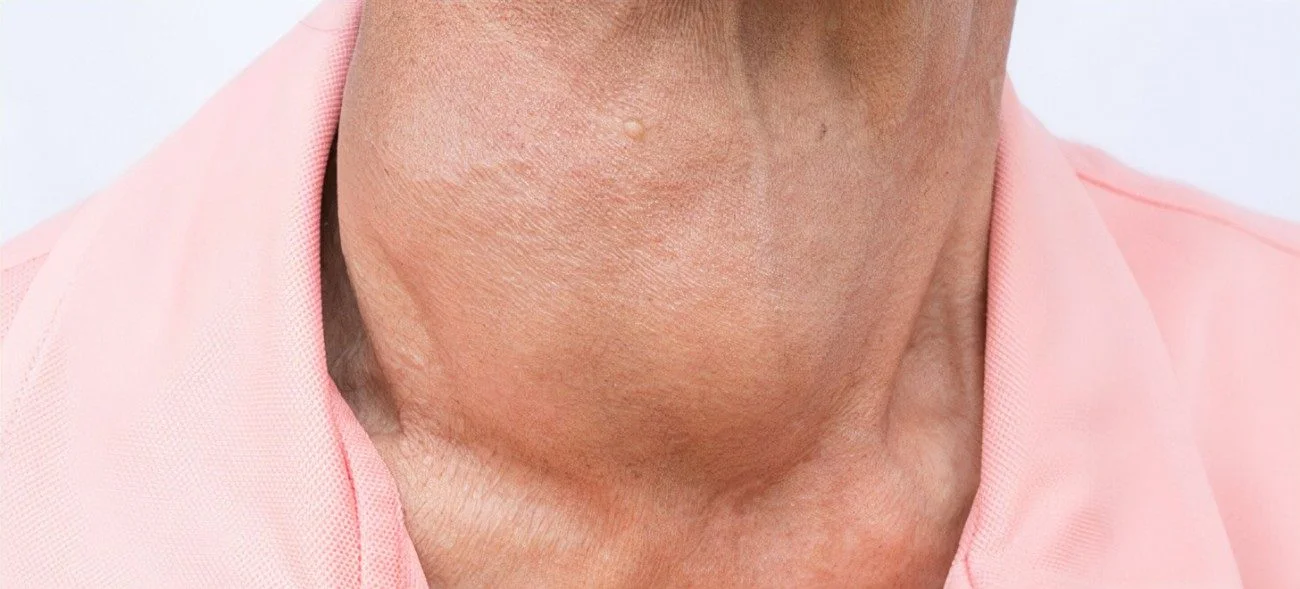
The thyroid gland itself may become enlarged, leading to a goiter, which can be either symmetrical or more prominent on one side. A goiter appears as a visible swelling or fullness at the base of the neck.
Worldwide, the most common cause of goiter is iodine deficiency, although in many countries today it is more often related to autoimmune thyroid disease.
Some people also develop bulging or protruding eyes, a condition known medically as exophthalmos. This is strongly associated with Graves’ disease and is often referred to as Graves’ ophthalmopathy or thyroid eye disease.
Long‑standing, untreated thyroid disease can also lead to brittle hair and hair loss. In some individuals with hyperthyroidism, there can be arrhythmias, shortness of breath, or even fainting. These symptoms require urgent medical evaluation.
Batal Specialized Complex in Saudi Arabia is considered one of the leading, most advanced medical centers in the field of eye care and eye disease treatment. Its reputation continues to grow thanks to the high level of expertise provided by its ophthalmologists, along with the use of state‑of‑the‑art diagnostic and treatment technologies.
If you suffer from any eye problem, do not hesitate to book an appointment at Batal Specialized Complex to receive top‑quality medical advice from a highly qualified eye specialist.
Read also: Duration of Cosmetic Botox Around the Eyes | Details on Timing and Procedure
Complications
If left untreated, hyperthyroidism can increase the risk of several serious health problems.
Thyroid Storm
Thyroid storm is a rare but life‑threatening complication that develops when severe, uncontrolled hyperthyroidism causes the body to go into an extreme “overdrive” state due to very high levels of thyroid hormones.
Thyroid storm is characterized by a cluster of severe symptoms, including:
– Very rapid heart rate
– Markedly elevated blood pressure
– High fever
– Agitation, confusion, or delirium
This is a medical emergency and requires immediate hospital care.
Pregnancy Complications
People who already have thyroid disorders, as well as those who develop hyperthyroidism during pregnancy, are at increased risk of complications. Excess thyroid hormone during pregnancy can be harmful to both the mother and the fetus.
Potential risks include:
– Miscarriage
– Preterm birth
– Preeclampsia and other pregnancy‑related complications
Regular thyroid function testing during pregnancy can help detect abnormalities early. Based on the results, your doctor may recommend antithyroid medication or thyroid hormone adjustment to optimize levels for a healthy pregnancy.
Osteoporosis
Over time, untreated hyperthyroidism can cause bones to become weak and fragile, leading to osteoporosis. Excess thyroid hormone speeds up bone turnover, which can result in reduced bone density.
Taking adequate calcium and vitamin D supplements during and after treatment can help support bone health. Regular weight‑bearing exercise and daily physical activity are also important in preventing osteoporosis.
Cancer
Some individuals with hyperthyroidism develop thyroid cancer. A 2018 research review suggested that thyroid cancer in patients with hyperthyroidism may behave more aggressively and be associated with a less favorable prognosis compared with thyroid cancer in people without overactive thyroid disease.
In addition, hyperthyroidism can lead to:
– Atrial fibrillation (AFib), an irregular heart rhythm that significantly increases the risk of stroke
– Congestive heart failure, particularly in older adults or in those with pre‑existing heart disease
Untreated thyroid disorders can have widespread negative effects on the body and may progress to medical emergencies if not managed appropriately.
Fortunately, blood tests used to diagnose hyperthyroidism and other thyroid conditions are generally simple and straightforward. You should speak with your doctor as soon as possible if you suspect you may have symptoms of hyperthyroidism.
How Is Hyperthyroidism Treated?
Medications
Antithyroid medications work by blocking the thyroid gland’s ability to produce thyroid hormones. The most commonly used antithyroid drugs are in a class called thionamides, which include:
– Methimazole (MMI)
– Propylthiouracil (PTU)
Thionamides have been used safely for decades to treat hyperthyroidism in both adults and children, including during pregnancy when carefully managed by a specialist.
Always inform your doctor if you are pregnant, planning to become pregnant, or taking any other medications. It is essential to take antithyroid drugs exactly as prescribed and to attend regular follow‑up appointments and blood tests.
Read also: Hashimoto’s Disease | Causes, Symptoms, and Treatment of Hashimoto’s Thyroiditis
Radioactive Iodine
Radioactive iodine therapy (RAI) uses a form of iodine that emits radiation to selectively destroy overactive thyroid cells, while sparing other tissues in the body. It is usually given orally as a capsule or liquid.
Most people who receive radioactive iodine treatment for hyperthyroidism eventually develop the opposite condition—hypothyroidism (underactive thyroid)—because enough thyroid tissue is destroyed to reduce hormone production below normal. Hypothyroidism is generally easier to manage and is treated with a daily thyroid hormone replacement pill, usually levothyroxine.
Higher doses of radioactive iodine are also used in the treatment of certain types of thyroid cancer.
In rare situations, particularly with prolonged exposure to high cumulative doses, radioactive iodine has been linked to an increased risk of some cancers. However, this has not been demonstrated with the lower doses typically used to treat hyperthyroidism.
Possible side effects of radioactive iodine therapy, especially at higher doses, include:
– Neck pain or tenderness
– Nausea
– Dry mouth or changes in taste
High‑dose radioactive iodine can also affect fertility for a period of time, so fertility planning should be discussed with the treating physician. In some cases, surgery (thyroidectomy) may be recommended instead of or in addition to radioactive iodine, especially if there is a large goiter, suspicion of cancer, or intolerance to medications.

Finally, Batal Specialized Complex in Saudi Arabia remains one of the foremost, cutting‑edge medical centers dedicated to eye care and ophthalmic treatments. Its growing reputation is driven by highly experienced ophthalmologists and the use of the latest diagnostic and therapeutic technologies.
If you are experiencing any eye‑related problem, schedule an appointment at Batal Specialized Complex to receive expert medical consultation from a specialized eye doctor.