Med info
How Can Nearsightedness Be Treated, and What Are the Latest Techniques?

If you can’t see distant objects clearly unless you move closer to them, but you read books without any difficulty, you may have an issue with distance vision known as nearsightedness (myopia). This isn’t a disease, but a refractive error of the eye. The problem lies in how light is bent (refracted) by the cornea, which causes blurred images inside the eye. For this reason, definitive treatment is based on correcting the path of light rays as they pass through the eye.
Myopia is one of the most common causes of blurred vision in people under 40, and its prevalence has been rising in recent years. Research suggests that by 2050, about half of the world’s population will be nearsighted. So what exactly is myopia, what causes it, and how can it be treated? This article covers the key points you need to know.
Myopia is the most common refractive error and often forces people to wear glasses, sometimes making them feel that their facial appearance is affected just so they can see far objects clearly. The issue is that the patient sees nearby objects in fine detail but struggles with distant ones. These individuals may have trouble reading road signs, for example, which affects their ability to drive and limits many daily activities.
What Is Myopia?
Myopia is a common refractive error that occurs when the eyeball is too long or the cornea is too steeply curved. Abnormal changes in the eye’s structures alter how light is refracted, which reduces the clarity and quality of vision. In myopia, images are focused in front of the retina rather than directly on it.
The farther away an object is, the blurrier and hazier it appears. The hallmark of this refractive error is that you can see close objects clearly and sharply, but distant objects remain out of focus. Myopia may progress slowly over time or advance more quickly, depending on lifestyle and visual habits. Long hours on the computer, extended TV viewing, and reading in poor lighting all contribute to faster progression and worsening of distance vision.
Put another way:
Myopia is a refractive error in which the eye sees near objects clearly, but distant objects appear blurred and lacking detail—hence it is also called “short-sightedness” or “near vision only.” The main issue lies in the shape of the eyeball: the axial length may be too long, or the front surface of the eye may lose its smooth curvature and become too steep. As a result, near vision (such as reading and writing) may be excellent, while distant objects look blurry.
In a healthy eye, the axial length from the cornea to the retina is about 2.4 cm (24 mm). Within this distance, light enters through the cornea and is focused precisely on the center of the retina (the macula), forming a clear image. Myopia can progress gradually or more rapidly, and often worsens during childhood and adolescence. A basic eye exam is usually enough to confirm whether you are nearsighted. Early detection is important to avoid complications. Myopia can be corrected easily with eyeglasses or contact lenses, and surgery is considered the last resort.
Symptoms of Myopia
Someone with myopia has to strain to focus on distant objects in order to see them more clearly. This visual effort can trigger several symptoms, including:
(Myopia is often diagnosed, and its symptoms first noticed, in childhood or adolescence.)
Because myopia can be associated with serious complications that could eventually threaten sight, parents need to observe their children carefully. Children are often unaware they have a vision problem and may not be able to express what they are experiencing, so it is crucial to detect and manage myopia early before it progresses to stages where permanent damage may occur. The following signs of myopia in children can help parents catch the problem early:
Myopia in Children
There is strong evidence that myopia has a hereditary component. If one or both parents are nearsighted, the child’s risk is higher. Myopia is often detected and diagnosed between ages 8 and 12. During the teenage years, when the body is growing rapidly, myopia in adolescents often worsens. Then it tends to stabilize and may slightly improve between ages 20 and 40. Adults can also develop myopia, but a positive family history increases the likelihood that they will become nearsighted at some point.
Parents are advised to take their child for regular eye exams—first at about 6 months of age, then at 3 years, and again upon starting school. After that, a vision exam every two years helps monitor eye development and detect any problems or eye diseases early.
High Myopia
When the degree of myopia is greater than usual and the refractive error is large, eye doctors refer to this as high myopia or severe myopia. This form is more serious and carries greater risk than mild myopia. It tends to progress over time, which is why it is called “high.”
If you’re wondering whether myopia can cause blindness, the answer is that myopia itself does not directly cause blindness, even in high degrees. However, if left unmanaged, progressive high myopia can damage the retina. Long-term complications may lead to significant vision loss. Regular follow-up is therefore critical, especially if myopia is diagnosed at a young age. As the body grows, the eye grows too, and the degree of myopia can increase quickly. Glasses and contact lenses may need frequent updates and can eventually become insufficient if the condition progresses.
One common concern among people with progressive myopia is: “When will my myopia stop changing?” Most research indicates that myopia usually stabilizes between ages 20 and 30. That’s why refractive surgery before this age range is generally not recommended and is often postponed until the prescription has been stable for a period of time.
Causes of Myopia
The exact mechanisms that lead to myopia are not completely understood, but the strongest evidence points to a combination of genetic factors and environmental influences, including daily visual habits. When the eyeball becomes too long or the cornea too steep, incoming light no longer focuses on the retina but instead converges in front of it. The result is blurred and hazy distance vision.
In general, several risk factors increase the likelihood of developing this refractive error. Clear, focused vision depends mainly on two elements:
In myopia, the eyeball becomes excessively elongated from front to back, or the cornea is more curved than normal. This creates a refractive mismatch in the front structures of the eye, so the image formed inside the eye is not sharp. Instead of being focused on the retinal surface, the image forms in front of it, leading to distorted distance vision.
Several factors may increase your risk of becoming nearsighted, including:
The main causes and contributing factors can be summarized as follows:
How Do People With Myopia See?
People with myopia have trouble seeing objects clearly at a distance because images are focused in front of the retina. Since their distance vision is blurry and lacks detail, they tend to squint or strain their eyes to try to sharpen the image. This can lead to symptoms such as:
Examinations Needed for Early Detection and Management of Myopia
Early diagnosis of myopia helps preserve eye health, prevent progression, and maintain stable vision using appropriate treatments. Myopia is often detected in childhood, but it can also appear in adults, especially in people with diabetes. That’s why routine eye exams are recommended across all age groups to monitor eye health and detect myopia early:
Can Myopia Be Completely Cured?
As of 2021, there is no treatment that guarantees a permanent “cure” for myopia. Current options aim to restore functional vision at different distances. Even in cases that show significant improvement after surgical intervention, there is no absolute guarantee that the eye will not elongate further or that myopia will not progress again.
The main goal of treatment is to allow you to see distant objects clearly, without blur. The amount of improvement you can expect depends largely on the age at which myopia is diagnosed and how severe it is at that time. Mild to moderate myopia is managed differently from high myopia. You should understand your exact degree of myopia and discuss all details with your eye doctor so you can receive the most appropriate treatment.
If you struggle to see clearly at long distances or have been diagnosed with myopia, there are multiple techniques to manage it. After a full eye evaluation, your ophthalmologist will recommend the option that best suits the degree of your refractive error.
Treatment of Myopia: What Are the Available Options?
The treatment approach depends on how severe your myopia is. If it’s mild, you may only need to wear glasses for specific activities such as driving or watching TV. Only an eye doctor can accurately determine your prescription and recommend the most suitable treatment, so do not hesitate to seek professional advice. Treatment options include:
Glasses and Contact Lenses
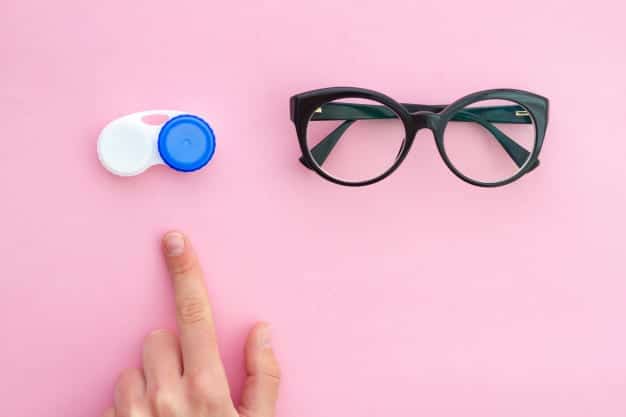
Correcting myopia with glasses or contact lenses is the most common approach. These lenses correct vision by refocusing light rays onto the retina. They compensate for the irregular shape of the eye that causes the refractive error. Prescription lenses are made to match both the degree of myopia and any associated optical issues.
Glasses offer an added advantage by protecting the eyes from harmful rays, whether from sunlight (UV) or digital screens (blue light filters in some lenses). For myopia, concave (minus) lenses are used. The higher the negative power, the stronger the correction and the clearer the distance vision. There are also specialized lenses, such as multifocal or myopia-control lenses, used particularly in children to stabilize the cornea and slow disease-related changes in the eye.
Refractive Surgery (Laser Vision Correction)
Many patients choose to treat myopia with laser refractive surgery, commonly known as LASIK and related procedures, to correct the refractive error. These surgeries reshape the cornea so that light is focused more accurately on the retina. There are several types of laser procedures for myopia, including surface ablation (PRK), LASIK, and SMILE (Small Incision Lenticule Extraction or femto-SMILE).
You and your doctor can decide which procedure best suits your eye and your lifestyle. However, refractive surgery is usually deferred until your prescription has been stable for a period of time, as operating on a changing prescription is not advisable.
Orthokeratology (Corneal Reshaping)
Orthokeratology is a non-surgical but temporary method of correction. The patient wears special gas-permeable contact lenses overnight. These lenses gently reshape the cornea while you sleep. The result is clearer vision during the following day without the need for glasses or daytime contacts.
This technique is typically suitable only for mild to moderate myopia. It also carries a risk of eye infections or inflammation if lenses are not inserted, removed, and cleaned properly. While you can enjoy clear daytime vision, you must wear the lenses every night to maintain the effect.
Low-Dose Atropine
In children, the primary goal of treatment is to slow down the progression of myopia. Low-dose atropine eye drops (commonly around 0.01%) are used for this purpose. Many clinical studies have shown that low-dose atropine significantly reduces the rate of myopia progression and slows structural changes in the eye.
In addition, children typically still need glasses to correct existing blur and reduce symptoms. Atropine helps with long-term control, while glasses provide immediate visual clarity.
There are many effective treatment options, and more than one may be suitable for your case. The eye doctor is the best person to determine which combination is ideal for you. If your distance vision is blurry while near vision remains clear, you should take your eye health seriously and schedule an eye exam.
When Should You See an Eye Doctor Urgently?
If your difficulty seeing distant objects (blurred distance vision) is severe enough that it interferes with tasks you need or want to perform, or if your reduced visual quality is affecting your enjoyment of daily activities, you should see an eye doctor. The doctor can determine the degree of your myopia and advise you on the best options to correct your vision.
Seek Emergency Medical Care If You Notice Any of the Following
These are warning signs of retinal detachment—a rare but serious complication of myopia. Retinal detachment is a true medical emergency where timing is critical.
“All you need is a specialized eye center with fully equipped diagnostic units and a dedicated same-day surgery center.”
For appointments and information: via the direct link
Phone: 9200066590555690310
pic.twitter.com/c8BSR4Dhi1
— Dr. Batal Specialized Center, Jeddah (@DrBatalCenter_) April 25, 2021
Protect Your Vision!
Even though myopia cannot be completely eliminated, you can slow its progression, protect your eyes from deterioration, and reduce the risk of complications that threaten your vision. Children in particular are more likely to experience natural worsening of myopia over time, so it’s essential to minimize environmental and behavioral factors that strain the eyes.
Here are some key tips to keep your vision strong and protect it:
Caring for your family’s eye health means keeping up with regular visits to the eye doctor, following professional advice, and sticking to recommended treatments. To enjoy clear, healthy vision without unnecessary problems, visit our clinics for state-of-the-art diagnostic tests and advanced treatment options.