Ways to Get Rid of Glasses
Do you wear corrective lenses, prescription glasses, or reading glasses? Are you tired of relying on glasses and want to improve your vision without depending on them? You’re in the right place. At Batal Specialist Medical Center Complex, we offer the best advanced solutions to eliminate the need for glasses, using the latest customized technologies for complete vision correction. Our advanced laser procedures are designed to help you enjoy clear vision and visual freedom—without glasses.
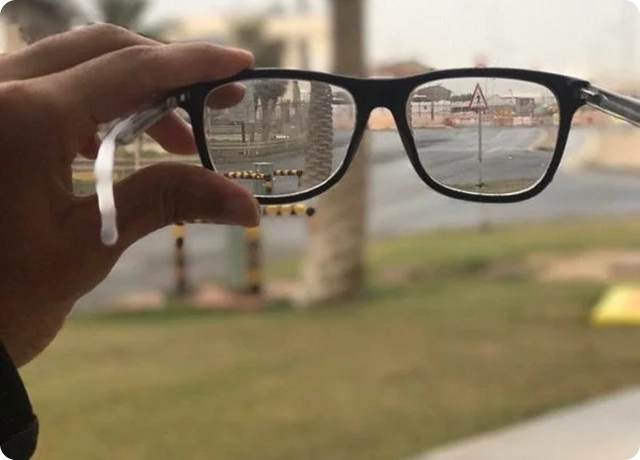
Do Glasses Improve Vision?
Yes, wearing glasses does improve vision—but only while you are wearing them. To improve your vision without glasses, the underlying cause of your vision problem must be corrected, which may involve changing the physical structure of the eye.
For example, if you are farsighted, the cornea may have an insufficient curvature pattern, preventing light from focusing properly on the retina. Unless the refractive error is corrected, the solution requires adjusting the corneal curvature, which is achieved through vision correction procedures.
Read More
Glasses can help improve your vision by enhancing visual clarity and magnifying your field of view, making it easier to see objects up close. However, they do not correct the underlying issue of a small or irregular corneal curvature. Instead, they work with it to provide the best possible visual acuity only while wearing corrective lenses.
In other words, your lenses correct your vision according to your prescription, but once you remove your glasses, your vision may return to its original state. Keep in mind that glasses can correct vision to 20/20 in some cases (or even better).
That said, this depends on the condition of your eyes. For example, if your vision measures 20/70 to 20/160 even while wearing glasses, you may have reduced visual acuity that requires additional steps or specialized lenses to further improve your sight.
Additionally, vision can deteriorate with age due to presbyopia. Regular, comprehensive eye examinations can help ensure you receive the care and correction your eyes need before symptoms become more severe.
For decades, both men and women have sought better vision without glasses. Many early experts who promoted a healthier lifestyle as a remedy for various ailments recommended eye exercises as a way to eliminate the need for reading glasses. Not all of us are blessed with perfect vision, and most people rely on glasses to achieve 20/20 vision. However, there is no greater comfort than not having to wear glasses. There are several ways to reduce dependence on glasses—some methods focus on specific dietary choices, others emphasize eye exercises, and the final option, of course, is undergoing surgical or laser vision correction procedures such as LASIK. If you are looking to free yourself from glasses and enjoy clearer vision in a natural and effective way, then reading this information is essential—especially since Batal Specialist Medical Center has extensive experience in vision correction and the treatment of eye conditions, regardless of their complexity.
What Do People with Astigmatism See?
Laser eye surgery may seem like a big step, but it is one of the most effective and painless ways to achieve clear vision without glasses or contact lenses. LASIK is a surgical procedure used to correct vision in people who suffer from nearsightedness, farsightedness, or astigmatism.
LASIK is a type of refractive eye surgery that provides visual comfort without obstacles. Other types of laser vision correction procedures include Femto LASIK, PRK (Photorefractive Keratectomy), Epi-LASIK, and wavefront-guided LASIK.
The dream of getting rid of glasses and the inconvenience of contact lenses can be achieved through LASIK eye surgery. LASIK has been approved by the U.S. Food and Drug Administration (FDA) for individuals over the age of 18. However, laser eye surgery is generally considered safest in the mid-twenties, when vision has fully stabilized.
Around the age of forty, many people begin to develop a condition known as presbyopia, where it becomes difficult to see objects at arm’s length. LASIK cannot correct presbyopia. At Batal Specialized Medical Complex, there is a highly experienced team of ophthalmologists specializing in LASIK, dedicated to helping you reduce or eliminate your dependence on glasses through the most suitable vision correction solutions.
Permanent Freedom from Glasses
Eye surgery procedures have seen significant technological advancements as more people now choose bladeless eye surgeries. Surgery remains the only permanent solution to eliminate the need for glasses, and the encouraging news is that there are several effective surgical options available.
PRK (Photorefractive Keratectomy)
PRK was the first vision correction surgery to use laser technology to reshape the cornea and correct refractive errors.
ICL (Implantable Collamer Lens)
ICL involves implanting a lens made of Collamer, a biocompatible material, inside the eye between the iris and the natural lens.
RLE (Refractive Lens Exchange)
In this procedure, the eye’s natural lens is removed and replaced with an artificial intraocular lens to correct vision.
ReLEx SMILE (Small Incision Lenticule Extraction)
This advanced technique uses femtosecond laser technology to sculpt a precise lenticule within the cornea, which is removed through a small incision to correct vision.
What Are the Differences Between the Various Glasses-Free Vision Correction Procedures?
Laser vision correction and lens-based surgical procedures are used to treat common refractive errors such as nearsightedness (myopia), farsightedness (hyperopia), astigmatism, and presbyopia, helping reduce dependence on glasses and/or contact lenses.
Most laser vision correction procedures work by reshaping the cornea, the clear front surface of the eye. This allows light to pass through properly and focus accurately on the retina at the back of the eye.
There are three main ways to improve visual focus:
Reshaping the existing cornea or lens
Adding an artificial lens
Replacing a non-functioning natural lens
Below are the main differences between the available procedures to eliminate glasses:
LASIK
LASIK (Laser-Assisted In Situ Keratomileusis) is used to correct myopia, hyperopia, and astigmatism. During the procedure, the surgeon reshapes the underlying corneal tissue so that light can focus correctly on the retina.
A corneal flap is created in the outer layer of the cornea to access the tissue beneath—this flap is what distinguishes LASIK from other procedures. In some cases, the surgeon may use wavefront-guided technology, a type of computerized imaging that creates a detailed map of the cornea to guide treatment.
PRK (Photorefractive Keratectomy)
PRK, also known as ASA (Advanced Surface Ablation), is used to correct mild to moderate myopia, hyperopia, and astigmatism. Like LASIK, PRK uses a laser to reshape the cornea; however, it only affects the surface of the cornea and does not involve creating a flap.
This makes PRK different from LASIK, and corneal imaging may also be used to guide the procedure.
ReLEx SMILE
ReLEx SMILE is an advanced laser-based corneal procedure in which no corneal flap is created. It combines advantages of both LASIK and PRK.
During the procedure, a small disc of corneal tissue (lenticule) is created and removed using a femtosecond laser from within the cornea, allowing it to be reshaped. Because there is no flap and minimal surface disruption, SMILE helps preserve corneal strength more effectively.
RLE (Refractive Lens Exchange)
RLE, also known as PRELEX, Clear Lens Exchange (CLE), or Refractive Lens Replacement (RLR), is similar to cataract surgery.
The surgeon makes a small incision at the edge of the cornea, removes the eye’s natural lens, and replaces it with a silicone or plastic intraocular lens. This procedure is especially effective for severe farsightedness or nearsightedness and works well for patients with thin corneas, dry eye, or mild corneal problems. RLE is considered an advanced and permanent solution for eliminating the need for glasses.
What Results Can You Expect?
Glasses can be a burden for many people, and eliminating the need for them offers several benefits, including:
Have you ever said, “Where did I put my glasses?” only to realize they were on your forehead? Keeping track of glasses is not always easy.
Water-related activities can be challenging when wearing glasses. After laser eye surgery, these problems are eliminated.
You can’t simply buy any pair of sunglasses—you need prescription lenses, which can be inconvenient and expensive.
When it rains heavily, you need an umbrella to keep both you and your glasses dry, and sudden rain can quickly affect your vision.
Your vision is limited by the size and design of your frames. Glasses can improve vision, but only to a certain extent.
Keeping glasses clean is difficult; maintaining lenses completely free of fingerprints and smudges is a constant challenge.
Any sudden movement can cause your glasses to slip or fall off.
If you replace a pair of glasses costing $200 every two years, you will spend around $2,000 over 20 years—a significant amount compared to the long-term cost of permanent vision correction procedures.
Advantages of Glasses-Free Vision Correction Procedures
Glasses can be a burden for many people, and eliminating the need for them offers several advantages, including:
Have you ever said, “Where did I put my glasses?” only to realize they were on your forehead? Keeping track of glasses isn’t always easy.
Water-related activities can be difficult when wearing glasses. After laser eye surgery, these issues are no longer a concern.
You can’t simply buy any pair of sunglasses—you need prescription lenses, which can be inconvenient and expensive.
Heavy rain means you need a good umbrella to keep both you and your glasses dry, and sudden downpours can quickly affect your vision.
Your vision is limited by the size and design of your frames. Glasses improve vision, but only to a certain extent.
Keeping glasses clean is challenging; maintaining lenses completely free of smudges and fingerprints is difficult.
Any sudden movement can cause your glasses to slip or fall off.
If you replace a pair of glasses costing $200 every two years, you’ll spend around $2,000 over 20 years—a significant amount compared to the long-term cost of permanent vision correction.
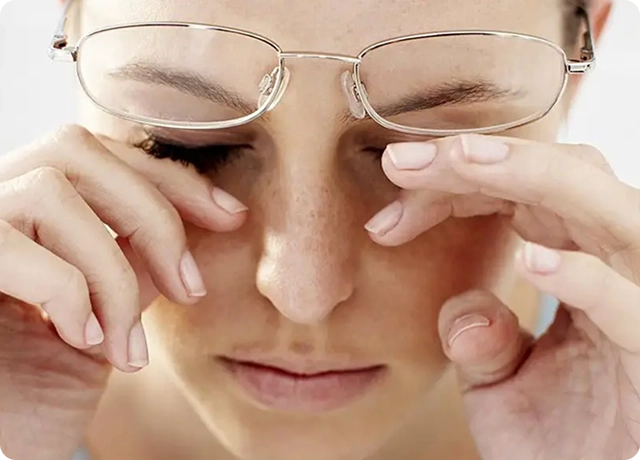
Does Wearing Glasses Make Your Eyes Worse?
Not wearing glasses will not damage your eyes, but it may cause the symptoms of vision problems to appear or worsen. Symptoms of farsightedness, for example, may include eye strain or fatigue after prolonged near-vision activities, as well as eye irritation and headaches, which are also common. You may have noticed that many of these symptoms improved or disappeared after you started wearing glasses. However, if you stop wearing them, the effects of refractive errors or other eye problems may return.
Read More
For this reason, it is recommended to wear prescription glasses according to your ophthalmologist’s advice, as they will explain in detail how often you should wear them after a comprehensive eye examination.
If you are concerned about not wanting to wear glasses all the time, there is no need to worry—you may not have to. You can eliminate the need for glasses through the latest and most advanced vision correction technologies available at Batal Specialized Medical in Jeddah.
Dr. Baraa Faham
Dr. Issa Baissa
Consultant in Ophthalmology & Vision Correction
Dr. Obaida Kilani
Eye Surgeon specializing in Glaucoma (Water Glaucoma) Surgery, Cataract Surgery, and Advanced Laser Vision Correction Procedures.
Dr. Mohamed hantira
the certificate of the Scientific Council of Ophthalmology Glaucoma, laser vision correction and corneal surgery
Dr. Mohammed Al-Mousa
Consultant in Corneal Surgery, Vision Correction & Cataract
Vision Correction Doctors at Batal Specialist Medical Center
Get comprehensive medical care



Installments available up to 100% via Tamara & Tabby & Amwal