Med info
Eye Vision Testing Using 3 Different Charts

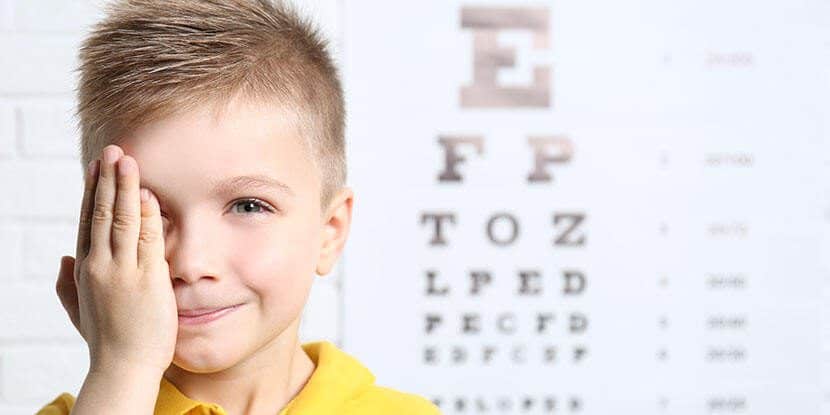
During an eye exam, eye doctors use eye charts to measure visual acuity at a specific distance and compare it to standard human vision. Different charts can be used to test vision depending on the patient and the clinical situation. Below are the three most commonly used eye charts:
These charts can be printed and used for basic vision screening at home.
Read also: Post-PRK (surface laser) care tips
The Snellen Eye Chart
The classic example of a vision test is the Snellen eye chart, developed by Dutch ophthalmologist Herman Snellen in the 1860s.
Today, there are many variations of the Snellen test, most of which include:
During a vision test, the eye doctor will ask you to identify the smallest line of letters you can read, then ask you to read it aloud. If you can read the bottom line of letters, your visual acuity is considered very good.
Read also: Top 10 symptoms of myopia and how to treat it
The “Tumbling E” Eye Chart
Sometimes ophthalmologists cannot use the standard Snellen chart. In such cases, they may use a modified version called the “Tumbling E” chart.
This test can be used in the following situations:
This chart uses the same visual acuity scale as the standard Snellen chart, but all the symbols are a capital letter “E” rotated in 90‑degree increments.
During the Tumbling E test, the eye doctor will ask the person being tested to use either hand (with fingers extended) to indicate the direction the “fingers” of the E are pointing: right, left, up, or down. Studies show that measurements obtained using the Tumbling E chart are almost identical to those from the standard Snellen eye chart.
The Jaeger Eye Chart
To assess near vision, an eye doctor may use a small handheld card called the Jaeger eye chart. The Jaeger chart consists of short blocks of text in different font sizes. It can be used in two different ways, depending on what the eye doctor is trying to evaluate:
Since its introduction in 1867, many manufacturers have produced modified versions of the Jaeger chart. Modern Jaeger charts are not fully standardized, so the letter sizes can vary slightly from one card to another. Typically, the J1 paragraph on a Jaeger chart is considered equivalent to 20/20 near vision on a distance eye chart. On some Jaeger cards, the J1+ paragraph is treated as the 20/20 equivalent.
Read also: Treatment of eye swelling
What Does 20/20 Mean in an Eye Test?
A visual acuity of 20/20 is considered “normal” vision. This means that at a distance of 20 feet, you can read what the average person with normal vision can read at 20 feet.
Because many eye clinics are shorter than 20 feet, the eye chart is often placed behind the patient and viewed via mirrors to simulate a 20‑foot testing distance. Eye charts can be configured in different ways, but in general, if you can read only the large “E” at the top of the chart and none of the smaller letters, your vision is classified as 20/200.
Having 20/200 vision means you can read at 20 feet what a person with normal vision can read at 200 feet. This indicates very poor visual acuity. In some countries, a person is considered legally blind if their best‑corrected visual acuity is 20/200 or worse, even with glasses or contact lenses.
For a driver’s license, vision typically must be at least 20/40 with correction. Very few people have 20/10 vision or better, but some animals do. Most birds of prey, for example, are believed to have visual acuity of about 20/5—or even better.
Limitations of the Eye Chart
Because eye charts measure only visual acuity, they help the eye doctor determine whether someone needs prescription glasses or contact lenses. They also help motor vehicle departments decide who needs corrective lenses to drive and who should not drive due to legal blindness.

However, eye charts do not measure peripheral (side) vision, depth perception, color vision, or contrast sensitivity. They also cannot assess factors such as intraocular pressure or the health of the retina.
Read also: Fundus (retinal) examination