
Laser Techniques for Correcting Eye Astigmatism
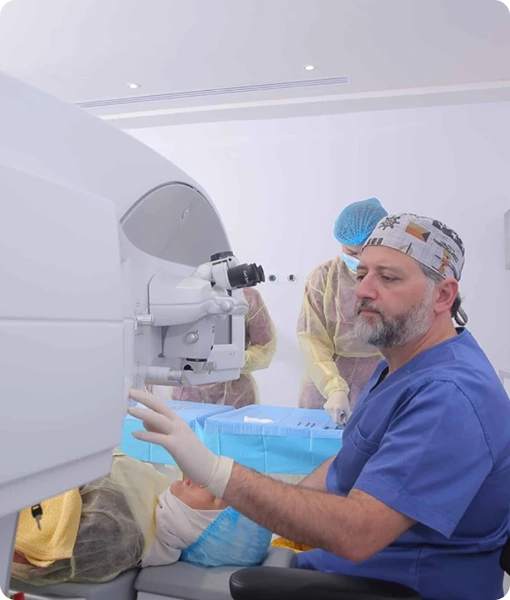
Laser treatment for astigmatism varies from one person to another, as visual measurements and vision prescriptions change with age. Some laser eye surgeries may be suitable for younger patients, while other procedures are more appropriate for older adults. Therefore, the treatment of astigmatism and refractive errors in children differs from the surgical and medical approaches used for adults and elderly patients.At Batal Medical Complex, we have performed specialized eye surgeries to treat astigmatism and other eye conditions in both children and adults. Below is an overview of some of the advanced techniques we offer.
Laser Techniques for Correcting Eye Astigmatism
Laser treatment for astigmatism varies from one person to another, as visual measurements and vision prescriptions change with age. Some laser eye surgeries may be suitable for younger patients, while other procedures are more appropriate for older adults. Therefore, the treatment of astigmatism and refractive errors in children differs from the surgical and medical approaches used for adults and elderly patients.At Batal Medical Complex, we have performed specialized eye surgeries to treat astigmatism and other eye conditions in both children and adults. Below is an overview of some of the advanced techniques we offer.
Diagnosis of Eye Misalignment (Strabismus)
There are several tests that help detect strabismus and associated eye misalignment. The light reflex test evaluates eye alignment by asking the child to look directly at a light source. Another test uses prisms to analyze whether the eyes are properly aligned. Vision can also be assessed by evaluating the eye’s ability to focus on a moving object or by observing the child’s response when one eye is covered. In adults, eye alignment is measured using a standard eye chart with letters or images to test visual acuity. It is extremely important to determine whether the child was born with strabismus or developed it later due to injury or other medical conditions.
What Do People with Astigmatism See?
People with moderate to severe uncorrected astigmatism may experience blurry, distorted, or unclear vision. However, many individuals with mild astigmatism may have no noticeable symptoms.
Astigmatism typically becomes noticeable at around 0.75 to 1.00 diopters, although this can vary depending on the individual. Astigmatism can also cause shadowing or ghosting of images.
It may make letters appear doubled, and at night, astigmatism can make vision particularly difficult, causing glare and halos around lights, which can be especially bothersome.
When children have astigmatism, they may not be able to express their symptoms clearly. Parents should watch for warning signs such as eye rubbing, squinting, or closing one eye, in addition to the symptoms mentioned above.
Treatment of Eye Astigmatism
In some cases of mild astigmatism, no treatment may be required, as it is a common condition that often does not cause significant symptoms and may not require medical intervention. However, in more severe cases, astigmatism can be treated using one of the following methods:
Types of Specialized Eye Surgeries
Common types of eye surgeries are outlined below, with descriptions based on information provided by the National Eye Institute (NEI) and the National Institutes of Health (NIH):
Blepharoplasty (Eyelid Surgery)
Blepharoplasty is performed to correct droopy eyelids. The surgeon makes one or more small incisions to remove excess skin, muscle, and fat, or to reposition fat to improve the appearance and function of the eyelids.
Cataract Surgery
A cataract is a cloudy area in the lens of the eye that makes it difficult to see clearly. During cataract surgery, the doctor uses small instruments to remove the cloudy lens and replace it with an artificial intraocular lens (IOL).
Corneal Transplant (Keratoplasty)
During a corneal transplant, the surgeon uses a special device to keep the eye open while removing the damaged portion of the cornea and replacing it with healthy donor tissue. Doctors may perform a full-thickness corneal transplant (penetrating keratoplasty) or a partial-thickness transplant (lamellar keratoplasty), depending on the condition.
Glaucoma Surgeries
For glaucoma treatment, a surgeon may implant a small tube (shunt) in the white part of the eye to help drain excess fluid and reduce intraocular pressure.
In trabeculectomy, the surgeon creates a small opening in the upper part of the eye under the eyelid to allow fluid to drain and lower eye pressure.
LASIK and Laser Vision Correction (Refractive Surgery)
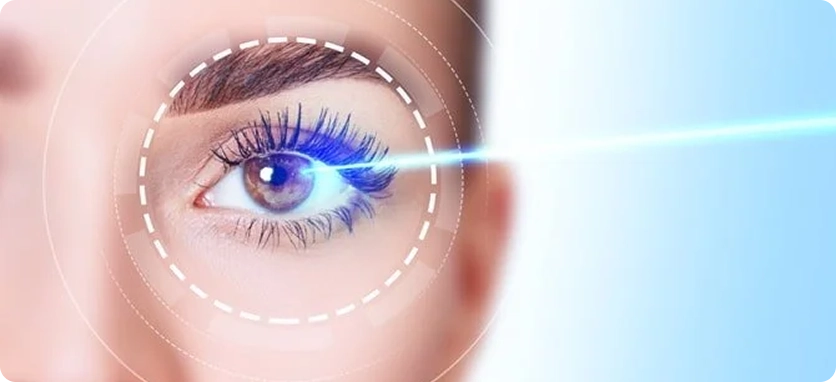
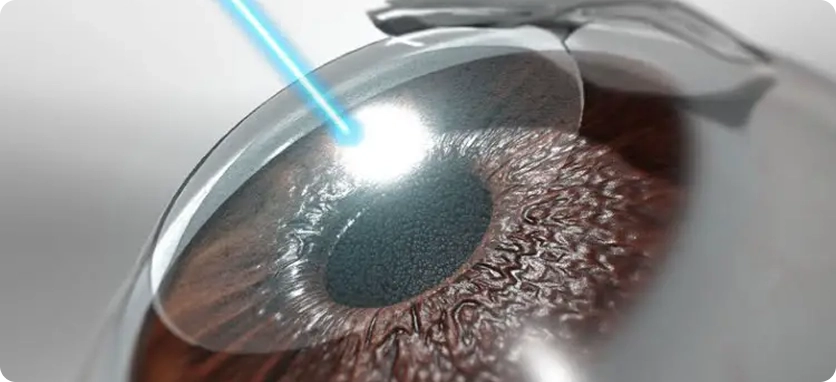
In laser eye surgery, a powerful laser beam is used to reshape the cornea, improving vision for adults with nearsightedness, farsightedness, or astigmatism.
Photorefractive Keratectomy (PRK) may be used as an alternative to LASIK for patients with dry eyes or thin corneas.
Retinal Surgeries
There are several procedures to repair damaged or detached retinas, and some may be used together.
Laser photocoagulation or cryopexy (freezing therapy) can create small scars to seal retinal tears or holes.
Scleral buckle surgery involves placing a flexible band around the white of the eye to gently push the eye wall toward the retina to help it reattach.
Pneumatic retinopexy involves injecting a small gas bubble into the eye to push the retina back into place before applying laser or freezing treatment. The bubble disappears naturally over time.
Vitrectomy involves removing most of the vitreous gel to give the surgeon better access to the retina and create space for the gas bubble.
Eye Muscle Surgery (Strabismus Surgery)
Strabismus is a condition in which the eyes do not move together as a pair, and one eye may drift inward, outward, upward, or downward. Surgery is not always required, but when necessary, the surgeon adjusts the eye muscles to strengthen or weaken them. This may involve removing a portion of the muscle or reattaching it to a different position on the eye.
Understanding Astigmatism
The cornea is the clear front surface of the eye, and the lens sits behind the cornea inside the eye. Both the cornea and the lens bend (refract) incoming light to help you see clearly. When they have a perfectly smooth, rounded curvature, vision is clear and focused.
However, many people do not have perfectly round eyes. If the cornea or lens has uneven or irregular curves, this is known as a refractive error, and astigmatism is one type of refractive error that can interfere with clear vision.
If you have astigmatism, your eye may be shaped more like an egg or a football rather than a perfect sphere. Astigmatism can result from an eye condition or injury, but in most cases, it is present from birth.
Astigmatism is a common condition and is often associated with other refractive errors such as nearsightedness (myopia) and farsightedness (hyperopia). You may have astigmatism if you experience:
Blurred vision at near or far distances
Headaches
Eye strain
Eye fatigue
Poor night vision
Information About Astigmatism
Astigmatism is generally easy to diagnose through a comprehensive eye examination. Our team performs a series of eye tests using specialized instruments, including a keratometer to measure corneal curvature and a phoropter to determine how your eyes refract light.
If your vision is blurry without corrective lenses, you may have a refractive error. Our team can determine whether you have nearsightedness (myopia), farsightedness (hyperopia), astigmatism, or a combination of these conditions.
The treatment plan for astigmatism depends on the severity of the condition. Some people have mild astigmatism, while others have more pronounced curvature irregularities. Astigmatism can affect one eye or both eyes.
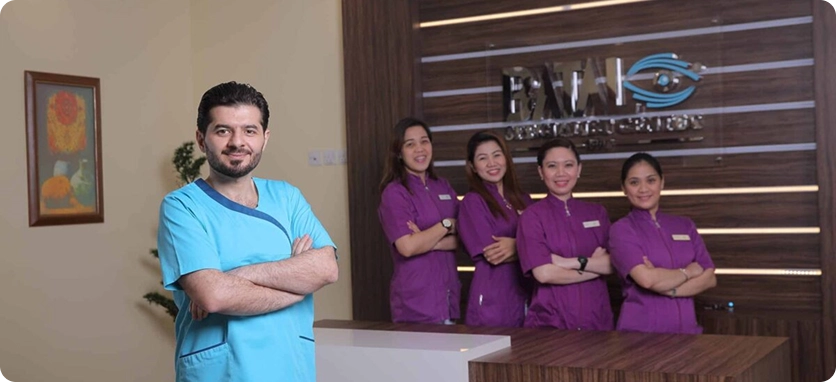
At Batal Eye Specialty Center, our team regularly treats astigmatism and other refractive errors and eye misalignment using:
Prescription eyeglasses
Prescription contact lenses
IntraLase® LASIK surgery
Eyeglasses and contact lenses counteract the irregular curvature in each eye to improve vision clarity. LASIK surgery permanently reshapes the cornea to improve vision without corrective lenses, while orthokeratology is a treatment that uses rigid contact lenses to gradually reshape the cornea.
Whether you have mild or severe astigmatism, you can achieve clear vision at any time of day or night. The team at Batal Eye Specialty Center is pleased to provide personalized treatment plans for astigmatism to help you achieve the best possible vision.
Medical Treatment
If strabismus or eye misalignment affects only one eye, the doctor may prescribe eye drops for the healthy eye to temporarily blur its vision and encourage the weaker eye to work more effectively. Another common method for treating mild eye misalignment is patching the healthy eye to train the brain to use the weaker eye. However, using eye drops alone cannot permanently correct eye misalignment in the long term.
Glasses or Contact Lenses
The doctor may prescribe customized eyeglasses to correct eye misalignment or medical contact lenses with specifications tailored to the degree of visual deviation. Contact lenses are typically suitable for moderate cases.
Laser Treatment for Eye Misalignment
We recommend strabismus surgery when other treatments are not effective. There are different types of surgical procedures to correct vision and treat eye misalignment, and the degree of deviation determines the most suitable procedure.
Eye alignment correction surgery usually takes no more than one hour and may be completed in as little as 30 minutes, depending on the case. Patients typically leave the clinic about two hours after the procedure.
Eye Misalignment Surgery (Strabismus Surgery)
At Batal Eye Specialty Center, we prefer to perform laser eye surgery as soon as the condition is detected. Studies have shown that binocular vision pathways in the brain (using both eyes together) are more adaptable at an early age, and laser treatment for eye misalignment can be performed at a very young age, even in infants under four months old.
However, laser surgery for eye misalignment can also be performed in adults, as the brain’s ability to adapt may continue to some extent in certain cases.
Regular and Irregular Astigmatism
Regular Astigmatism
The principal meridians are perpendicular to each other and form a 90-degree angle. Most cases of astigmatism are regular and usually affect the cornea.
Irregular Astigmatism
The principal meridians are not perpendicular. This type of astigmatism may result from an eye injury or surgery that causes corneal scarring. It can also be caused by keratoconus, a condition that leads to thinning and distortion of the cornea.
What Are the Anesthesia Considerations During Eye Surgery?
Some types of eye surgery may require general anesthesia, which keeps you unconscious throughout the procedure, while in other cases it may be an option. However, most patients receive monitored sedation to help them relax, along with a local anesthetic block to prevent pain. Sedation is usually administered intravenously, while the anesthetic block is given as an injection near the eye.
Although the level of anesthesia varies depending on the procedure and the patient, it is often kept light enough for you to remain awake and relaxed. This level of sedation is important in eye surgery because the surgeon needs your head to remain still. Excessive sedation can cause confusion, drowsiness, or snoring, which may lead to unwanted head movement. In blepharoplasty (eyelid surgery), too much anesthesia can make the eyelids appear more droopy than usual, potentially leading the surgeon to overcorrect the condition.
Monitored anesthesia is also preferred in most cases due to the positioning of the surgeon and anesthesiologist during eye surgery. In many other surgical procedures, the anesthesiologist is positioned near the patient’s head and the surgeon near the middle of the body. In eye surgery, these positions are reversed, making it more difficult for the anesthesiologist to intervene quickly if the patient experiences breathing difficulties, which are more likely under general anesthesia.
Specialized Eye Surgeries at Batal Specialist Medical Center
Specialized eye surgeries—also known as refractive and laser eye surgeries—have advanced significantly in recent years. Most eye procedures work by reshaping the cornea so that incoming light focuses correctly on the retina, while other procedures involve implanting lenses to replace the natural eye lens. The type of surgery is determined by the specific eye condition and visual defect.
Some patients may have other medical conditions, such as diabetes, that make certain procedures unsuitable. Pregnant women should also avoid eye surgery, as hormonal changes can affect surgical outcomes. A person’s profession and daily activities are also important factors in determining the most appropriate eye surgery and vision correction method. For this reason, there are multiple laser eye treatment options available to meet individual needs.
Presbyond Laser Vision Correction
Presbyond surgery is a suitable treatment for many people who experience age-related near vision decline (presbyopia). Although the procedure is primarily used to reduce the need for reading glasses, it can also be combined with treatments for nearsightedness (myopia), farsightedness (hyperopia), and astigmatism—which we offer at Batal Eye Specialty Center.
Femto LASIK
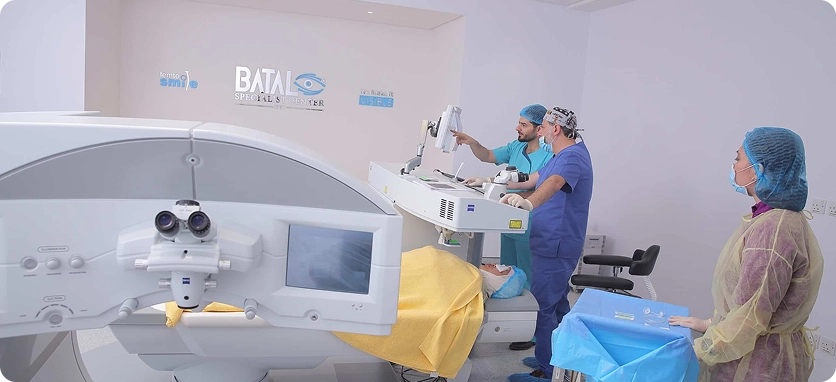
Femto LASIK is a laser vision correction procedure similar to traditional LASIK, in which the cornea is reshaped to correct refractive errors. It is an effective solution for cases of nearsightedness that may not be suitable for conventional LASIK.
Its main advantage is that it uses laser technology entirely, without the need for the surgical blade used in standard LASIK, making it a more precise and minimally invasive procedure.
LASIK (Laser Vision Correction)
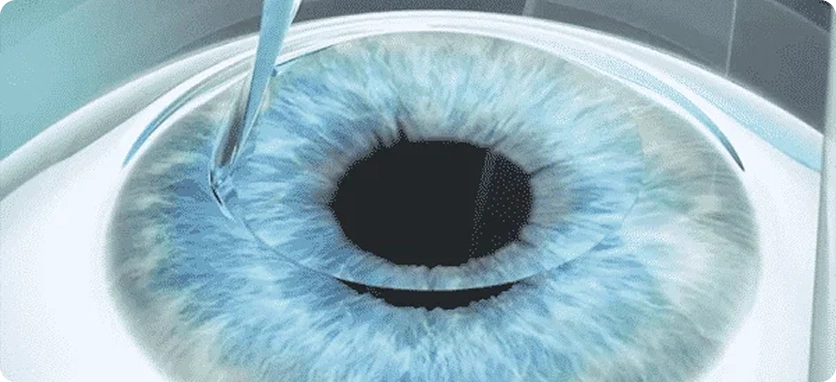
LASIK is a procedure that reshapes the cornea to properly focus light onto the retina, making it an ideal treatment for people with nearsightedness, farsightedness, and astigmatism, especially in their twenties and thirties.
This procedure requires high precision and is preceded by a comprehensive eye examination using advanced digital imaging devices, allowing the LASIK specialist to create a detailed map of the cornea and guide the treatment accurately.
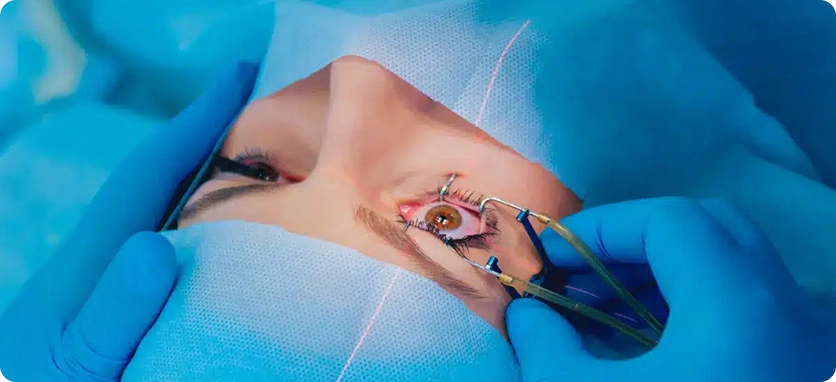
LASEK (Laser Epithelial Keratomileusis)
Laser epithelial keratomileusis (LASEK) is a surface laser vision correction procedure in which the cornea is reshaped using a laser. It is used to treat nearsightedness (myopia), farsightedness (hyperopia), and astigmatism, and is considered a surface laser treatment option that is particularly suitable for patients with thin corneas.
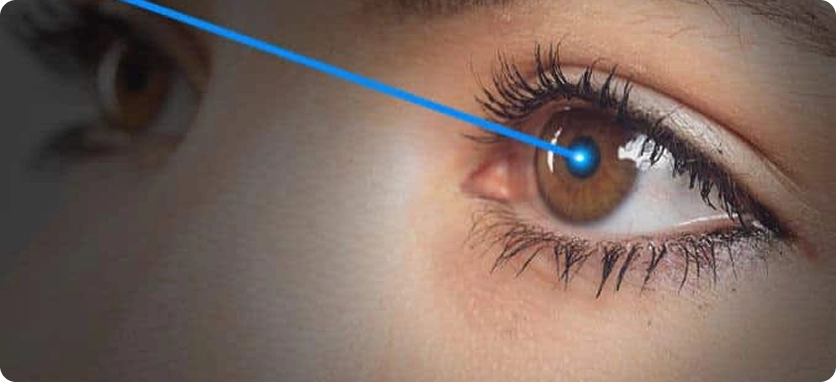
Refractive Lens Exchange (RLE) or Clear Lens Extraction (CLE)
Refractive Lens Exchange (RLE), also known as Clear Lens Extraction (CLE), is a vision correction procedure and a treatment for cataracts. At Batal Eye Specialty Center, a small incision is made at the edge of the cornea to remove the eye’s natural lens and replace it with a flexible artificial lens.
This procedure is used to treat severe farsightedness or nearsightedness, correct thin corneas, manage dry eye conditions, and address other eye disorders that are not suitable for LASIK. It is generally recommended for patients over 40 years of age.
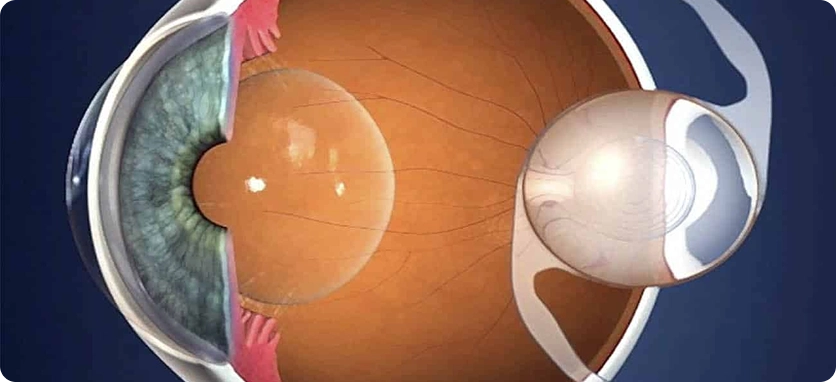
Epi-LASIK Surgery
Epi-LASIK is one of the laser vision correction options. In this procedure, a thin layer of the cornea is separated and the cornea is then reshaped with a laser. A soft contact lens is placed afterward to protect the treated area.
It is suitable for treating astigmatism, nearsightedness (myopia), and farsightedness (hyperopia), especially in cases of thin corneas. A thorough eye examination is performed beforehand to measure corneal thickness and determine suitability for the procedure.
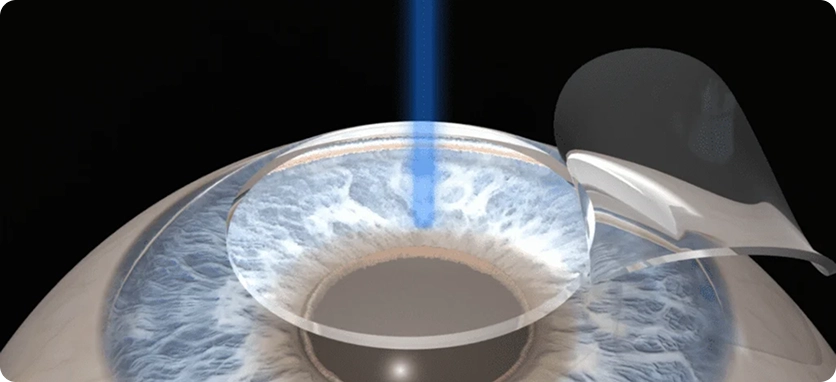
PRELEX (Presbyopic Lens Exchange)
We have performed hundreds of PRELEX procedures to treat presbyopia (age-related near vision loss), a condition in which patients experience difficulty seeing close objects due to the natural lens losing flexibility with age.
At Batal Eye Specialty Center, this procedure takes only a few minutes. A small incision is made to implant a multifocal intraocular lens inside the eye to enhance focusing ability and correct vision.
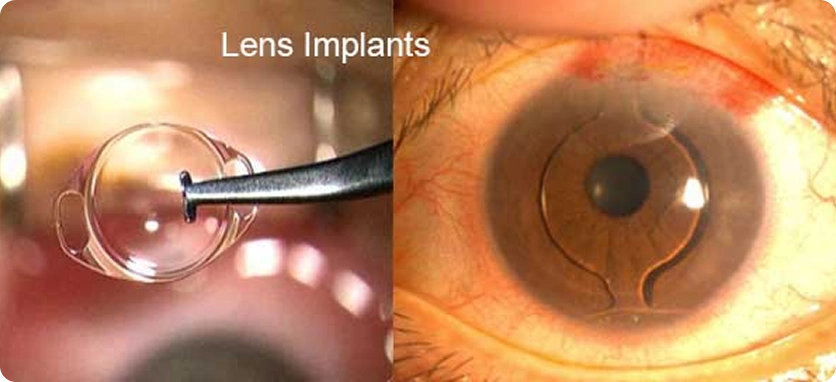
Intraocular Lens Implantation (ICL)
Some patients with severe nearsightedness may require an intraocular lens implant. In this advanced specialized eye surgery, an implantable lens is inserted through a very small incision at the edge of the cornea and positioned behind the pupil, attached to the iris, while keeping the eye’s natural lens in place.
Astigmatic Keratotomy (AK)
Astigmatic keratotomy is a surgical procedure that corrects astigmatism without using a laser. It involves making one or two small incisions to control the corneal curvature and relax the cornea. The procedure can be performed on its own to correct astigmatism or combined with other laser eye surgeries, depending on the patient’s condition.
Talk to one of the specialists at Batal Eye Specialty Center about any eye problem you are experiencing and be assured that you will be in the hands of experts who have performed specialized eye surgeries for hundreds of patients.
Top Specialists at Batal Specialist Medical Center
Oculoplastic and Aesthetic Eye Surgeon – Batal Specialist Medical Center
Dr. Tarek Al-Najjar is a highly experienced specialist in oculoplastic and eye aesthetic surgery, with more than 25 years of experience in eye cosmetic procedures, ophthalmic surgery, and lacrimal (tear duct) system surgery.
87 Reviews

Top Specialists at Batal Specialist Medical Center
Get comprehensive medical care



Installments available up to 100% via Tamara & Tabby & Amwal