Med info
Do Contact Lenses Really Treat Hyperopia (Farsightedness)?

Hyperopia (farsightedness) and myopia (nearsightedness) are among the most common refractive errors today, and they are usually easy to correct with the help of corrective lenses. Your eye doctor may recommend eyeglasses, but in many cases you can also choose to wear contact lenses. Your ophthalmologist or optometrist will help you decide which option is best for you. So, is it really true that contact lenses can be used to treat hyperopia?
Read also: Treatment Options for Hyperopia and All Available Techniques
What Is Hyperopia?
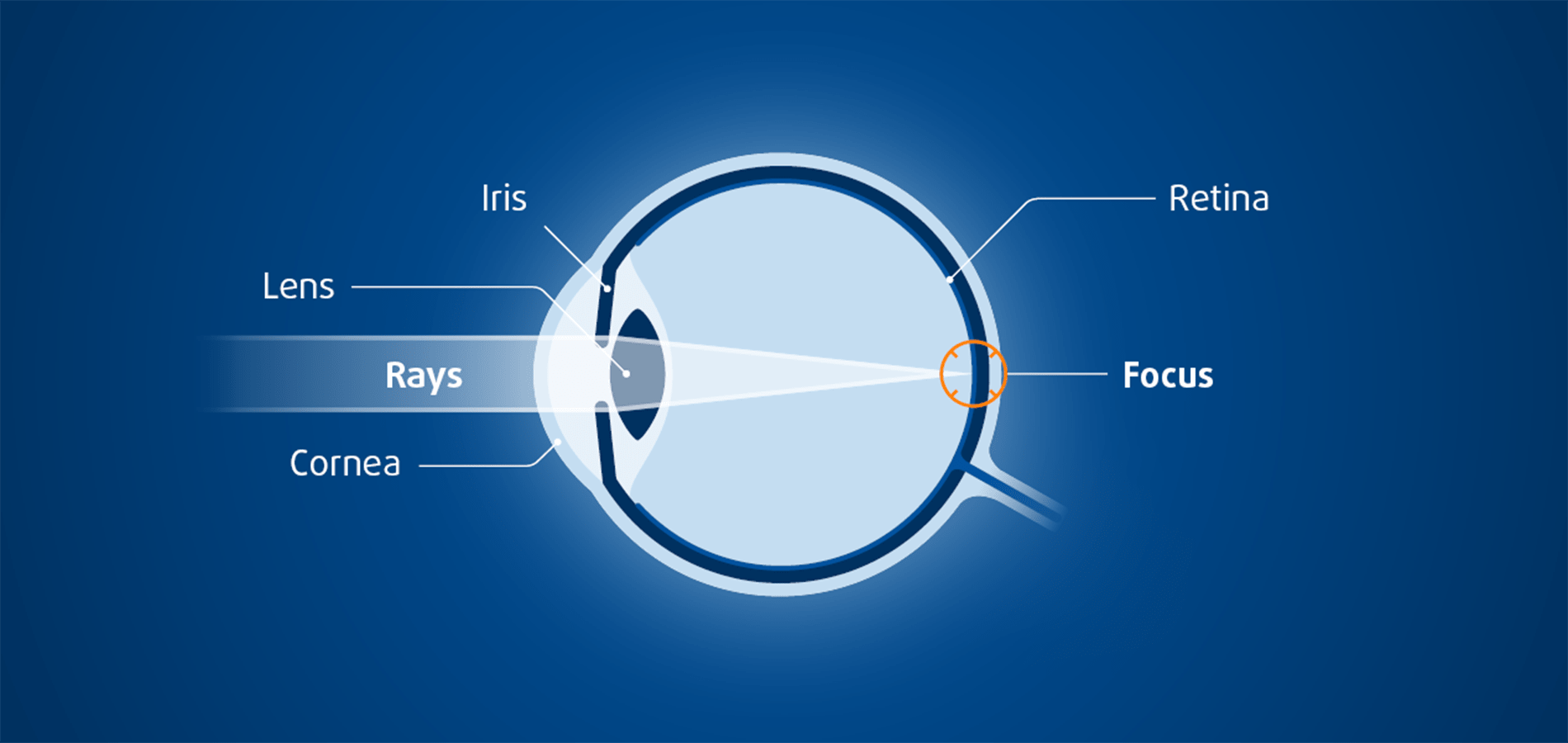
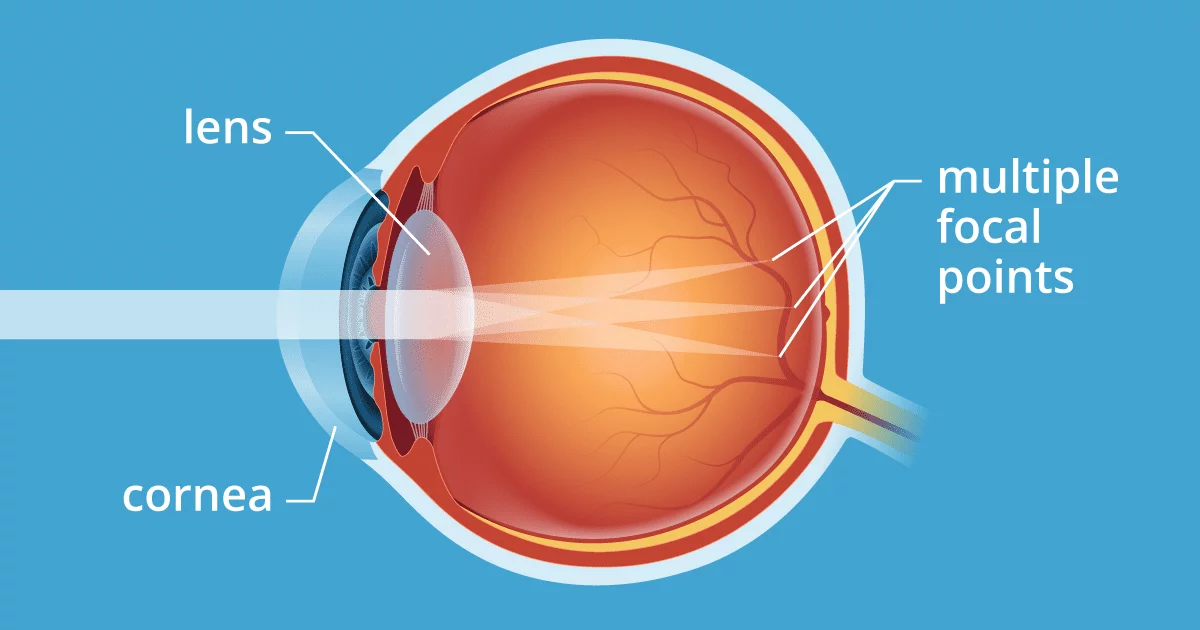
Hyperopia is a common refractive error that occurs when the eyeball is shorter than normal, causing incoming light to focus behind the retina rather than directly on it. The retina is lined with photoreceptor cells that convert light into nerve signals, which are then sent to the brain.
Because of this focusing error, the crystalline lens of the eye has to work harder to bring the image into clear focus on the retina. Your eye care provider may not always state explicitly that you have hyperopia, but you can often tell from your prescription: if the numbers for your distance correction start with a plus sign (+), that indicates farsightedness. The other numbers reflect how strong the correction needs to be to sharpen your vision.
Read also: LASIK Eye Surgery for Vision Correction – Is It Right for You?
Symptoms of Farsightedness
With hyperopia, distant objects are usually seen more clearly than nearby ones. However, during the teenage years and early adulthood, many people may not notice any obvious symptoms because the eye can still compensate.
As you get older, the symptoms often become more noticeable. You may start to feel that distant objects look a bit blurry, and near tasks such as reading books, newspapers, or other printed materials become more difficult or tiring. Early detection allows you to start vision correction before the symptoms significantly affect your daily activities.
Don’t Confuse Hyperopia with Presbyopia
Several vision problems can cause very similar symptoms. Presbyopia is an age-related condition that also leads to blurry near vision while distance vision remains relatively clear. Hyperopia is caused by the shape of the eyeball and how it focuses light, whereas presbyopia results from age‑related changes in the eye’s lens and its focusing muscles.
Age is the main factor in presbyopia. If you are over 40 and notice that close-up tasks like reading are becoming blurry or you have to hold things farther away to see them clearly, presbyopia may be the reason. As you age, the lens of the eye gradually loses flexibility, and the focusing system no longer works the way it did when you were younger. This is a normal part of aging and can be corrected quite easily, but presbyopia usually requires a different type of lens than the one used to correct hyperopia.
Read also: Vision Correction Surgeries
Contact Lenses to Correct Farsightedness
(Are Contact Lenses Really Used to Treat Hyperopia?)
Some people dislike the idea of corrective lenses because they imagine bulky, unattractive eyeglasses. Others find glasses to be a convenient and effective way to correct their vision. Fortunately, hyperopia is generally straightforward to correct, and you will have several options to discuss with your eye care professional.
Eyeglasses are often the simplest solution, but spherical contact lenses are commonly used to correct hyperopia as well. The choice between prescription glasses and contact lenses is largely a matter of personal preference. You might prefer one option over the other for reading, computer work, or other close‑up tasks. It’s important to weigh the pros and cons of both before deciding whether contact lenses are right for you.
Read also: Medical Contact Lenses and Top Care Tips
Choosing the Right Contact Lenses
Here are some factors to keep in mind:
If you are new to contact lenses, the variety of options can feel overwhelming. It’s important to take your time, ask questions, and understand the different types of lenses, their materials, replacement schedules (daily, bi‑weekly, monthly), and how they fit your lifestyle, eye health, and budget.
Other Treatment Options for Hyperopia
Some people prefer not to rely on glasses or contact lenses and instead consider surgical options. Refractive surgery for hyperopia is generally straightforward and relatively quick. It typically involves using laser technology and very fine incisions to reshape the cornea, allowing light to focus correctly on the retina. This can greatly reduce or even eliminate the need for corrective lenses.
These procedures are performed by an ophthalmologist (eye surgeon). However, refractive surgery can be relatively expensive, and many insurance plans either do not cover it at all or cover only part of the cost. It’s important to review your insurance policy and speak with your insurance provider before deciding to proceed with any corrective eye surgery.
Conclusion
Contact lenses are an effective and convenient way to achieve clear vision if you have hyperopia. They are generally comfortable and cost‑effective, and they are worn directly on the surface of the eye. Contact lenses are available in a wide range of materials and designs, and there are many high‑quality brands at affordable prices.
You should always consult your eye doctor about the benefits and possible drawbacks of contact lenses, and which specific type is best suited to your eyes, prescription, and daily needs.
Read also: Contact Lenses – Daily Wear Vision Lenses