Med info
Common Eye Diseases in Children

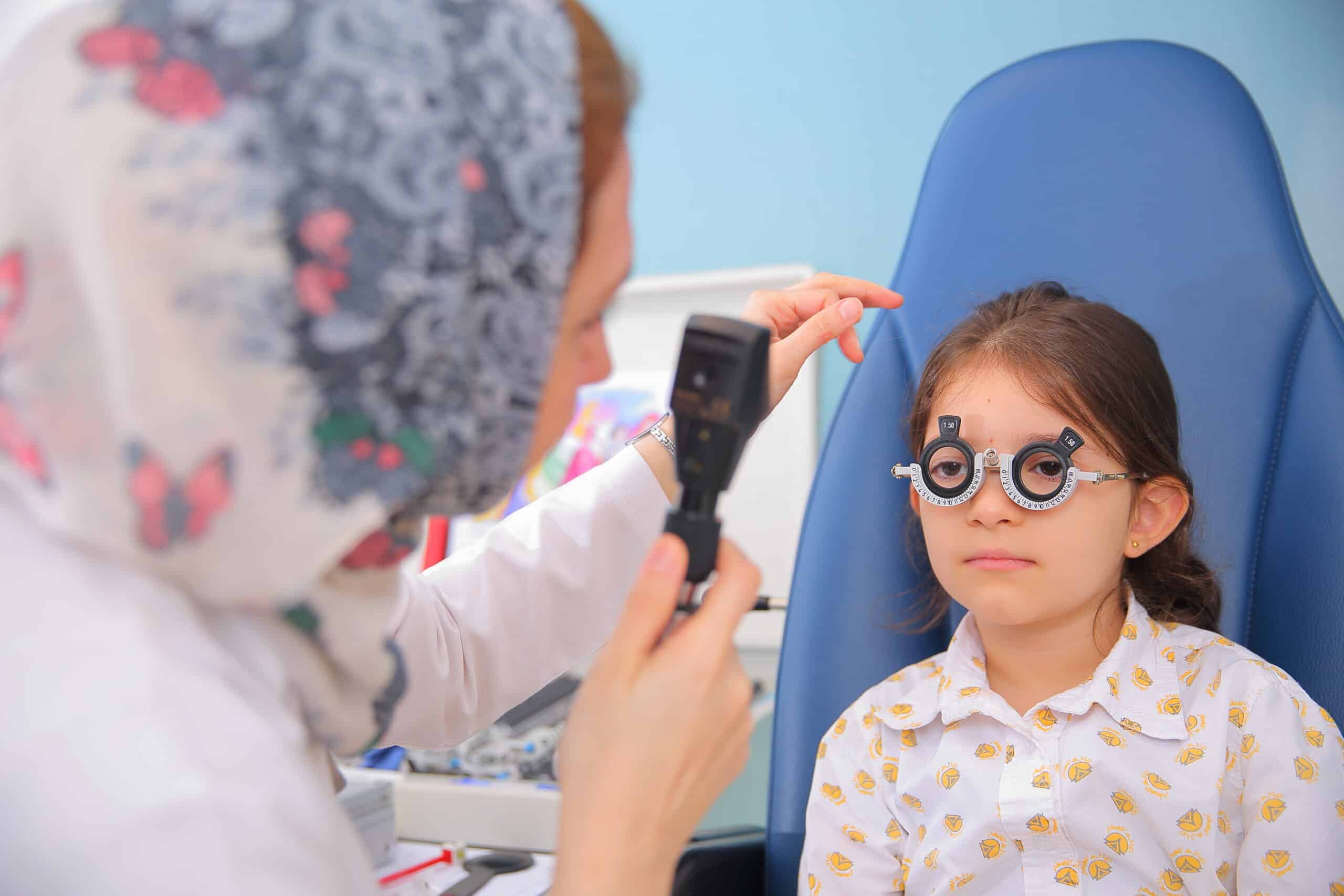
Eye inflammation or redness in children may be nothing more than an infection or an allergy—both are among the common pediatric eye problems. But sometimes these signs can be a symptom of a more serious issue affecting your child’s eyes. The earlier parents notice and address these problems, the better the response to treatment and the faster the recovery. Below are the most common eye conditions in children and when you should contact a doctor right away.
If your child frequently complains of headaches, it’s important to have their eyes examined, including a full assessment of their visual range, with special focus on the visual skills needed for reading. Headaches in children are often related to a refractive error that prevents light rays from focusing properly on the retina, causing blurred vision.
Eye Diseases in Children: Conjunctivitis (Pink Eye)
Conjunctivitis, commonly known as pink eye, is one of the most frequent eye conditions in children. It involves irritation or inflammation of the thin membrane lining the inside of the eyelids and covering the white part of the eye (the conjunctiva). It can be triggered by allergies, bacterial or viral infections, or by the use of steroid-containing eye drops. Newborns can also pick up an eye infection while passing through the birth canal.
Symptoms include itchy, irritated eyes, eye discharge, and swollen eyelids.
Because the symptoms of conjunctivitis in children can mimic those of other eye disorders, it is important not to ignore them or rely solely on home remedies. An eye doctor will typically prescribe anti-inflammatory or antibiotic eye drops depending on the cause.
Refractive Errors
Refractive errors—such as astigmatism, hyperopia (farsightedness), and myopia (nearsightedness)—are the most common eye problems seen in both children and adults. They usually occur due to irregularities in the shape of the eye that prevent light from focusing correctly on the retina.
One of the most noticeable signs of poor eyesight in children is sitting very close to the TV, or holding a phone or book unusually close to their face. Children with myopia, for example, see nearby objects more clearly than distant ones.
Eye Diseases in Children: Nasolacrimal Duct Obstruction
Blocked tear ducts (nasolacrimal duct obstruction) commonly appear in infants shortly after birth. The main sign is constant tearing in one or both eyes without significant redness or infection. This is a well-known pediatric eye condition and in many cases resolves on its own between 6 and 12 months of age.
If the blockage persists, the doctor may recommend massaging the lower eyelid toward the nose along with medicated eye drops. If there is still no improvement, a minor surgical procedure using a probe or endoscope may be needed to open the tear duct or create a new drainage pathway through the nasal bone.
Cerebral Visual Impairment (Cortical Visual Impairment)
Cerebral visual impairment (also called cortical visual impairment) is a partial or complete loss of vision due to a problem in the brain’s visual processing centers rather than in the eyes themselves. In this condition, the eyes are structurally normal, but the part of the brain responsible for interpreting visual information does not function properly, leading to impaired vision.
This may occur around the time of birth due to a lack of oxygen, or later in infancy as a result of repeated shaking (as in shaken baby syndrome) or head trauma. Children with this condition may have poor eye contact and it can be difficult to tell exactly what they are looking at.
Lazy Eye (Amblyopia)
Amblyopia, commonly known as lazy eye, is reduced vision in one or, less commonly, both eyes that can lead to blurred or double vision. In amblyopia, normal visual development is disrupted due to various factors that interfere with how the brain and eyes work together. Over time, the brain starts to rely more on one eye and suppresses the other, which can cause long-term vision problems.
If amblyopia is detected and treated early, the chances of significant improvement are high. Treatment options include prescription glasses, patching (covering the stronger eye to stimulate the weaker one), medicated eye drops, and in some cases surgery.
Sometimes lazy eye is hard to detect, especially when both eyes are affected equally. Unless there is a noticeable squint (strabismus) or obvious misalignment of the eyes, the child may adapt to poor vision and not be able to describe the problem clearly.
Nystagmus
Nystagmus is one of the more recognizable pediatric eye conditions. It is characterized by involuntary, repetitive eye movements, making the eyes appear to move rapidly up and down, side to side, or in a circular pattern. Nystagmus can be present at birth or can develop later in childhood after head trauma, with the use of certain medications, or as a sign of another underlying condition.
Pediatric Cataracts
Cataracts are often associated with aging, but they can also occur in newborns and children. A cataract is a clouding of the eye’s natural lens that can severely affect normal visual development if not detected and treated early.
In children, signs of cataracts may include white or grayish spots in the pupil or noticeable misalignment of the eyes. When cataracts significantly interfere with vision, surgery is usually needed to remove the cloudy lens. If left untreated, pediatric cataracts can lead to amblyopia (lazy eye) or strabismus (crossed eyes).
Strabismus (Crossed Eyes / Eye Misalignment)
Strabismus is a common childhood eye condition in which the eyes do not look in the same direction at the same time. One eye may look straight ahead while the other turns inward, outward, upward, or downward. This misalignment can be due to problems involving the eye muscles, the eye itself, the brain, or the nerves that control eye movement.
The most obvious sign is that one eye does not seem to be looking straight ahead. Other symptoms include squinting, tilting the head, or covering one eye when focusing on an object to compensate for poor alignment.
If left untreated, strabismus can lead to amblyopia because the brain begins to ignore the image from the misaligned eye, potentially resulting in permanent vision loss in that eye. Treatment options include glasses, eye muscle surgery, botulinum toxin (Botox) injections, and patching.
Sometimes a child’s eyes may appear misaligned even though they are actually straight. This is called pseudostrabismus and is often due to the shape of the face, especially a wide nasal bridge or prominent skin folds at the inner corners of the eyes. Pseudostrabismus usually improves as the child’s facial bones develop. True strabismus, however, does not resolve on its own and must be diagnosed by an eye specialist.
If you are concerned that your child may have any of these common eye problems, you can schedule a comprehensive pediatric eye exam with one of our children’s eye specialists at Dr. Batal Specialized Medical Complex.