Med info
After Laser Vision Correction – Eye Care Guidelines 2026


With the latest advances in laser refractive surgery, there are now many treatment options to correct refractive errors such as myopia (nearsightedness), hyperopia (farsightedness), and astigmatism. Laser-Assisted In Situ Keratomileusis (LASIK) and Photorefractive Keratectomy (PRK) are among the most commonly performed laser refractive procedures.
These procedures are done using an excimer laser, a computer‑controlled device that allows the surgeon to precisely reshape the cornea to improve focus. The laser emits ultraviolet light in very high‑energy pulses that last only a fraction of a nanosecond. After laser vision correction, there are several important post‑operative care steps you must follow to protect your eyes. In this article from Batal Specialized Center, we’ll cover all of them in detail.
Common Symptoms After Laser Vision Correction
Undergoing any type of surgery can be stressful, especially when it involves your eyes. Because our eyes are so valuable, it’s completely normal to feel some anxiety after surgery, even if everything went perfectly and the results are amazing—as is the case for the vast majority of patients.
Laser vision correction is a major decision and should be taken seriously. At the same time, it’s one of the safest and most commonly performed procedures in the world. So if something is on your mind, there’s a good chance it’s not a serious problem and doesn’t warrant excessive worry.
If you have questions or concerns about your recovery, contact an ophthalmologist at Batal Specialized Center. Online information can never replace a direct conversation with a medical professional. To give you a general idea of what to expect, here are some of the most common symptoms patients experience after laser vision correction.
Light Sensitivity After Laser Vision Correction
Right after laser eye surgery, it is normal to experience temporary sensitivity to light. At Batal Specialized Vision Clinic, we advise patients to wear sunglasses outdoors on the day of surgery. In most cases, any light sensitivity settles within 12–24 hours.
Eye Irritation and/or Dryness After Laser Vision Correction
Mild discomfort, irritation, or watery eyes are very common on the day of laser eye treatment. To help manage this, it’s essential to use your prescribed eye drops exactly as directed by your clinic. This not only keeps you more comfortable, but also supports faster healing.
Some of these symptoms may persist beyond the treatment day, but they are usually very mild and easily manageable. Most patients can expect some degree of dry eye for a longer period. This can often be improved by avoiding certain activities and using lubricating eye drops regularly.
Blurry Vision and Fluctuations
Because the cornea swells slightly after LASIK, you may notice a hazy or misty quality to your vision. Some patients describe it as looking through a frosted shower curtain. As the swelling goes down over the next 48 hours after surgery, your vision should gradually clear.
It’s also common to experience some visual fluctuation and intermittent blurriness in the early healing phase. This is part of the normal stabilization process. If your symptoms are worrying you, or you feel they are getting worse instead of better, you should contact the clinic where you had your surgery. They will be happy to reassess you and, in most cases, reassure you.
Post‑Operative Eye Care Instructions After Laser Vision Correction

After laser vision correction, follow these precautions to reduce the risk of injury or infection:
Healthy Habits to Maintain Good Vision
Here are some general healthy habits that help maintain good, stable vision:
– Follow all prescribed eye drop schedules carefully (antibiotic, steroid, and lubricating drops as instructed).
– Avoid rubbing your eyes, especially in the early weeks.
– Get enough sleep and allow your eyes to rest.
– Stay well‑hydrated and maintain a balanced diet rich in antioxidants (such as leafy greens and colorful fruits).
– Take regular breaks from screens (the 20‑20‑20 rule: every 20 minutes, look 20 feet away for 20 seconds).
– Wear sunglasses outdoors to protect your eyes from UV light.
– Keep all scheduled follow‑up appointments with your ophthalmologist.
Things to Avoid After Laser Vision Correction
Laser vision correction offers many people the opportunity to be free from contact lenses and glasses, and to significantly improve their quality of life with clearer vision. If you’re considering laser eye surgery, it’s important to understand what the recovery period involves. After laser vision correction, certain activities must be restricted for a period of time. Understanding the healing process helps you avoid mistakes that could slow recovery or put your eyes and vision at risk.
Here are some general examples of what you should avoid after laser eye surgery (your surgeon will give you a detailed, personalized list):
– Do not rub or press on your eyes.
– Avoid swimming pools, hot tubs, and the sea for the period specified by your doctor (to reduce infection risk).
– Avoid eye makeup for the recommended time (often about one week for LASIK and longer for surface procedures like PRK).
– Avoid dusty, smoky, or dirty environments when possible, especially early on.
– Avoid strenuous exercise, contact sports, or activities where you might be hit in the eye until your doctor clears you.
– Do not skip your prescribed eye drops or follow‑up visits.
When Vision Stabilizes After Laser Vision Correction

When Does Vision Settle After Laser Eye Surgery?
At Batal Specialized Center, we want our laser surgery patients to feel confident in their decision to undergo laser vision correction. As with many things in life, the unknown can make an experience seem more intimidating than it really is. By answering your questions and giving you clear information ahead of time, we help you feel relaxed and prepared for what to expect during the healing process after laser eye surgery.
One of the most common questions is: “How long will it take for my vision to become clear after laser surgery?” Every surgical procedure has a healing timeline, and refractive surgery is no exception.
While some patients may need up to a week for their vision to feel “normal,” the vast majority notice their vision starting to normalize within about 48 hours. Laser patients should always follow their ophthalmologist’s recommendations regarding post‑operative treatments and protective measures to help speed recovery.
Your eye surgeon at the best laser vision correction center in Jeddah will explain what to expect in the hours and days after your procedure during your pre‑operative visit, and will assess your healing at your follow‑up appointment. If you’d like to learn more about laser surgery and how you might achieve clear vision without glasses or contact lenses, contact us. Our comprehensive eye exam will help your doctor determine whether you are a good candidate for laser surgery.
After laser vision correction, you should expect some eye sensitivity. Most patients are sensitive to bright light immediately after the procedure. This is usually temporary and resolves within 12 to 24 hours. Wearing sunglasses outdoors is always a good habit, both to reduce discomfort and to limit unnecessary UV exposure. Ask your ophthalmologist about any specific recommendations to support your healing. In general, it’s best to choose sunglasses with polarized lenses and full UV protection.
Key Post‑LASIK Tips from Batal Center in Jeddah
Immediately after LASIK, it’s common for your eyes to feel uncomfortable. Typical sensations include itching, burning, and general irritation, as if there is something in your eye. Mild pain can also occur, although not every patient experiences this.
Once your surgeon is satisfied that everything went according to plan, you will be discharged to go home. It is essential to have someone drive you; you will not be allowed to drive again until your surgeon has confirmed that your vision meets safety standards.
On the way home, wear sunglasses and rest your eyes as much as possible. Try to keep them closed. If you can, the best thing you can do is take a nap as soon as you get home.
You will need to wear the protective plastic eye shields provided and rest your eyes for three to four hours. After that period, you can remove the shields, but you must strictly follow the post‑operative care instructions your surgeon has given you to avoid any of the potential risks associated with laser eye surgery.
Is Crying Harmful After Laser Vision Correction?
It is generally safe to cry after laser eye surgery. Whatever the reason you feel like crying, your natural tears will not damage your eyes or delay healing. In fact, crying can help lubricate your eyes, which may support the healing process. Many patients actually tear up immediately after sitting up from the laser bed.
Frequently Asked Questions After Laser Vision Correction
When Should I See the Doctor After Laser Vision Correction?
You should see your doctor no later than one week after laser eye surgery. In all cases, at the end of your procedure, your ophthalmologist will tell you the exact date and time of your follow‑up visit.
Although you will see better as early as the day after surgery, your vision may still be somewhat hazy or blurry at first. These temporary visual disturbances usually improve over the first few weeks. However, it can take 2–3 months for your vision to fully stabilize and for your eyes to be completely healed.
Eye Swelling After Laser Vision Correction
Mild swelling of the eyelids or around the eyes can occur after laser surgery and is usually temporary. Significant pain, marked swelling, or a sudden drop in vision are not typical and should be reported immediately to your ophthalmologist so they can rule out infection, inflammation, or other complications.
When Does Vision Improve After Surface Laser (PRK) Correction?
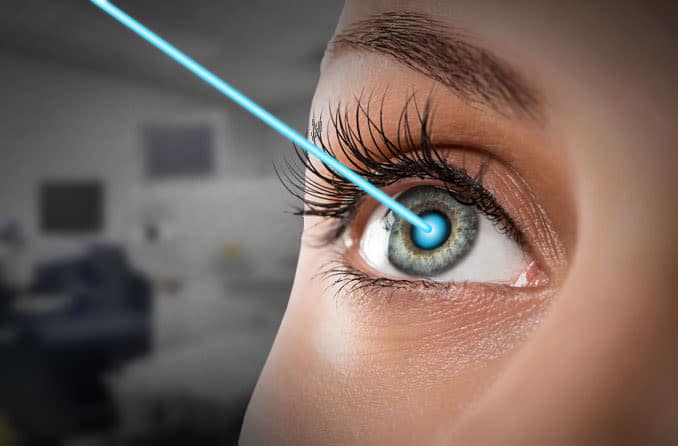
Recovery after surface ablation procedures such as PRK is slower than after LASIK. Vision is often quite blurry during the first several days while the corneal surface heals. Many patients notice meaningful improvement within 1–2 weeks, but it can take several weeks to a few months for vision to fully sharpen and stabilize. Your doctor will monitor your healing at follow‑up visits and adjust your drops and activity restrictions accordingly.
Post‑Laser Eye Surgery Tips
– Use all prescribed medications exactly as directed (antibiotic, steroid, and lubricating drops).
– Do not rub or squeeze your eyes.
– Sleep with your protective shields in place for as long as your doctor recommends.
– Avoid getting tap water, soap, or shampoo directly into your eyes in the early days.
– Avoid smoking environments and airborne irritants.
– Limit screen time initially and increase gradually as comfort allows.
– Contact your clinic promptly if you notice severe pain, sudden vision loss, intense redness, or discharge.
Cost of Surface LASIK (PRK) at Batal Center
Both PRK and LASIK are safe, effective procedures that can greatly improve vision. Unless you have specific conditions that clearly favor one technique over the other, choosing between them can be challenging. Your doctor will usually recommend PRK if you have a thin cornea or certain types of refractive error.

Because PRK is considered an elective procedure, it is unlikely to be fully covered by insurance—similar to LASIK. Some pre‑operative evaluations or diagnostic tests may be partially covered by your vision plan, but the surgery itself typically is not. You should still contact your insurance provider to understand exactly which aspects of PRK, if any, might be covered.
As with other laser‑assisted eye surgeries, the cost of PRK is influenced by the surgeon’s level of expertise, geographic location, and type of practice. A surgeon with decades of experience who has successfully improved the vision of tens of thousands of patients may charge more. A state‑of‑the‑art surgical center may also have higher fees. Regardless of these variables, Batal Specialized Eye Center is committed to offering competitive pricing and proven expertise. Geographic location remains one of the biggest factors affecting the cost of PRK and other similar elective eye procedures.