
Med info
Does Farsightedness in Children Improve? Everything About Hyperopia in Kids

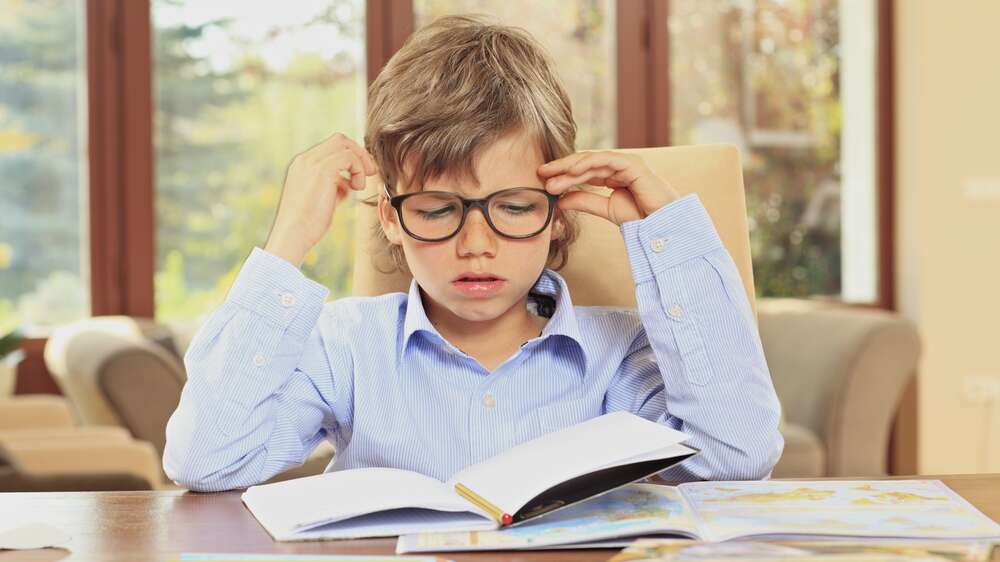
Refractive errors and farsightedness (hyperopia) in children are the most common types of vision disorders they experience. Nearly 21% of children between 6 months and 6 years old, and about 13% of children between 5 and 17 years old, have hyperopia.
This condition is often hereditary and tends to run in families. Many children are born with it, and it can easily go unnoticed because the eyes can compensate on their own, so blurred vision may not seem like a problem. However, untreated hyperopia can lead to learning difficulties, eye strain, and may cause accommodative esotropia—when the eyes cross inward in an effort to correct the refractive error.
If left untreated, it can worsen. A comprehensive eye exam using specialized equipment performed by an ophthalmologist is used to diagnose hyperopia in children. It is usually managed with prescription glasses, although refractive surgery may be an option in certain, carefully selected cases.
Read also: What Is a Neuro‑Ophthalmologist and What Do They Treat?
Factors That Contribute to Hyperopia in Children
Hyperopia occurs when light focuses behind the retina instead of directly on it. This can happen if the eyeball is too short or the cornea does not have enough curvature. While most children are naturally farsighted to some degree, their eyes are usually able to compensate and adjust for mild hyperopia. Their eyes can bend (refract) incoming light in a way that allows it to focus on the retina, improving focus and clearing up what would otherwise be blurry vision.
In such cases, this diagnosis does not usually cause problems, because children can accommodate and are generally able to see clearly both at near and far distances. As children grow, their eyeballs lengthen, and hyperopia can improve on its own.
Refractive errors such as hyperopia are among the most common causes of visual impairment worldwide. Hyperopia has a strong genetic component; studies show that genes play a role at least half of the time. This means that if one parent is farsighted, there is a high likelihood their biological child will also be farsighted.
Complications during pregnancy or early childhood that affect growth and development—such as serious illnesses—may increase the risk of hyperopia. Eye trauma can also be a risk factor for developing farsightedness.
Read also: Signs of a Successful Retinal Detachment Surgery
Diagnosing Hyperopia in Childhood
Mild hyperopia in children is often self‑correcting and does not usually cause problems. However, when it is more pronounced, it can lead to inattention in school, behavioral issues, and additional eye problems.
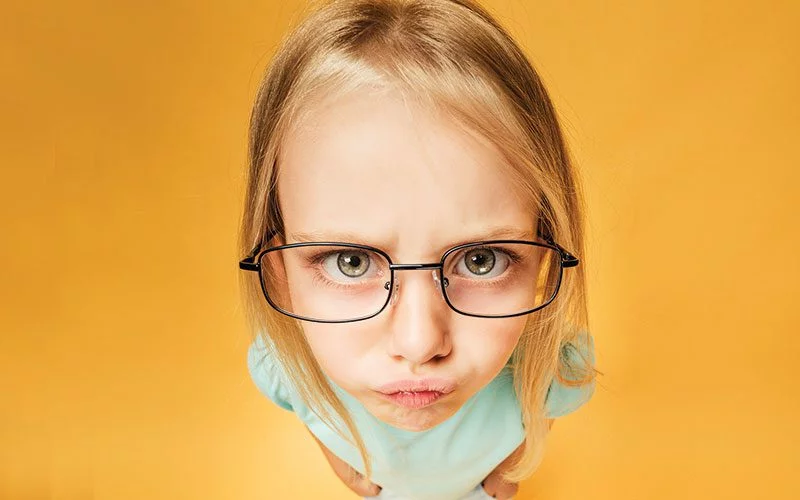
Crossed eyes (strabismus), particularly accommodative esotropia, can occur when one eye tries to compensate for the refractive error in the other. This often appears when the child is tired and trying to focus on something up close. You may notice one or both eyes turning inward in these situations. Older children may also complain of frequent headaches.
Symptoms
Other signs and symptoms of hyperopia in children can include:
Read also: Information About Strabismus (Crossed Eyes), Its Types, and Treatment Options
Examination and Testing for Hyperopia
The following are some of the techniques an ophthalmologist may use to detect hyperopia in children:
Read also: Color Blindness | Test Yourself with Images and Learn About Causes and Treatment
Treatment of Hyperopia in Children
In many cases, hyperopia in children does not need correction because the eyes can naturally accommodate the refractive error. When needed, hyperopia can be corrected with prescription eyeglasses. Glasses are fitted directly to the child’s face, and the lenses are made according to the exact prescription.
Some children may only need to wear corrective lenses while reading or doing close‑up work. Hyperopia can also be managed with bifocal glasses—special lenses that correct both distance vision (including farsightedness) and near vision (associated with myopia or reading needs).
Children’s glasses should fit their faces properly. Frames are often soft, comfortable, and flexible around the ears, with impact‑resistant lenses that are less likely to break. Contact lenses may be another option, but they are generally reserved for older children and are more commonly used for treating myopia than hyperopia. For this reason, the choice of treatment depends on the ophthalmologist’s assessment.
Laser eye surgery (such as LASIK) is generally not considered a treatment option for children with hyperopia. Therefore, glasses or contact lenses—adjustable over time as the child grows—are usually the most appropriate and practical solutions.
Read also: Causes, Symptoms, and Treatment of Eye Swelling, Under‑Eye Puffiness, and Eyelid Edema