
Med info
The Difference Between Reading Glasses and Distance Glasses – And How to Get Rid of Them

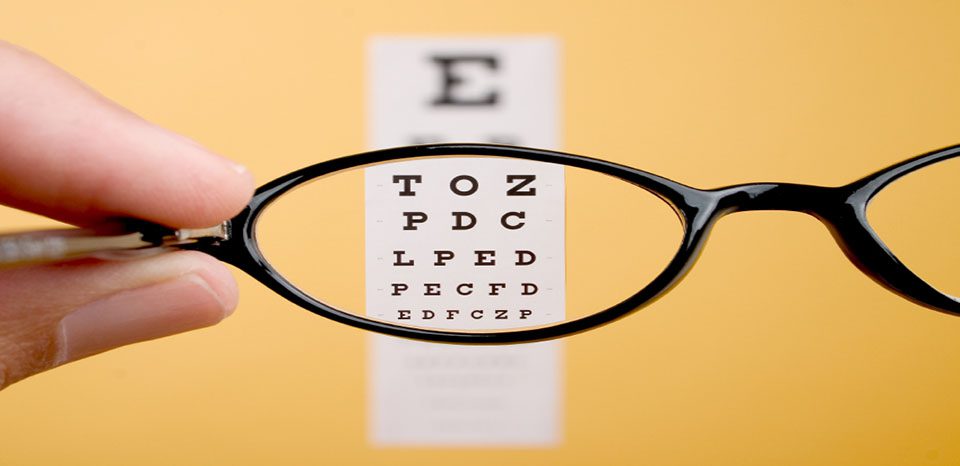
Choosing the right pair of reading glasses can be confusing if you’ve never done it before. Here’s what you need to know about the difference between reading glasses and distance glasses, and how you can potentially get rid of them altogether.
Before you worry about buying reading glasses, keep in mind they don’t have to be expensive. If your only problem is difficulty seeing up close while reading, then basic reading glasses may be enough for you. And there’s good news: you may be able to get rid of your reading glasses using advanced techniques available at Batal Specialized Eye Center, performed by highly skilled ophthalmologists.
In general, reading glasses are designed for people who struggle with near tasks like reading, while computer or distance glasses are made to help people who use digital devices for long periods or who need clear vision far away.
Reading glasses are best for people who read physical materials such as hardcover books, labels, and printed menus. They’re specifically designed to improve near vision for objects very close to your face. They are not suitable for distance vision and will not help you when driving. Their main purpose is to help you see words and objects that are close to your eyes.
Also read: Do You Really Need Blue Light Glasses – and Why?
Why You Should Avoid Over-the-Counter Reading Glasses
The downside is precisely that they’re cheap. “Ready-made” over-the-counter reading glasses are now available in many supermarkets and retail stores, but they are nowhere near the standard of a properly fitted pair of prescription glasses. They are only offered in fixed steps of 0.25 diopters, with the same power in both lenses, and they do not account for the unique visual needs of each wearer—such as the distance between the eyes (pupillary distance).
This can cause chromatic aberrations (color fringes) and, in some cases, may actually worsen visual discomfort. Over time, this can lead to eye strain, headaches, nausea, and even migraines. The reality is that off-the-shelf reading glasses cannot provide the optimal vision correction you would normally expect.
There is no question that getting a pair of reading glasses prescribed by an eye specialist is a better choice—not only to make the most of your visual potential, but also to improve your overall comfort and quality of life. An even better solution than relying on reading glasses is to get rid of them altogether using modern technologies available at Batal Specialized Eye Center in Jeddah.
Also read: Getting Rid of Reading Glasses – The Latest KAMRA™ Inlay Technique
How Do I Know If I Need Glasses?
As the name suggests, distance glasses (or “regular” glasses) help you see far objects more clearly. Most people start needing them before the age of forty. After that, the eye’s ability to shift focus from one distance to another—known as accommodation—declines and is no longer sufficient to see clearly at all distances.
This leads to reduced ability to focus on near objects, a condition known as presbyopia. Different solutions are needed to manage these conflicting visual demands: some people alternate between distance and reading glasses; others switch to bifocal or progressive lenses. The best option is to consult ophthalmologists at Batal Specialized Eye Center to determine what suits your eyes and lifestyle.
Also read: Is It True That Contact Lenses Can Correct Hyperopia (Farsightedness)?
What Is the Difference Between Reading Glasses and Distance Glasses?
Reading glasses are typically used by people with presbyopia—an age-related condition in which the natural lens of the eye becomes stiffer over the years, reducing the ability to focus up close. These glasses have convex lenses (curved outward), which make near objects appear clearer.
Non-prescription reading glasses are widely available over the counter, but they come in generalized strengths. People have to rely on trial and error to find something “close enough.” In addition, these “ready-made” readers usually have identical power in both lenses and do not correct astigmatism, which many people have.
Another issue with non-prescription reading glasses is lens quality. They are often made from lower-quality materials that can introduce more visual distortions. For this reason, many people prefer prescription reading glasses to achieve more precise vision correction and a properly fitted frame.
Also read: How Do I Know the Right Strength for My Reading Glasses?
By contrast, distance glasses are designed for people with myopia (nearsightedness) to help them see far objects more clearly. These lenses are concave (curved inward), which helps the eyes focus on distant objects.
If someone has both presbyopia and myopia, they may be an excellent candidate for bifocal or progressive lenses. These are customized to the patient’s unique visual needs and can combine both reading and distance prescriptions in a single pair of glasses.
If you already wear reading glasses and want to get rid of them permanently—especially after a long struggle—and now understand the difference between reading glasses and distance glasses, you may be able to eliminate your dependence on reading glasses using advanced techniques offered at Batal Specialized Eye Center in Saudi Arabia.
Check out this service: Get Rid of Your Glasses with Batal Specialized Eye Center.
Book an appointment at Batal Eye Clinic in Saudi Arabia.