
Med info
Can You Have Laser Eye Surgery Twice?

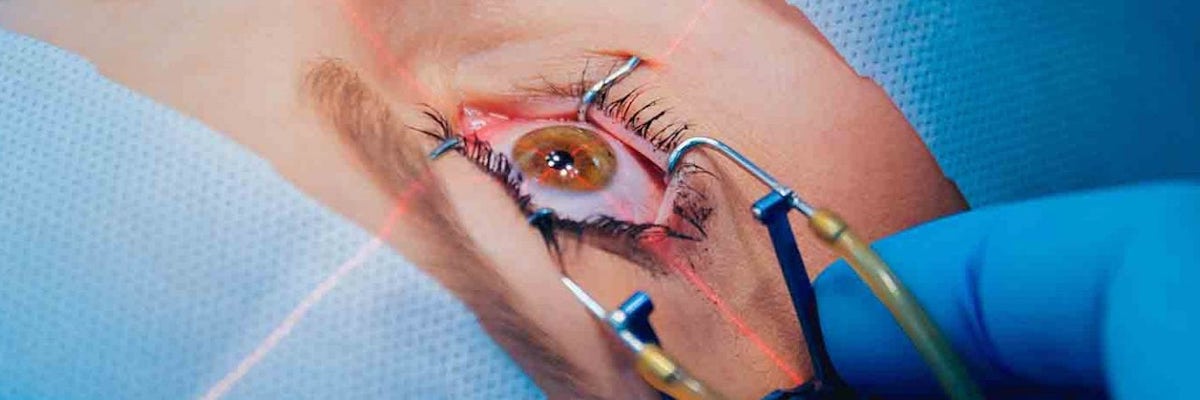
Despite what some online myths and rumors may claim, laser eye surgery is a permanent procedure in which your ophthalmologist uses a highly precise laser to make an irreversible change to the cornea.
However, because of the eye’s natural aging process, the long‑term effects of laser eye surgery can shift or even diminish over time. This raises an important question: can you have laser eye surgery a second time?
In short, yes, it is possible—but it isn’t always straightforward. Every case is unique, and when dealing with something as critical as your vision, your surgeon must be extremely cautious in determining whether you are a good candidate for further treatment.
Read also: Can Laser Eye Surgery Correct Reading Vision Problems?
Is a Second Laser Eye Surgery Possible?
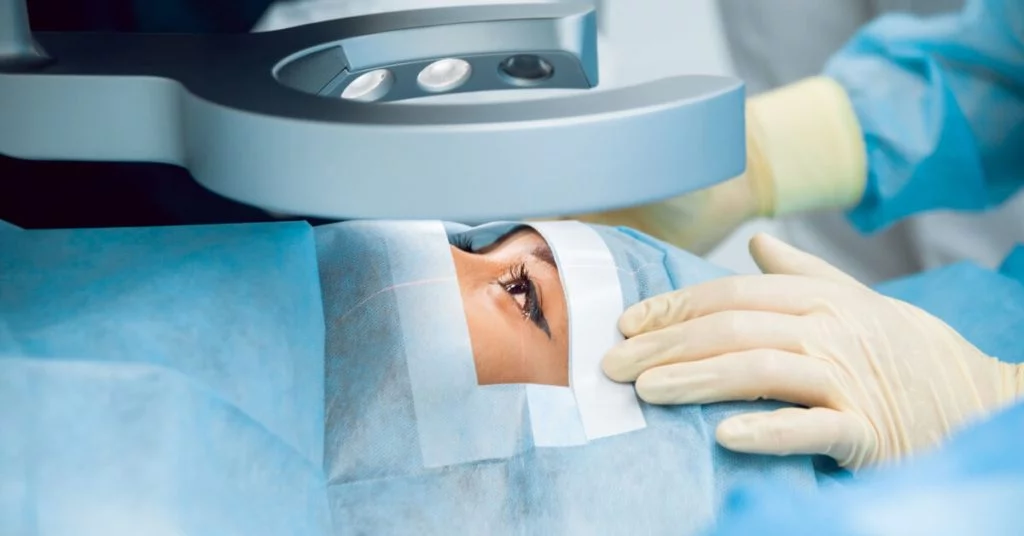
There are several different reasons why a second procedure might be necessary, and each patient must be assessed individually. You need an ophthalmologist’s evaluation to determine whether you should undergo a second laser eye surgery. This depends mainly on how much corneal tissue you have and how much was removed during the first procedure.
In theory, a second surgery is possible, but your surgeon will need to carefully assess your specific situation before giving you an answer. As with all surgical procedures, there is some degree of risk involved (although it is very low with laser vision correction), so your surgeon must take all relevant factors into account.
Read also: Can Laser Eye Surgery Correct Reading Vision Problems?
How Effective Is Laser Eye Surgery?
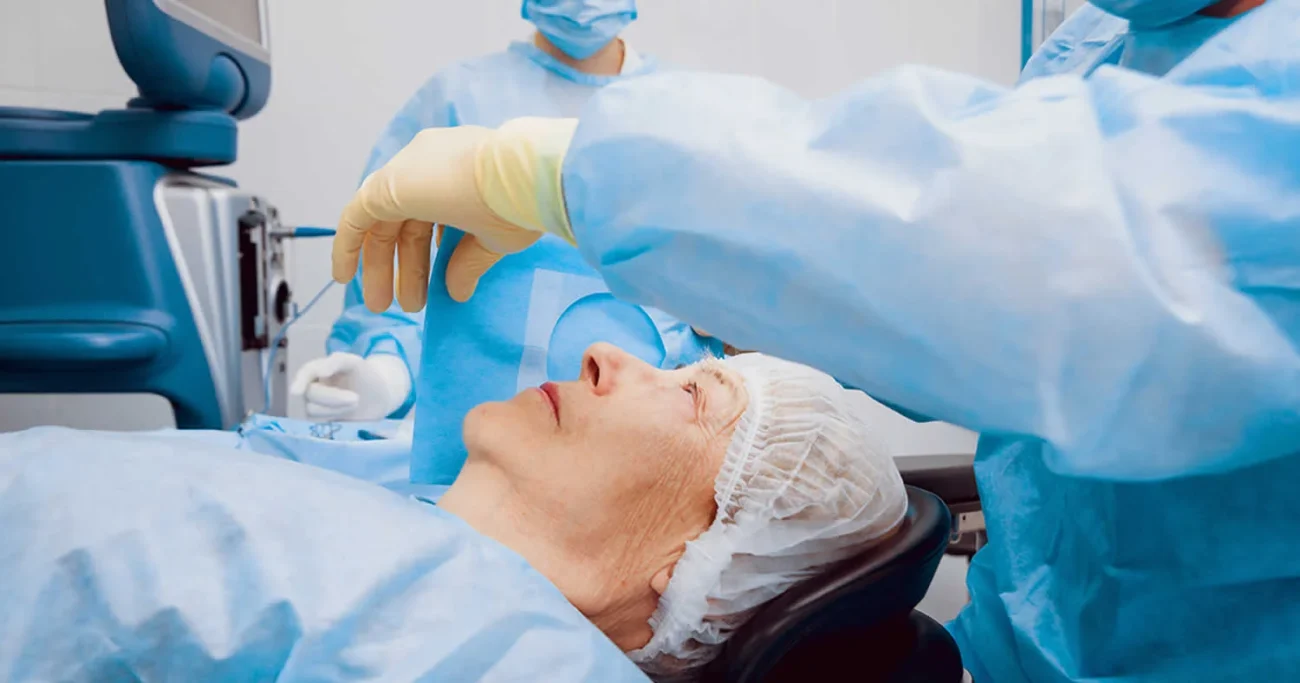
Laser eye surgery has a very high success rate, but in about 2–3% of cases, a second procedure may be needed shortly after the first. A combination of factors—including the patient’s prescription, age, and genetics—can lead to under‑correction or over‑correction as the eye heals.
This can cause blurred vision, glare, and some visual distortion. In most patients, these symptoms improve and disappear within a few weeks after surgery. Persistent blurring, however, may indicate that the first procedure did not fully achieve the intended result. At Batal Specialist Center, our surgeons are highly experienced, and in certain situations, an enhancement procedure is the safest and most effective option. If follow‑up treatment is needed, your surgeon will reassess your corneal tissue and fine‑tune the correction to further improve your vision. In the vast majority of cases, the outcome is excellent.
Read also: Vision Correction Offers and Getting Rid of Reading Glasses – Google Campaign
Laser Eye Surgery
Laser eye surgery is considered one of the most significant technological advancements in the history of eye care.
Batal Specialist Center now offers three generations of laser vision correction: LASIK, PRK, and the advanced SMILE procedure, which is available only at a limited number of specialized eye surgery centers. SMILE stands for “Small Incision Lenticule Extraction,” and as the name suggests, it is performed through a very small incision with minimal disruption to the surface of the eye.
LASIK (Laser Assisted In Situ Keratomileusis) is a laser eye surgery used to correct nearsightedness (myopia), farsightedness (hyperopia), and astigmatism.
During LASIK, a thin flap is created in the cornea using a femtosecond laser. The surgeon gently lifts the flap and then uses an excimer laser to reshape the underlying corneal tissue. The flap is then repositioned to cover the area where the tissue was removed.
For people with myopia, LASIK flattens a cornea that is too steep. For those with hyperopia, the aim is to create a steeper cornea.
LASIK can also correct astigmatism by smoothing an irregularly shaped cornea into a more regular, symmetrical curve.
PRK (Photorefractive Keratectomy) uses the same type of excimer laser reshaping as LASIK but differs in how the cornea is prepared for treatment. Instead of creating a flap, the surface layer (epithelium) is removed before the laser is applied.
SMILE, on the other hand, is a flap‑less procedure. It causes less disruption to the corneal nerves and therefore carries a much lower risk of long‑term dry eye.
With SMILE, a small piece of corneal tissue (lenticule) is removed from a deeper, structurally stronger layer of the cornea than with LASIK, preserving more of the cornea’s biomechanical integrity. This can be especially important for patients with thinner corneas.
Read also: The Newest Vision Correction Technology for Keratoconus
What Happens During Laser Eye Surgery?
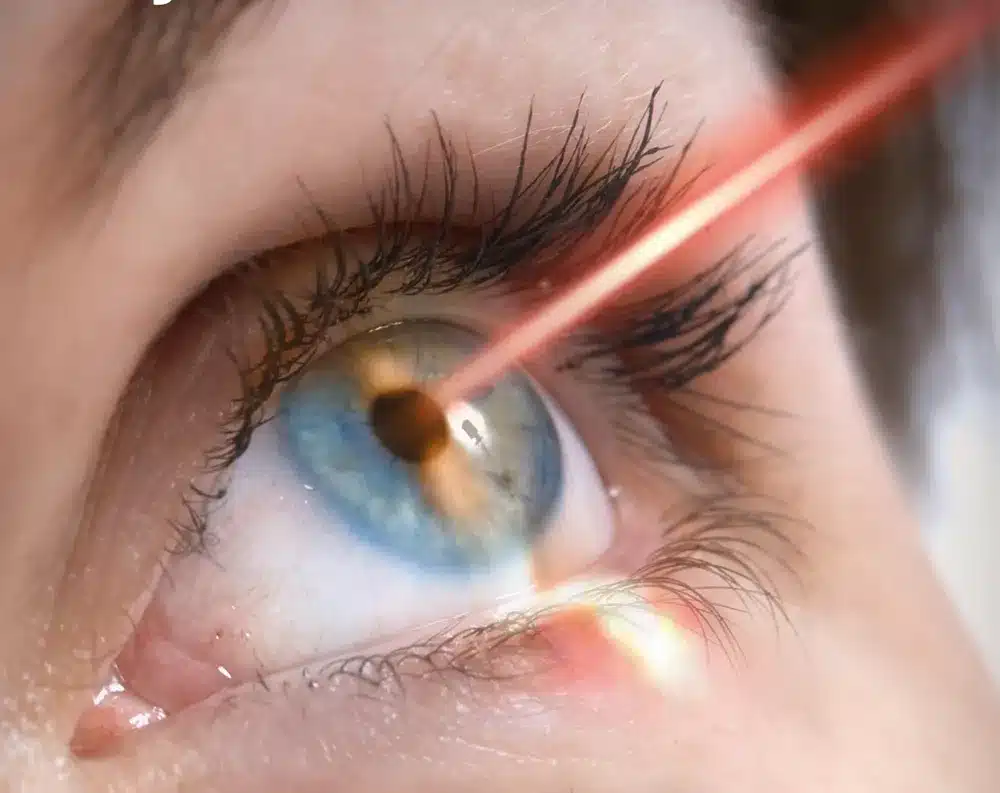
At Batal Specialist Center, we offer a range of laser vision correction techniques designed to gently reshape the cornea and correct refractive errors that prevent the eye from seeing clearly.
Read also: Discover How You Can Correct Your Vision with Laser in Saudi Arabia at Batal Specialist Center
The Natural Aging Process
Although most patients still report 20/25 vision or better even ten years after surgery, the eye muscles and focusing system naturally weaken with age. This can lead to the return or development of refractive errors such as myopia.
If you find yourself increasingly dependent on reading glasses or glasses for driving several years after your surgery, you may be a candidate for an additional corrective procedure. If your cornea is still thick enough and you meet a set of general health and eye health criteria, a second operation may be possible with minimal risk. Your surgeon will advise you on whether you are suitable for further treatment.
Each time laser eye surgery is performed, only a very small amount of corneal tissue is removed. Every laser pulse removes a fraction of the width of a human hair. This makes enhancement procedures technically possible; however, it is crucial not to remove too much tissue overall. Corneal tissue does not grow back and cannot be replaced.
Read also: Causes of Seeing Lines in Vision and Treatment Options
How Likely Is a Second Treatment?
Whether due to under‑correction, over‑correction, or gradual regression of your vision, the chance that you will ever need a second treatment is low. Fewer than 5% of patients require any additional procedure over their lifetime, and the overwhelming majority of those who do undergo an enhancement report significant visual improvement that lasts for years after surgery.
As you get older, you may find yourself relying more on glasses or contact lenses again. This is completely normal and happens to almost everyone, whether they have had laser eye surgery or not. In most cases, this alone is not a strong enough reason to recommend a second surgical procedure.
To learn more about how laser eye surgery works and whether your eyes are suitable for treatment, you can book a consultation with one of our highly skilled surgeons at Batal Specialist Center.
Read also: Is It Safe to Use Colored Prescription Contact Lenses for Poor Vision?
Whatever vision problems or eye conditions you are experiencing, this delicate medical specialty requires a thorough examination and the right treatment from a skilled, experienced ophthalmologist using effective medical technologies that deliver real, positive results. Whatever eye disease or refractive error you have, you can book an appointment at Batal Specialist Center for a comprehensive eye examination and to begin treating your eye problems—no matter how complex they may be.