Med info
Dental Health and Wisdom Teeth

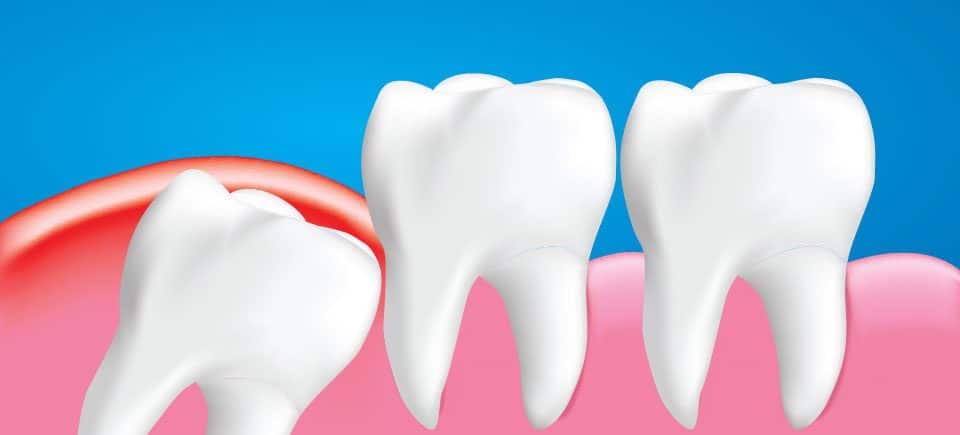
Wisdom teeth are the third and final set of molars that most people develop in their late teens or early twenties. In some cases, these teeth can be a useful part of the mouth when they are healthy and properly aligned. However, they are often misaligned and need to be removed.
When wisdom teeth are misaligned, they may grow horizontally, tilt toward or away from the second molars, or lean inward or outward. Poor alignment of wisdom teeth can crowd, damage, or put pressure on neighboring teeth, the jawbone, or nearby nerves.
Wisdom teeth can also become impacted — trapped beneath the gum tissue and/or jawbone, or only partially erupting through the gums. Partial eruption creates an opening where bacteria can enter around the tooth and cause an infection, leading to pain, swelling, jaw stiffness, and general illness.
Partially erupted teeth are also more prone to tooth decay and gum disease because their position at the back of the mouth and their angulation make them difficult to clean properly with brushing and flossing.
Also read: Information and Facts About Digital Dentistry
How Do I Know If I Have Wisdom Teeth?
Ask your dentist about the position of your wisdom teeth. They may take periodic X‑rays to assess the presence and alignment of your wisdom teeth. Your dentist may also decide to refer you to an oral and maxillofacial surgeon for further evaluation.
Your dentist or oral surgeon might recommend removing your wisdom teeth even before they cause any symptoms. This is often done to avoid a more painful or complicated extraction in the future. Removal is usually easier in younger patients, when the roots of the wisdom teeth are not fully formed and the bone is less dense. In older adults, recovery and healing times tend to be longer.
Also read: Local Anesthesia for Teeth | Types and Side Effects
How Are Wisdom Teeth Removed?
The relative ease with which your dentist or oral surgeon can remove your wisdom teeth depends on their position and stage of development. Your oral health provider will explain what to expect during your pre‑extraction exam.
A wisdom tooth that has fully erupted through the gum can usually be extracted as easily as any other molar.
However, a wisdom tooth that is still beneath the gum and embedded in the jawbone will require an incision in the gum and removal of some of the bone overlying the tooth. Often, in these cases, the tooth is sectioned and removed in smaller pieces rather than as a single unit. This helps minimize the amount of bone that needs to be removed to access the tooth.
Also read: Tooth Fracture | Causes, Symptoms, and Treatment
What Happens During Wisdom Tooth Removal?
Before your wisdom teeth are removed, the teeth and surrounding tissues will be numbed with a local anesthetic — the same type commonly used to numb a tooth before placing a filling. In addition to local anesthesia for pain control, you and your dentist or oral surgeon may decide that some form of sedation is needed to help manage anxiety.
Sedation options can include nitrous oxide (commonly known as “laughing gas”), oral sedatives (for example, diazepam/Valium), or intravenous (IV) sedation given through a vein.
If you receive only nitrous oxide, you will usually be able to drive yourself home. If any other sedative medications are used, you will need someone to drive you to and from your appointment.
Also read: Treatment of Swollen Gums at Batal Specialty Complex
What Is Recovery Like After Wisdom Tooth Extraction?
After wisdom tooth removal, your healing time will depend on how difficult the extraction was (a simple extraction of a fully erupted tooth versus removal of an impacted tooth within the jawbone). In general, you can expect the following:
During the First 24 Hours
Bleeding may continue for several hours after the extraction. To control it, place a clean, damp piece of gauze over the empty socket and bite down firmly. Maintain steady pressure for about 45 minutes. A moistened tea bag is an effective alternative.
The tannic acid in tea helps promote clot formation (blood clots function similarly to a scab on an open wound). Repeat this process if slight bleeding continues. If you experience heavy, persistent bleeding, contact your dentist or oral surgeon.
Avoid rinsing or spitting for 24 hours after the extraction. Do not create suction in the mouth (for example, do not drink through a straw or smoke), and avoid hot liquids such as coffee or soup. These activities can dislodge the blood clot and lead to a painful condition known as dry socket.
Also read: Tooth Contouring | How Can It Improve My Smile?
After 24 Hours
Complete healing of the extraction site can take several weeks to a few months. However, within about one to two weeks, there is usually enough healing for you to use your mouth fairly comfortably in the area of the extraction. Your dentist will explain what to expect in your specific case.
What Are the Possible Complications of Wisdom Tooth Removal?
The most significant potential complications after wisdom tooth extraction include:
Also read: Dental Veneers … Everything You Want to Know
What Happens on the Day of Wisdom Tooth Removal?
First, you will need to decide whether you want to have general anesthesia (“go to sleep”). Many people prefer not to be aware of the procedure while their wisdom teeth are being removed. Appropriate anesthesia options will be discussed with you during your consultation.
On the day of your surgery, you will be given medications to help reduce pain and swelling after the procedure. A parent or responsible adult will need to accompany you to the office, remain there during the surgery, and plan to stay with you for the rest of the day.
The procedure itself usually takes about an hour, and you can expect to be in the office for roughly an hour and a half in total.
Why Do We Have Wisdom Teeth?
Our human ancestors used their wisdom teeth to grind tough, fibrous foods. They had larger jaws and stronger teeth, with plenty of room for a third set of molars.
Modern humans, however, eat cooked foods and have a more efficient digestive system. Over time, this has led to smaller jaws and teeth — which means there is often not enough space in our mouths for wisdom teeth.
When Should I Have My Wisdom Teeth Removed?
Wisdom teeth usually erupt between the ages of 17 and 25, so many people have them removed before finishing high school. The longer you wait, the more likely complications are to develop.

As you get older, the roots of the wisdom teeth continue to grow and may eventually come into contact with one of the major nerves in the jaw. At that point, nerve injury becomes a possible risk of wisdom tooth extraction.