Med info
What Can LASIK Fix?

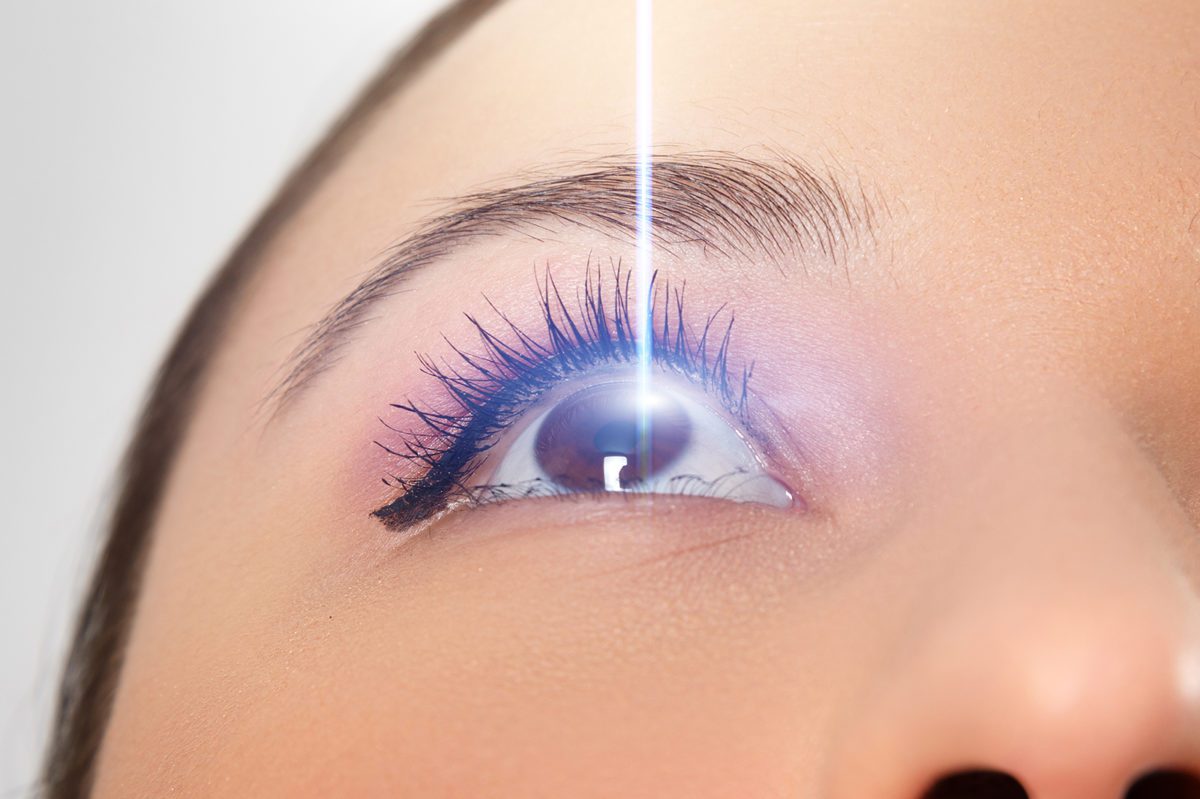
If you wear glasses or contact lenses, you’ve probably caught yourself dreaming about a quick, permanent fix for your vision. For many people, LASIK eye surgery is exactly that solution—but what, exactly, can LASIK correct?
Before looking at possible outcomes, it’s important to make sure you’re actually a good candidate for LASIK and that the procedure can address your specific vision needs.
To determine whether LASIK is right for you, you’ll need a comprehensive evaluation with an experienced ophthalmologist. Ask every question you have so you fully understand whether LASIK is a realistic option in your case.
Read also: What to Expect During Laser Eye Surgery
What Vision Problems Can LASIK Eye Surgery Correct?
LASIK can significantly improve a range of common refractive errors, but it’s not a universal solution. In some situations, your vision may not be correctable with LASIK—either because your type of refractive error isn’t suitable for laser correction, or because you have an underlying eye or health condition that makes LASIK unsafe or ineffective for you.
Because not everyone is a good candidate, a thorough pre‑operative consultation and evaluation with an eye surgeon is essential.
So, which vision problems can LASIK address? In general, if you’re found to be a suitable candidate, LASIK is highly effective for several very common refractive issues. While there are exceptions, it’s helpful to understand what LASIK can fix.
Read also: How to Choose a LASIK Surgeon – The Complete 2024 Guide from Batal Specialty Center
Astigmatism
Astigmatism occurs when the cornea has an irregular or uneven curvature, which prevents light from focusing properly on the retina. In this situation, LASIK can reshape the cornea to create a more uniform curvature, helping light focus correctly and providing clearer vision.
Hyperopia (Farsightedness)
Hyperopia, or farsightedness, develops when the eyeball is shorter than normal or the cornea is too flat. As a result, light rays focus behind the retina. Near objects look blurry, while distant objects may appear relatively clearer. In these cases, LASIK can increase the curvature of the cornea to improve near vision.
Read also: Everything You Need to Know About Advanced Surface Ablation
Myopia (Nearsightedness)
Myopia, or nearsightedness, occurs when the eyeball is longer than average or the cornea is too steeply curved. This causes light to focus in front of the retina. Objects up close appear sharp, but distant objects look blurry. Here, LASIK can reshape and flatten the cornea to shift the focal point onto the retina, improving distance vision.
Read also: Retinal Tear | Causes, Symptoms, Treatment, and Full Information
Presbyopia
Presbyopia is age‑related difficulty focusing on near objects. It happens when the natural lens of the eye becomes less flexible and more rigid, making it harder to see very small or close‑up details. This is a normal part of aging and cannot be stopped or reversed by LASIK itself.
However, LASIK can be used to manage presbyopia through a technique called monovision. In monovision LASIK, the dominant eye is corrected for clear distance vision, while a slight nearsightedness is intentionally left in the other eye to improve near vision. Many people adapt well to this setup and can reduce or eliminate their need for reading glasses.
Read also: Symptoms, Causes, and Treatment of Blocked Tear Ducts in Adults
What Can’t LASIK Fix?
Although LASIK is an excellent option for many common refractive errors, it cannot solve every vision problem. In some cases, LASIK is not appropriate or effective for your particular eye condition or visual needs. So, what are the limitations of LASIK?
Cataracts
A cataract is a clouding of the eye’s natural lens, usually due to aging, trauma, or certain diseases. While cataracts are not typically dangerous in themselves, they progressively impair vision and may eventually require surgery.
LASIK does not treat lens clouding and cannot remove or correct a cataract. Instead, cataract surgery—where the cloudy lens is removed and replaced with a clear artificial intraocular lens (IOL)—is the definitive treatment and is often highly successful.
If you still have a residual refractive error after cataract surgery, ask your eye surgeon whether you might be a candidate for LASIK or another refractive procedure to fine‑tune your vision.
Read also: Is Laser Eye Surgery Painful?
Glaucoma
Glaucoma is a group of eye diseases that damage the optic nerve, often associated with elevated intraocular pressure. LASIK cannot treat or reverse optic nerve damage from glaucoma.
You’ll need ongoing care with an eye specialist to control glaucoma and prevent further vision loss or blindness. However, in some cases, once your glaucoma is well‑managed and stable, you may still be eligible for LASIK to correct refractive errors like myopia, hyperopia, or astigmatism. This must be carefully evaluated by your ophthalmologist.
Keratoconus
Keratoconus is a condition in which the cornea becomes progressively thinner and bulges outward into a cone‑like shape. This abnormal shape prevents light from focusing correctly on the retina and leads to distorted, blurry vision.

Unfortunately, LASIK is not suitable for keratoconus and can actually worsen the condition by further weakening the cornea. Because of this, it’s crucial that your eye surgeon thoroughly screens for keratoconus or any signs of corneal instability before recommending LASIK, and instead guides you toward appropriate treatments such as specialty contact lenses, corneal cross‑linking, or other surgical options when indicated.
Read also: Can I Get Rid of My Glasses? The Complete Guide to Ditching Your Eyeglasses