
Med info
Differences Between a Children’s Eye Exam and a Vision Screening

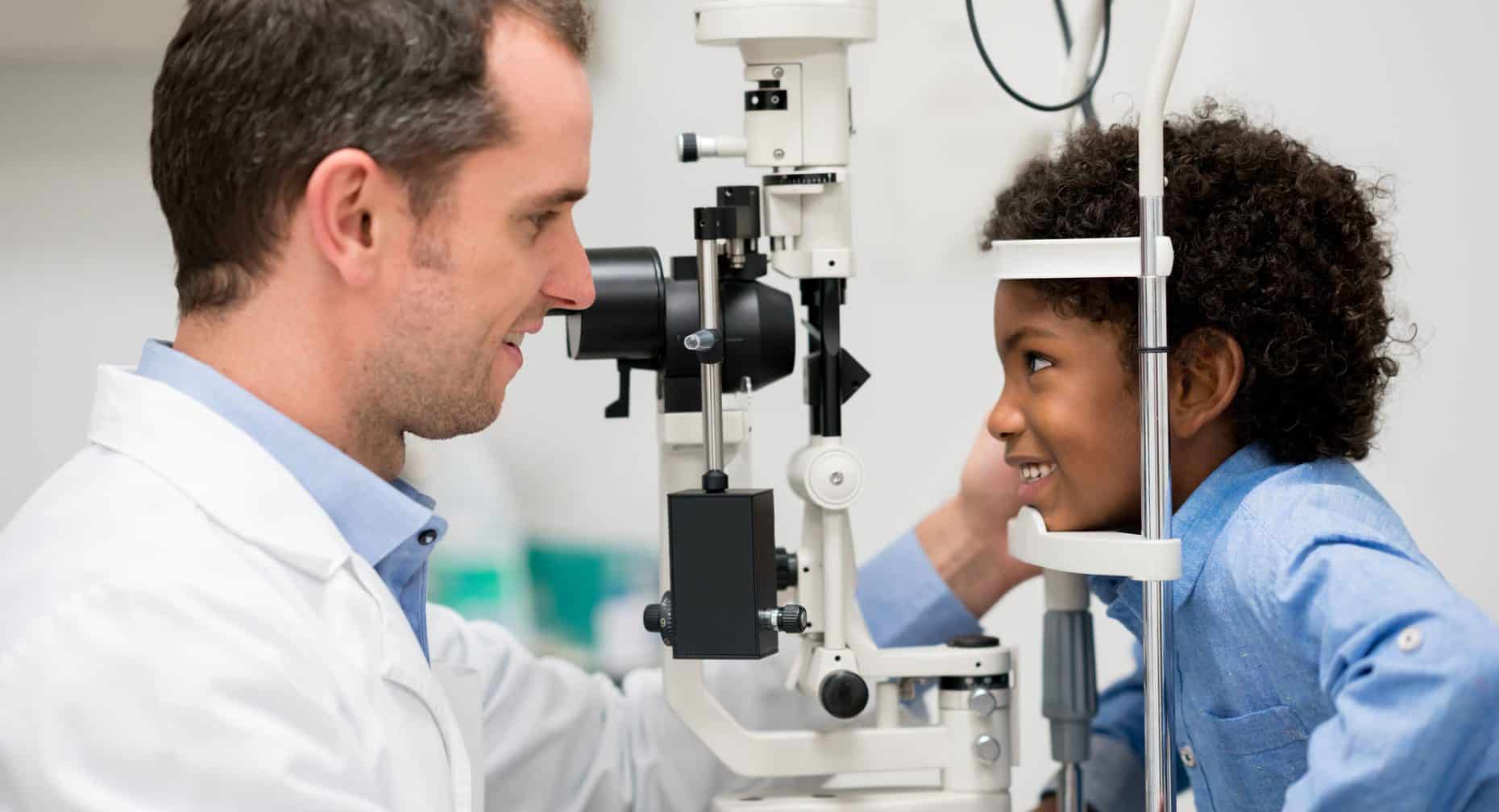
There is a lot of confusion about the different tools used to test a child’s vision. For anyone with young children, it’s important to understand the difference between a children’s eye exam and a basic vision screening, since a screening is not a substitute for a full pediatric eye examination.
You’re encouraged to visit the Eye Center at Batal Specialized Complex in Saudi Arabia periodically for comprehensive pediatric eye exams to help ensure your child performs better at school and during play.
Understanding the Difference Between a Children’s Eye Exam and a Vision Screening
A vision screening is a tool most doctors use to measure how well a child can see. They typically use a reading chart known as the Snellen chart, which has large letters at the top that get progressively smaller toward the bottom. The top line has a large “E,” followed by the second line with “F & P,” and so on.
During the test, the child covers one eye, stands 20 feet away from the chart, and reads the letters out loud from the top down. The smallest line of letters the child can read accurately indicates the visual acuity of that eye. Snellen charts are inexpensive and are commonly used in clinics to give a rough estimate of a person’s vision.
This method can reveal refractive errors such as nearsightedness and farsightedness, but it does not detect eye diseases, eye disorders, or conditions that require more detailed evaluation. The main limitation of a vision screening is that it only assesses, at best, one or two aspects of vision.
A children’s eye exam, on the other hand, is a comprehensive series of tests performed by an ophthalmologist. During a pediatric eye exam, the doctor evaluates several aspects of the child’s visual system, including color vision, eye movements, depth perception, peripheral (side) vision, intraocular pressure (eye pressure), and visual acuity.
Sometimes the doctor will dilate the child’s pupils to see how they respond to light and to examine the internal structures of the eye to ensure they are healthy. Another benefit of dilation is that it allows the doctor to look for any signs of eye disease. Pediatric specialists at the Eye Center at Batal Specialized Complex have detailed the standard tests they perform during children’s eye exams, which is why a visit is recommended to help maintain your child’s eye health.
What Is the Difference Between an Ophthalmologist, an Optometrist, and an Optician?
Optometrists and ophthalmologists are eye care professionals who specialize in caring for your eyes. An ophthalmologist performs comprehensive eye exams and diagnoses and treats eye conditions. Ophthalmologists can also perform surgery to correct eye problems.
An optometrist typically focuses on examining your eyes and prescribing corrective lenses. An optician is not a medical doctor, but is trained to help you choose eyeglass frames and to make sure your glasses and contact lenses fit properly.

Pediatric eye doctors at Batal Specialized Complex recommend that every child have a comprehensive eye exam starting at age two, and then once a year thereafter. About 5–10% of preschoolers and 25% of school‑age children have vision problems. Detecting these issues early allows children to receive treatment while their visual system is still developing.