
Med info
Types of Vision Correction Surgery | The Latest List

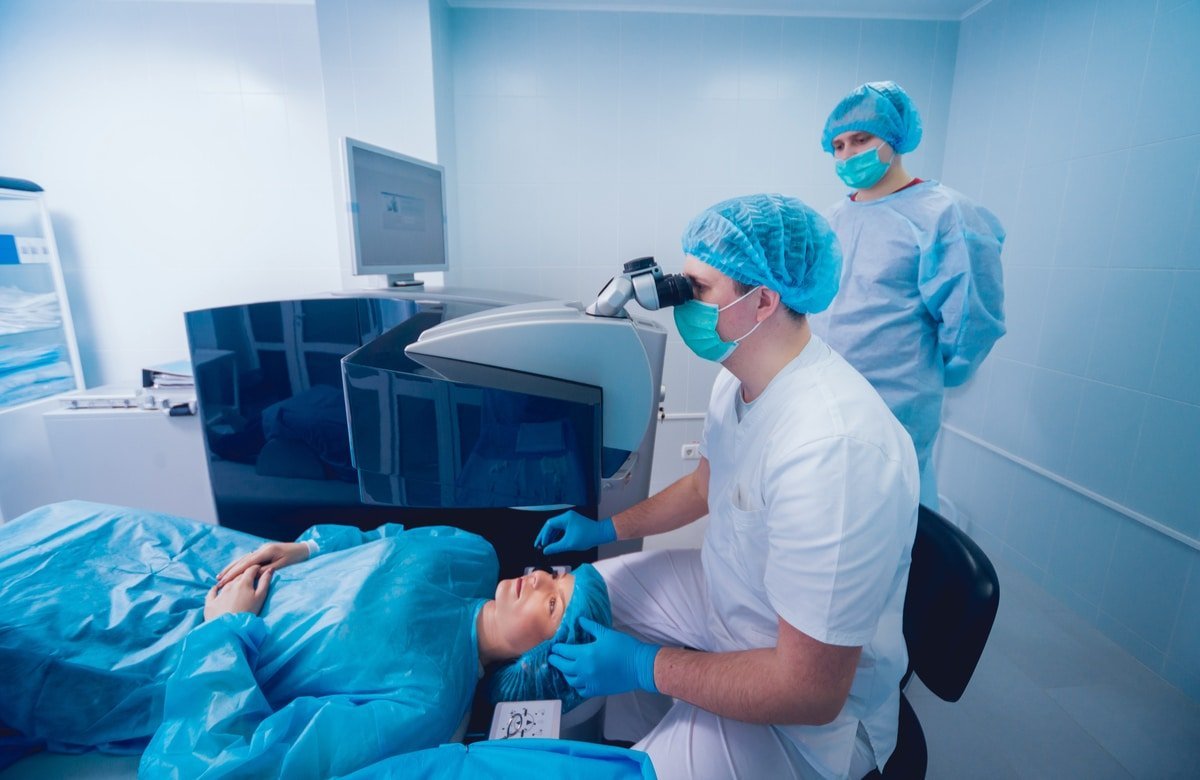
While LASIK is certainly the best-known type of vision correction surgery and one of the most common procedures worldwide, there are actually several other options available.
Most of these procedures work by reshaping the cornea, the clear front surface of the eye. The cornea focuses incoming light, helping to form a sharper image on the retina at the back of the eye.
Some types of vision correction surgery also involve replacing the eye’s natural lens with an artificial intraocular lens. At Batal Specialized Center, a variety of vision correction procedures are performed to give your eyes the best possible health and clarity.
Read also: How Does a Keratoconus Patient See? | What Is It Like Living With Keratoconus?
Types of Laser Eye Surgery
Laser vision correction, or refractive eye surgery, refers to any surgical procedure used to correct or improve vision. There are several techniques, and most of them work by reshaping the cornea, the clear front part of the eye. Other procedures involve replacing the eye’s natural lens, usually to correct high degrees of nearsightedness (myopia) or farsightedness (hyperopia).
Phakic intraocular lens (Phakic IOL) implantation is an option for people with very high myopia who are not suitable candidates for PRK or LASIK. Similar to refractive lens exchange (RLE), the surgeon makes a small incision at the edge of the cornea, but instead of removing the natural lens, it is left in place. The artificial lens is then implanted in front of the natural lens.
Read also: Corneal Astigmatism and Vision Correction at Batal Center in Jeddah
Is Laser Eye Surgery Safe?
Different types of laser eye surgery have different recovery times, but most people achieve good visual acuity within about two weeks, and often sooner. These procedures are among the safest and most effective eye surgeries available, although many of them are not covered by health insurance because they are considered elective rather than medically necessary.
Read also: What Are the Best Ways to Correct Vision After 40? Here’s the Answer
Can Teenagers Have LASIK?
Although LASIK is a safe and effective way to improve vision, the U.S. Food and Drug Administration (FDA) has not approved it for people under 18, because their eyes are still changing. In some cases, the eye may not be fully developed until around age 21.
If a teenager undergoes LASIK before their eyes have fully matured, the results are likely to be temporary, and they may need additional corrective surgery in the future. For this reason, most doctors recommend that a patient’s eyeglass prescription remain stable for at least two years before surgery. Just as with younger children, surgery is not suitable for teenagers if their refractive error is still changing significantly.
Patients who have reached or are approaching the age of 40 should keep in mind that their vision may be affected by conditions that LASIK cannot correct, such as presbyopia. Presbyopia occurs when the eye’s natural lens becomes less flexible, making it harder to shift focus between near and far objects, and often leading to the need for reading glasses.
Patients with refractive errors who are not good candidates for LASIK or monovision have other options. Intraocular lens (IOL) implantation involves removing the eye’s natural lens and replacing it with an artificial lens through a small incision, in order to improve both distance and near vision.
LASIK, monovision, IOLs, and all other vision correction procedures should be thoroughly discussed with the surgeon at the Eye Center in Batal Specialized Complex before the patient decides which option is best for them.
Read also: Top Advantages of Femto-LASIK Vision Correction at Batal Center in Jeddah
A List of the Most Common Types of Vision Correction Surgery
Vision correction procedures are not limited to LASIK. The most widely used techniques include:
LASIK Eye Surgery
LASIK is used to correct vision in patients with myopia (nearsightedness), hyperopia (farsightedness), and astigmatism. During the procedure, a thin flap is created in the outer layer of the cornea and lifted to expose the underlying corneal tissue, which is then reshaped with an excimer laser.
The creation of this flap is what distinguishes LASIK from other types of refractive eye surgery. LASIK can be performed with or without wavefront-guided technology, which uses detailed computerized mapping of the cornea to guide a more customized treatment.
Read also: Causes of Poor Vision | 9 Things That Can Damage Your Eyesight
PRK (Photorefractive Keratectomy)
PRK is a laser procedure that reshapes the surface of the cornea. Unlike LASIK, PRK does not involve creating a corneal flap; instead, the outermost layer of the cornea (epithelium) is gently removed, and the laser is applied directly to the corneal surface.
PRK is ideal for patients with mild to moderate myopia, hyperopia, or astigmatism, and it can also be performed using computerized wavefront-guided techniques.
Read also: Treatment of Retinal Diseases and Surgery | Management of Dryness, Redness, and Inflammation of the Eye
RLE (Refractive Lens Exchange)
Refractive Lens Exchange (RLE) is essentially the same surgical technique used for cataract removal. The surgeon makes a small incision at the edge of the cornea and removes the eye’s natural lens, then replaces it with a silicone or plastic intraocular lens.
This procedure is also known as Clear Lens Extraction (CLE) or Refractive Lens Replacement (RLR). It can be used to correct high degrees of myopia or hyperopia, and is also an option for patients with thin corneas, dry eye, or other minor ocular conditions that make corneal laser procedures less suitable. Additional procedures may be needed if there is significant astigmatism.
Epi-LASIK
Epi-LASIK is very similar to PRK. In this procedure, the surgeon separates a very thin sheet of epithelial tissue from the surface of the cornea using a special instrument, then reshapes the cornea with a laser.
The separated layer may be removed or repositioned, and at the end of the procedure a soft contact lens is placed on the eye to protect the area and promote healing.
Read also: Corneal Surgery and Vision Correction
Intracorneal Ring Segments (Intacs)
Intacs, also called intracorneal ring segments (ICR or ICRS), involve inserting tiny crescent-shaped plastic segments into the peripheral cornea. The surgeon makes a small incision in the cornea and places two ring segments in the outer corneal tissue to flatten the corneal curvature.
By flattening the cornea, light rays are bent differently and can be focused more accurately on the retina. Intacs were originally used to treat mild myopia, but have largely been replaced by laser procedures for that purpose. They are still used in certain cases, such as keratoconus.
Read also: ReLEx SMILE (Femto-SMILE) | Treating Different Degrees of Refractive Error with Advanced Laser Techniques
Phakic Intraocular Lens Implantation
This is one of the important options among vision correction surgeries. Some patients with very high myopia who are not suitable candidates for PRK or LASIK may benefit from phakic intraocular lens implantation.
In this procedure, the surgeon inserts an implant through a very small incision at the edge of the cornea and positions it either in front of or just behind the iris, in front of the natural lens. The natural lens remains in place, allowing the eye to retain its ability to accommodate in some cases.
Read also: Implantable Collamer Lens (ICL) Surgery | Procedure, Care, Risks, and Cost
AK (Astigmatic Keratotomy)

Astigmatic keratotomy (AK) is a surgical technique used to correct astigmatism without using a laser. In astigmatism, the cornea is shaped more like a football than a sphere. AK addresses this by making one or two precisely placed incisions in the steepest meridian of the cornea.
These incisions relax the corneal curvature, allowing it to adopt a more regular, round shape. AK can be performed on its own or combined with other laser vision correction procedures.
Read also: Antibiotic Eye Drops | Do Antibiotics Really Work Well for Eye Infections?
Whatever eye condition or visual problem you are facing, it is important to remember that the eye is delicate and requires careful, thorough examination and an appropriate treatment plan from a skilled ophthalmologist, using effective medical technologies that provide real and lasting benefits.
Whatever diagnosis your eyes may have, you can book an appointment at Batal Specialized Center to undergo a comprehensive eye examination and begin addressing your vision problems with the most suitable treatment options.