
Med info
Eye Freckles | Causes, Symptoms, and Treatment

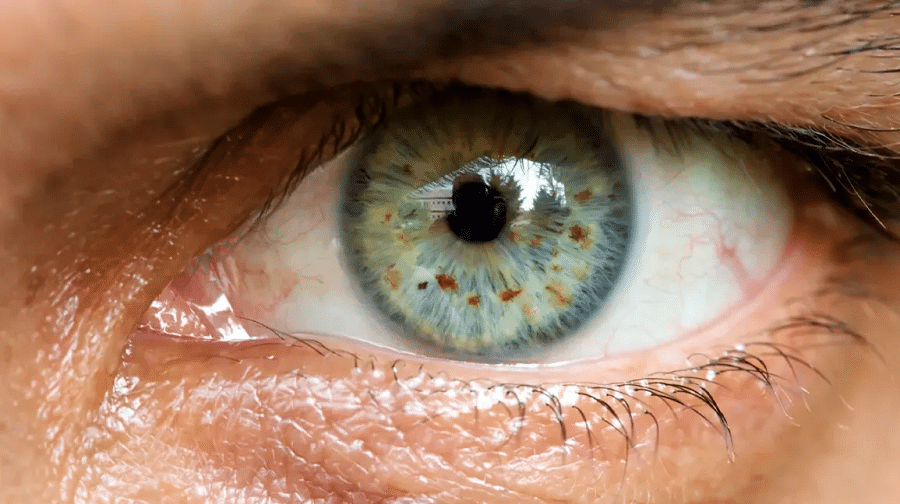
Eye nevi, often called eye freckles, may be present at birth or develop later in life. They’re usually pigmented spots that can appear on the sclera, the iris, or the back of the eye. Most are harmless, but some can be cancerous.
Read also: Eyelid Bumps | Risk Factors and Treatment
What Are Eye Freckles?
Eye freckles, medically known as nevi (singular: nevus), are pigmented growths on the surface of the eye. You can have a nevus inside the eye or on its outer surface. On the skin, a nevus is essentially what most people call a mole or birthmark.
Nevi you’re born with are usually harmless, and those that develop later in life are often benign as well. However, your eye care provider will want to monitor an eye nevus during routine eye exams, because some nevi can transform into melanoma (a type of eye cancer). Typically, a nevus appears in only one eye.
Read also: Corneal Transplant With Images | Accurate Information and Facts
Are There Different Types of Eye Freckles?
Yes. Eye nevi are classified by where they appear in or on the eye.
Read also: Information About Laser Vision Correction Surgery
Conjunctival Nevus
This type of eye freckle, or nevus, is located in the conjunctiva—the clear membrane that covers the front surface of the eye and lines the inside of the eyelids. Its color can range from yellow to gray to brown.
It’s usually noticed easily because it lies over the sclera (the white of the eye). Conjunctival nevi are the most common type of visible pigmented spots on the eye.
Read also: The Cornea in Detail | Structure, Function, and Factors That Affect It
Iris Nevus and Iris Freckles
Iris nevi and iris freckles appear on the iris, the colored part of your eye. The main differences between an iris nevus and an iris freckle are size and depth:
– An iris nevus is larger than an iris freckle.
– An iris nevus extends deeper into the layers of the iris and can sometimes distort the shape of the pupil, pulling it slightly to one side.
Choroidal Nevus
A choroidal nevus is an eye freckle located at the back, or inside, of the eye. The choroid is part of the uvea, the pigmented middle layer of the eye that includes the iris. The choroid lies between the sclera and the retina.
Some choroidal nevi are amelanotic, meaning they are very lightly colored or almost non-pigmented. Both choroidal nevi and iris nevi are forms of uveal nevi (nevi of the uveal tract).
How Common Is This Condition?
Having an eye freckle (nevus) is not rare. It’s estimated that about 1 in 10 people has some type of eye nevus. They appear to be more common in people of Caucasian descent, likely because freckles are easier to see on lighter-colored eyes.
What Are the Signs and Symptoms of Eye Freckles?
You can usually see an eye freckle. It’s easiest to notice when it’s on the white part of the eye, but iris nevi and iris freckles are often visible too, especially in lighter-colored eyes.
Benign (noncancerous) spots typically don’t cause symptoms. However, problems can arise if you have a nevus and also experience symptoms such as:
– New or worsening floaters
– Changes in vision, such as dimming or loss of side (peripheral) vision
These can be signs of a retinal detachment. A choroidal nevus can sometimes leak fluid or promote the growth of abnormal new blood vessels, either of which may lead to retinal detachment.
Read also: Nearsightedness (Myopia) and Everything You Need to Know
What Causes Eye Freckles?
Eye freckles develop when clusters of pigment-producing cells (melanocytes) gather together. These cells produce melanin, the pigment that gives color to your eyes, hair, and skin.
Some eye nevi are genetic and associated with inherited conditions. Others may be related to sun exposure, similar to how skin freckles can appear or darken after spending time in the sun.
Read also: Symptoms of Poor Vision and Everything You Need to Know About Low Vision
How Are Eye Freckles Diagnosed?
Eye care providers can see many types of eye freckles simply by examining your eyes, sometimes even without dilating the pupils. However, detecting a choroidal nevus requires a comprehensive eye exam and specialized imaging of the back of the eye.
How Are Eye Freckles Treated?
Most eye nevi (freckles or moles) are not dangerous. Your ophthalmologist will typically monitor them during routine eye exams and document their size, shape, and appearance with photographs and imaging tests over time.
Removing a nevus that doesn’t need to be removed can cause more harm than benefit. In general, eye freckles are not treated unless there is concern that the spot may be malignant (cancerous).
If your doctor suspects melanoma, they may recommend removing or treating the lesion using:
– Surgery
– Radiation therapy
– Laser surgery
They may also recommend close, regular follow-up to watch for any changes in the nevus.
Read also: Corneal Transplant Surgery | Everything You Need to Know

Regardless of the type of visual problem, refractive error, or eye disease you have, this sensitive organ requires careful evaluation and timely, appropriate treatment by an experienced ophthalmologist using effective medical technology to achieve the best outcomes.
Whatever eye condition you’re dealing with, you can book an appointment at Batal Specialized Center for a full eye examination and to begin addressing your eye problems, no matter how complex they may be.
Read also: Scleral Buckling Surgery for Retinal Detachment | Guide From Batal Specialized Center

'/%3E%3C/svg%3E)