
Med info
Best Vision Correction Techniques in Saudi Arabia

Refractive surgery for vision correction has advanced dramatically over the past half century. One of the earliest approaches involved creating deep incisions in the cornea to intentionally weaken and reshape it for corrective purposes.
Radial keratotomy (RK) was among the first surgical refractive procedures, first performed more than 50 years ago in Japan. However, the original technique, which used deep incisions inside the cornea, did not work well for most people, and many patients later developed bullous keratopathy (a painful, blistering corneal condition).
Vision correction surgery usually does not help people with presbyopia (age‑related difficulty seeing up close). Presbyopia affects essentially everyone over the age of 40–45 and is typically corrected with bifocal glasses or bifocal contact lenses.
In presbyopia, the eye’s natural lens loses its ability to change shape and focus on near objects. It is not a problem of the eye being too long or too short. Research is ongoing to develop surgical procedures to correct presbyopia, but a definitive, universally accepted technique has not yet been established.
Types of Vision Correction Surgery
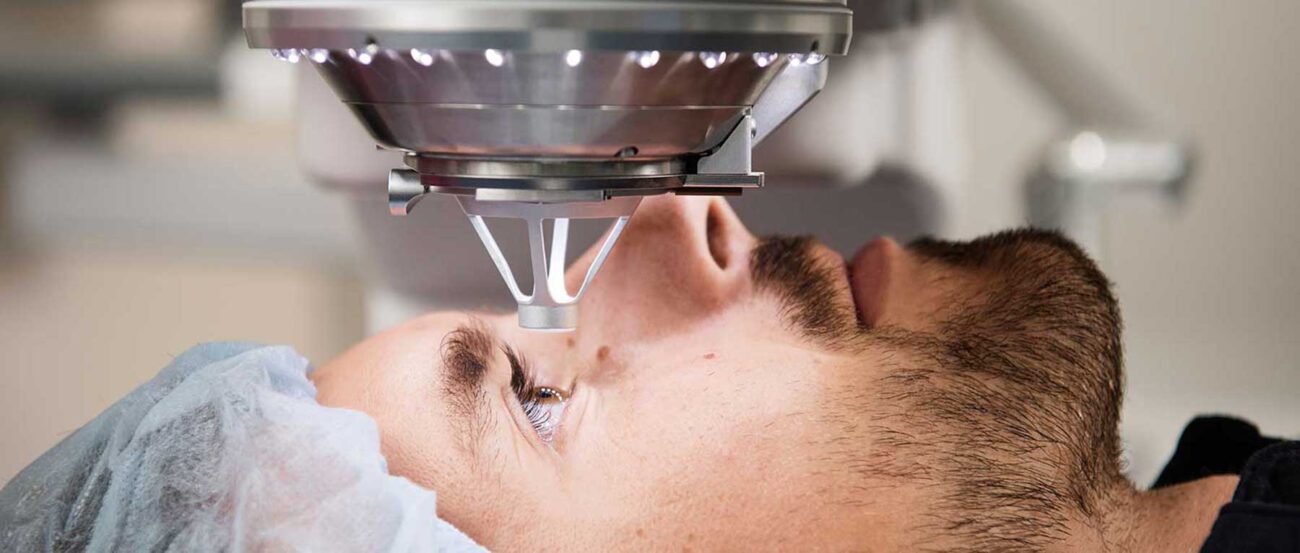
Modern vision correction and corneal reshaping procedures are performed using advanced laser technology. Three main procedures are commonly used, and it is essential to match the right procedure to each eye. Only a few centers offer all three, including the Eye Center at Batal Specialized Complex. The most widely performed of these three procedures is LASIK, which stands for Laser‑Assisted In Situ Keratomileusis.
The name describes the procedure: LASIK uses a laser to reshape the cornea in place. LASIK has been performed for decades, is the most extensively studied refractive procedure, and is the most commonly performed worldwide. In LASIK, a thin flap of corneal tissue is created (now usually with a laser) and lifted; after the laser reshapes the underlying cornea, the flap is repositioned, allowing for rapid healing with minimal discomfort.
Today, the leading options for the best vision correction techniques in Saudi Arabia include:
The most important types of vision correction surgery are:
LASIK for Most Refractive Errors
LASIK is used to correct most refractive errors—myopia (nearsightedness), hyperopia (farsightedness), and astigmatism—and can be performed in most patients aged 18 years and older.
PRK: The Precursor to LASIK
PRK stands for Photorefractive Keratectomy. Again, the name is descriptive: a laser (light photons) is used to remove (“ablate”) small amounts of corneal tissue to correct refractive errors. PRK differs from LASIK in that it is performed directly on the surface of the cornea rather than under a flap.
PRK is used in specific situations—such as when there are concerns about the corneal surface or when the cornea is relatively thin. Modern PRK healing usually takes several days. Although PRK is safe and effective, LASIK is generally more comfortable and therefore more commonly performed.
SMILE (Small Incision Lenticule Extraction)
SMILE, or Small Incision Lenticule Extraction, is the third major method of corneal reshaping and vision correction. Instead of reshaping the cornea by ablating tissue from the surface, SMILE uses a laser to create a small lens‑shaped piece of tissue (a lenticule) inside the cornea, which the surgeon then removes through a tiny incision.
All of these procedures rely on advanced optics and extremely precise laser beams. The amount of tissue removed or altered is measured in microns (thousandths of a millimeter). A human hair is typically about 40–60 microns thick, which is often more than enough corneal tissue to correct an average refractive error.
The Best Vision Correction Technique in Saudi Arabia
Without question, the most well‑known type of laser eye surgery—and the leading vision correction technique in Saudi Arabia—is LASIK (Laser‑Assisted In Situ Keratomileusis). For people with refractive errors such as myopia, hyperopia, or astigmatism, LASIK has become the gold‑standard procedure.
LASIK restores optimal vision by creating a corneal flap, allowing the surgeon to access and precisely reshape the underlying corneal tissue. Modern LASIK technology has revolutionized laser eye surgery, offering patients highly predictable results, rapid visual recovery, minimal discomfort, and shorter downtime.
However, not everyone is a suitable candidate for LASIK. To qualify, both you and your eyes must meet several criteria. Your ophthalmologist will perform a comprehensive examination to determine whether LASIK is appropriate for you.
If you are found to be a good candidate, there are different LASIK variants, such as bladeless LASIK, MonoLASIK (for monovision), and Epi‑LASIK. LASIK can also sometimes be used as part of the management plan for amblyopia (“lazy eye”) when the condition is largely due to a significant difference in refractive error between the two eyes.
How to Choose the Right Vision Correction Procedure
Every person’s eyes are unique. The best type of vision correction surgery for you is the one recommended by your eye surgeon after a thorough examination and consultation. Several key factors must be considered, including:
– Your age
– The degree and type of refractive error (myopia, hyperopia, astigmatism, presbyopia)
– Corneal thickness and shape
– Overall eye health (including dry eye, corneal disease, retinal problems, etc.)
– General health conditions and medications
– Lifestyle, occupation, and visual demands
After taking all of this into account, your refractive surgeon can work with you to determine the procedure most likely to give you the best possible visual outcome. This may not always be the procedure you initially had in mind. If you have taken the time to find an experienced ophthalmologist you trust, you can be confident that the recommended approach is based on maximizing your long‑term vision and safety.
It is also important to remember that technology is constantly evolving and surgical techniques are continually being refined. Even if you are not a candidate for LASIK, PRK, SMILE, or another type of laser eye surgery right now, you may become eligible in the future. Similarly, if you were told in the past that you were not a candidate, it is often worth undergoing a new evaluation and consultation to see whether newer technologies might now make surgery possible.
Contraindications to Vision Correction Surgery
Some people should not undergo LASIK or other laser vision correction procedures. This includes patients younger than 18 years. Vision often continues to change during the teenage years, so individuals under 18 are generally not good candidates for LASIK.
Their refractive error is likely to change again after surgery, reducing the long‑term benefit. Significant dry eye disease is another concern; combining severe dry eye with LASIK increases the risk of postoperative discomfort and can worsen the underlying condition.
People with certain medical or eye conditions should also avoid LASIK or other vision correction procedures, such as those with:
– Unstable or severe dry eye disease
– Certain autoimmune diseases (e.g., uncontrolled rheumatoid arthritis, lupus)
– Uncontrolled diabetes with eye involvement
– Progressive corneal ectatic disorders (e.g., keratoconus)
– Active eye infections or inflammation
– Significant corneal scarring
Your ophthalmologist will review your medical history and perform appropriate tests to determine if any contraindications apply in your case.
Success Rate of Vision Correction Surgery
The success rates of LASIK and similar vision correction procedures are well documented, thanks to thousands of clinical studies evaluating patient outcomes. LASIK has an exceptionally high patient satisfaction rate—at least 96%—the highest reported for any elective medical procedure, according to the American Refractive Surgery Council.
If you are considering vision correction surgery, understanding LASIK success rates is an important part of your decision‑making, along with understanding what those numbers mean for your personal visual goals.
One of the main questions patients ask is: “What is the success rate of laser vision correction?” Research data consistently show that LASIK is a safe and effective vision‑correcting procedure that helps many patients significantly improve their quality of life—often reducing or eliminating the need for glasses and contact lenses.
SMILE Vision Correction Technology
Small Incision Lenticule Extraction (SMILE) is one of the newest types of laser eye surgery. It is a minimally invasive procedure that can correct different refractive errors, primarily myopia (nearsightedness) and astigmatism.
SMILE has become a popular option worldwide. More than 1,400 clinics and over 2,500 surgeons around the globe perform SMILE, and millions of eyes with myopia and/or astigmatism have been successfully treated using this technology.
SMILE is performed with a femtosecond laser to reshape the cornea. A femtosecond laser emits extremely short pulses of near‑infrared light and is also commonly used to create the corneal flap in bladeless LASIK.
Because of the laser’s very high peak intensity and ultra‑short pulse duration (on the order of a few femtoseconds), it can create extremely precise microscopic cavities (bubbles) that connect to form cuts or planes within the corneal tissue without damaging surrounding tissue.
The laser usually takes less than 30 seconds to create a small, lens‑shaped piece of corneal tissue (the lenticule) inside the cornea. The surgeon then removes this lenticule through a tiny incision on the surface of the eye. This reshapes the cornea and corrects the refractive error.
The femtosecond laser creates a thin layer just beneath the corneal surface while simultaneously creating a small access incision. The procedure is almost completely silent, with no vibration or burning smell, and the patient remains in the same position from start to finish.
The laser is designed to pass harmlessly through the upper layers of the cornea and form the lenticule only at a precisely selected depth within the tissue, which means:
– Minimal disturbance of the corneal surface
– A very small incision compared with traditional LASIK
– Potentially less dry eye and faster structural recovery
Although SMILE can reduce some of the surgical risks associated with other techniques, no surgical procedure is completely risk‑free. Your eye doctor can explain all potential risks and side effects and determine whether you are a suitable candidate.
Possible side effects may include:
– Temporary blurry or fluctuating vision
– Dry eye symptoms
– Glare and halos around lights
– Rarely, infection or inflammation
– Residual refractive error that may require enhancement
Read also: Femto‑LASIK Vision Correction Surgery
Best technique for vision correction
How Long Does Vision Correction Surgery Take?
A common misconception is that eye surgery takes a long time. On the day of your procedure, you can expect to spend about two hours at the clinic. However, the actual laser portion of the surgery typically takes around 10 minutes in total (just a few minutes per eye).
The remaining time is dedicated to preoperative checks and intraoperative measurements. The surgeon and clinical team will perform more than 100 different checks and measurements to ensure maximal safety and accuracy. If any of these pre‑surgical assessments are not performed correctly, the procedure may not achieve the desired result and you might need an enhancement.
While the surgery itself is quick, this time frame refers only to the actual laser procedure and does not include preparation and postoperative recovery. The overall timeline—from initial inquiry to treatment—can range from about two weeks to two months, depending on the individual, the need to optimize eye health beforehand (for example, treating dry eye), surgeon availability, and other factors.
Presbyond: Advanced Presbyopia Correction
Presbyond is an advanced vision correction procedure specifically designed to treat presbyopia, the natural age‑related loss of near focusing ability that typically affects people in their forties and beyond.
In presbyopia, the eye’s natural lens gradually loses flexibility, making it harder to focus on close objects such as reading material, phone screens, and fine print.
Presbyond uses a specialized form of presbyopic LASIK, known as Laser Blended Vision (LBV), to improve both distance and near vision. By carefully reshaping the cornea of each eye in a slightly different way, the procedure aims to provide a continuous range of clear vision—from near to intermediate to far—without significantly compromising depth perception or overall visual quality.
Key benefits of Presbyond for age‑related vision correction may include:
– Reduced dependence on reading glasses or bifocals
– Improved near, intermediate, and distance vision
– Customized treatment based on each patient’s visual needs and eye characteristics
Read also: Causes of Dry Eye After LASIK – Symptoms and Treatment Options
Will My Vision Return to 6/6 After LASIK?
The majority of patients achieve 6/6 (20/20) uncorrected vision after LASIK. However, results can vary from person to person. Some patients—especially those who had very high refractive errors before surgery—may still need a light prescription for certain tasks, such as night driving or prolonged reading.
Cost of Vision Correction Surgery at Batal Specialized Complex
The cost of vision correction procedures at Batal Specialized Complex starts from about 3,000 Saudi riyals. Insurance coverage depends on the type of procedure and your specific insurance policy. Because laser eye surgery is considered an elective procedure that does not address a life‑threatening condition, it is often not covered by Saudi health insurance plans, similar to many international policies.
(Please contact us to confirm whether your insurance company covers the procedure by filling in the form below with your details.)
Read also: What Is Recurrent Corneal Erosion and How Is It Treated?
My Experience with Vision Correction at Batal Specialized Complex in Jeddah
Sarah says:
“I first started thinking about LASIK when my contact lenses became uncomfortable because of dry eye. However, my regular eye doctor initially advised against the procedure for the same reason. I was still struggling with my symptoms, so I went to an ophthalmologist at Batal Specialized Complex, who recommended taking a break from my contact lenses for a few weeks.
Although I wasn’t thrilled about going back to glasses, this break allowed my doctor to properly assess what was causing my dry eye symptoms. I was happy to find out that LASIK could actually be part of the solution and that it made sense financially in the long run—especially when you consider how many years I would otherwise spend buying glasses and contacts.”
Abdullah adds:
“The main reason I decided to go ahead with LASIK was the ability to wake up in the middle of the night and see clearly. I’m a father of three children, all under the age of five, so that happens a lot. I wanted to be able to get to my kids quickly whenever they needed me.
I was also tired of the constant hassle of correcting my vision every single day. Of course, I had some concerns, but the doctors at Batal Specialized Complex answered all my questions about LASIK, which made me feel comfortable and confident in my decision. Recovery was much easier than I expected.”
Frequently Asked Questions About the Best Vision Correction Techniques in Saudi Arabia
Which Is Better: Femto‑LASIK or Femto‑SMILE?
Femto‑LASIK generally offers faster healing and fewer flap‑related complications than traditional (microkeratome) LASIK because it uses a femtosecond laser instead of a mechanical blade to create the corneal flap. Both Femto‑LASIK and Femto‑SMILE aim to reshape the cornea with a laser to correct issues such as myopia and hyperopia, but they differ in technique and incision size. The choice depends on corneal anatomy, degree of refractive error, dry eye status, and your surgeon’s assessment.
What Is the Newest Vision Correction Procedure?
One of the latest advances in refractive surgery is the EVO Visian ICL (Implantable Collamer Lens). This innovative, biocompatible lens is implanted inside the eye, in front of the natural lens, to correct refractive errors. EVO ICL allows many patients to free themselves from glasses and contact lenses and enjoy sharper, clearer vision—often in a procedure lasting only 20–30 minutes.
What Happens If Laser Eye Surgery Fails?
Significant complications occur in roughly 1% or fewer of laser eye surgery cases. When problems do occur, they may be due to incorrect corneal reshaping, abnormal healing, or—much more rarely—direct damage from the laser. In some cases, patients can also have an allergic or toxic reaction to anesthetic or medicated eye drops used during or after the procedure. Many issues can be managed with additional treatment or enhancement surgery, but prevention through careful screening and precise planning is key.
How Long Does It Take for the Eye to Heal After Laser Surgery?
For several weeks—and in some cases, up to a few months—after laser eye surgery, it is normal to experience fluctuating or slightly blurred vision. You may also notice dry eye symptoms, glare, or halos around lights, especially at night.
Most patients have multiple follow‑up visits with their eye doctor over the first six months or longer after surgery. These visits allow your surgeon to monitor healing, adjust treatments such as lubricating drops, and decide whether any enhancement is needed.
What Is the Best Age for LASIK?
In general, the ideal age range for LASIK is between about 20 and 40 years. The U.S. Food and Drug Administration (FDA) has approved LASIK for patients aged 18 and older, but most providers recommend waiting until the mid‑twenties, once your prescription has been stable for at least one to two years. Stability reduces the risk that your vision will change significantly after surgery.
Whatever your symptoms of poor vision or eye problems may be, this delicate medical field requires a thorough examination and carefully chosen treatment from a skilled, experienced ophthalmologist. With the right expertise and effective modern tools, it is possible to achieve excellent visual outcomes.
If you have any eye condition—no matter how simple or complex—you can book an appointment at Batal Specialized Complex for a comprehensive evaluation and to begin addressing your vision problems with a tailored treatment plan.